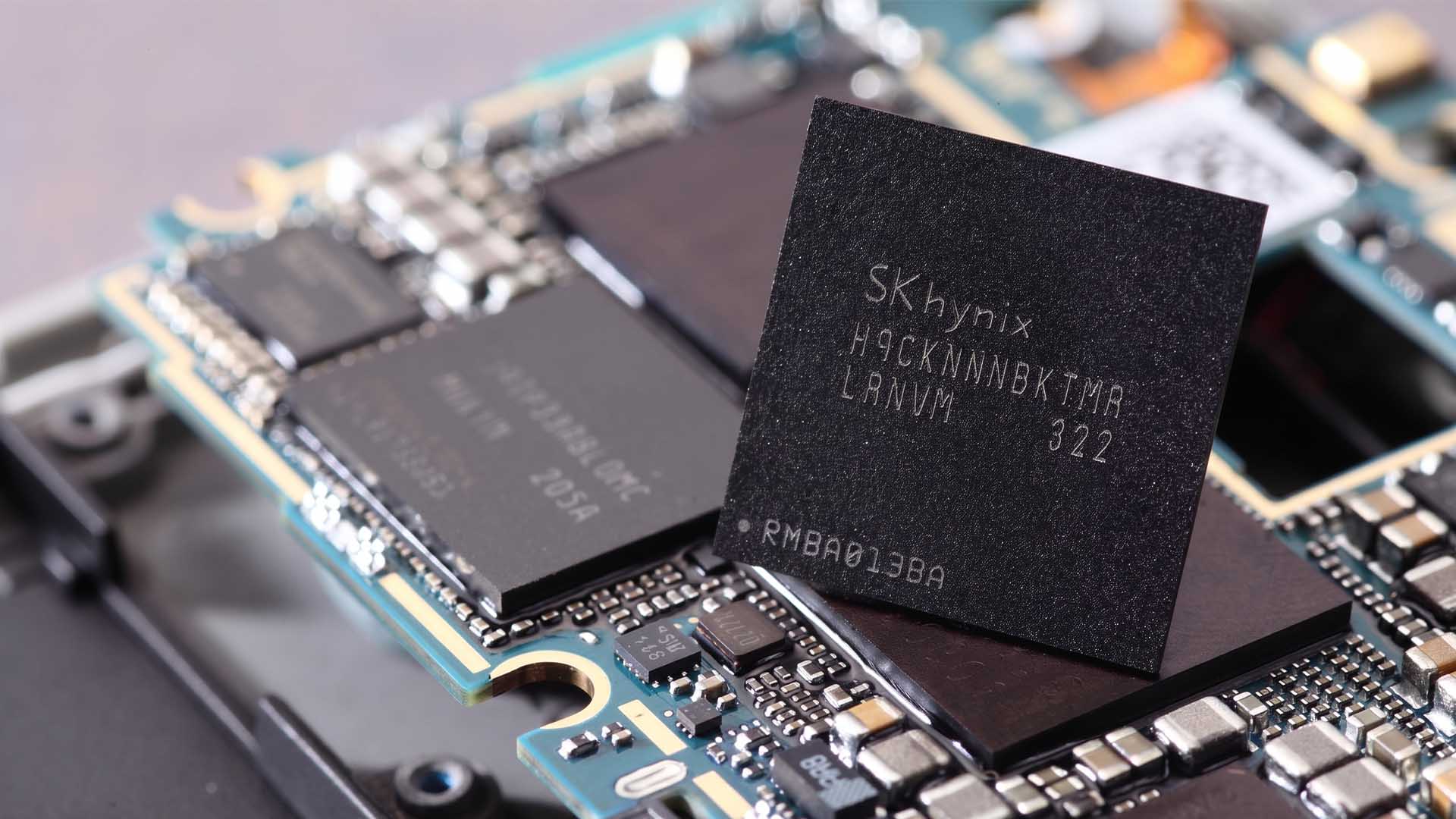
SK hynix is working on a major mobile memory breakthrough that could reshape on-device AI in smartphones
Smartphone chips have become incredibly powerful in recent years, with Apple, Qualcomm, MediaTek, and Samsung pushing mobile processors closer to laptop-class performance. The next major challenge, however, is not just raw processing power. For advanced on-device AI to work smoothly on phones, mobile chips need faster, more efficient memory with much higher bandwidth.
That is where SK hynix may be preparing a major step forward. The company is reportedly developing 3D-stacked DRAM-on-logic architecture for smartphones, a next-generation memory design that places DRAM directly on top of a logic semiconductor chip. This approach could help remove one of the biggest bottlenecks holding back edge AI computing on mobile devices.
According to industry information, SK hynix has started recruiting design engineers through its U.S. subsidiary in San Jose, California. The company is also said to be working with an unnamed customer to apply this new memory technology. While the customer has not been officially confirmed, Apple is viewed as a possible early partner because it is expected to move away from older InFO-PoP packaging and adopt newer WMCM, or Wafer-Level Multi-Chip Module, packaging for future iPhone chips.
The shift from traditional packaging to 3D-stacked DRAM-on-logic could be significant. Current package-on-package designs place chips on top of each other, but they do not provide the same level of integration as true 3D-stacked memory. SK hynix’s approach would shorten the distance between the processor and memory, increase the number of data-transfer channels, and improve communication speed within the same compact smartphone footprint.
For users, this could mean faster AI processing, reduced latency, better battery efficiency, and more room inside phones for other components. As smartphones become more dependent on generative AI, image processing, real-time translation, voice assistants, and personalized automation, memory bandwidth is becoming just as important as CPU, GPU, and NPU performance.
The reason this matters is simple: on-device AI requires quick access to large amounts of data. If memory is too slow or too limited, even a powerful chip can struggle to run advanced AI features efficiently. Cloud-based AI can offload these tasks to remote servers, but on-device AI needs to process everything locally. That makes high-speed mobile DRAM a crucial part of the future smartphone experience.
SK hynix is not the only company trying to solve this problem. Qualcomm is reportedly developing 3D DRAM for Neural Processing Units and is working with CXMT to support stronger on-device AI capabilities in smartphones for the Chinese market.
Samsung is also pursuing a different solution known as Low Latency Wide DRAM, or LLW DRAM. This technology aims to deliver some of the advantages of high-bandwidth memory while avoiding the heat and design challenges that come with traditional stacked HBM. Samsung’s LLW DRAM is said to target up to 150 percent higher bandwidth than conventional LPDDR5X memory, which could make it highly valuable for future AI-focused mobile chips.
Huawei is also believed to be exploring ways to bring HBM-style memory to smartphones. However, standard HBM is usually designed for data centers and high-performance computing systems because it is expensive, complex to manufacture, and can suffer from lower yields. If Huawei does move in this direction, it will likely require a customized mobile-friendly memory design rather than a direct use of conventional HBM.
Apple’s current mobile memory bandwidth also shows why the industry needs a new approach. The A19 Pro is said to reach around 75.8GB/s of memory bandwidth, which may be enough for many traditional smartphone tasks but could become restrictive as AI workloads grow more demanding. Future iPhones and Android flagships will need memory systems that can keep up with increasingly powerful neural engines and AI accelerators.
If Apple is involved with SK hynix’s 3D-stacked DRAM-on-logic plans, the technology may not arrive immediately. The A20 Pro is already expected to be tied to the next major iPhone production cycle, and reports suggest that the iPhone 18 Pro has already moved far enough along that a major memory packaging change may be difficult to include at this stage. That means the real breakthrough could appear in a later generation.
Still, the direction is clear. Smartphone performance is entering a new era where better AI features will depend not only on faster processors but also on advanced memory packaging. SK hynix’s 3D-stacked DRAM-on-logic technology could become a key building block for future AI smartphones, giving devices faster response times, improved efficiency, and the ability to handle more complex tasks directly on the phone.
As mobile AI becomes a major selling point for premium smartphones, memory innovation may become one of the most important battles in the semiconductor industry. The companies that solve the bandwidth and latency problem first could define the next generation of flagship devices.