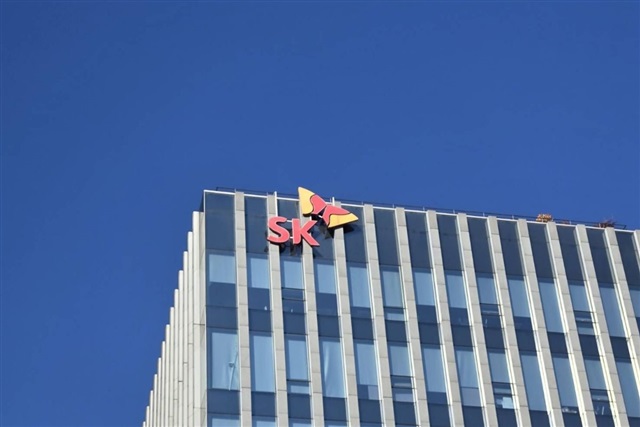
In a significant development, top South Korean corporations have seen a notable surge in revenue from the North American market, with a collective boost of about 20% reported for 2024. Leading this charge is SK Hynix, a pioneer in the high-bandwidth memory (HBM) sector, reflecting robust growth despite potential trade challenges looming on the horizon.
The North American market proved lucrative, as a study by Leaders Index, focusing on 100 major South Korean companies, revealed a revenue leap from KRW262.2 trillion (approximately $180.47 billion) in 2023 to KRW313.5 trillion in 2024 across the first three quarters. This impressive increase was predominantly driven by advancements in the semiconductor industry.
SK Hynix experienced a remarkable surge in cumulative North American revenue, more than doubling from KRW9.7 trillion in 2023 to a significant KRW27.3 trillion in 2024, highlighting the region’s growing centrality to their earnings, which swelled from 45.4% to 58.8% of their total revenue. A pivotal factor in this growth is the demand for SK Hynix’s advanced HBM3E memory, heavily sought after by tech behemoths like Nvidia.
Similarly, Samsung Electronics achieved a 24% rise in their North American revenue, reaching KRW84.7 trillion in the same period. However, the percentage of their total revenue from North America saw only a modest increase, suggesting a balanced revenue portfolio despite the region’s growth.
Amidst this upbeat scenario, there’s a shadow of uncertainty as US President Donald Trump contemplates implementing new tariffs on imports including cars, semiconductors, and pharmaceuticals. Proposed semiconductor tariffs range from 10-25%, inciting concern among South Korean companies. The Korea Institute for Industrial Economics and Trade (KIET) anticipates a potential shrinkage of 4.7-8.3% in South Korea’s semiconductor exports if these tariffs are imposed.
In response, industry experts suggest that South Korean giants like Samsung and SK Hynix might need to ramp up their US production to mitigate these challenges. Currently, their US operations include wafer foundries and advanced packaging units, but expansion into local memory factory production appears necessary.
The imposition of such tariffs could paradoxically disadvantage the US, as analysts highlight the dominant position of Korean firms in the global memory market. Tariffs could inadvertently escalate procurement costs and dent the earnings of major US tech companies, diluting the intended benefits to the US economy.
As of the third quarter of 2024, South Korea holds sway over 75.5% of the global DRAM market, segmented between Samsung and SK Hynix, alongside a 55.8% stake in the NAND Flash market. This dominance underscores why any tariff imposition might backfire domestically, despite the presence of Micron Technology, an American firm whose international production footprint would also face tariff repercussions.
Navigating these complexities with strategic foresight could empower South Korean companies to solidify their positions in the international arena, while the discourse on tariffs unfolds with consequences for the global tech industry.