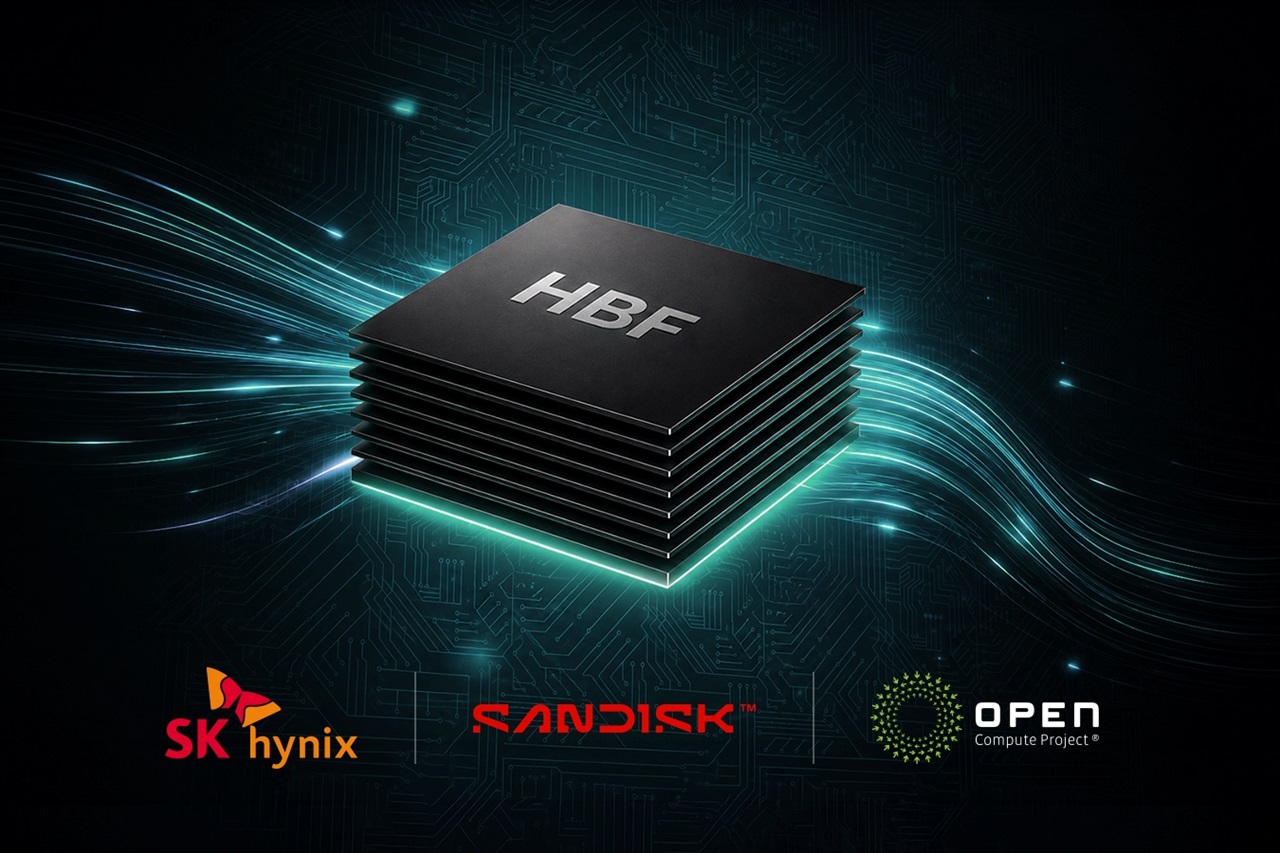
SK Hynix and SanDisk Unveil First High Bandwidth Flash Specs With Up to 512GB Capacity and 3TB/s Bandwidth
SK Hynix and SanDisk have introduced the first standard specifications for High Bandwidth Flash, a new NAND-based memory technology designed to deliver massive storage capacity and extremely fast data transfer speeds.
Announced on August 4, the new HBF specification outlines memory solutions capable of reaching up to 512GB in capacity while delivering bandwidth of up to 3TB/s. This marks an important step forward for next-generation memory systems, especially as demand grows for faster, more efficient data handling in artificial intelligence, high-performance computing, servers, and advanced consumer devices.
High Bandwidth Flash is built around NAND flash technology, but its goal is to push beyond the limits of traditional storage by combining high capacity with significantly improved bandwidth. While NAND flash is widely used in SSDs, smartphones, data centers, and embedded systems, HBF aims to create a new class of memory that can better support workloads requiring rapid access to large amounts of data.
The 512GB capacity target is especially notable because it suggests HBF could help address the growing need for denser memory in modern computing environments. At the same time, the 3TB/s bandwidth figure points to performance levels that could benefit applications where speed is just as important as storage size.
For AI workloads, this kind of memory technology could be particularly valuable. Large language models, machine learning training, inference systems, and data-intensive analytics all require fast movement of information between processors and memory. HBF could help reduce bottlenecks and improve overall system efficiency.
The release of the first HBF standard specifications also indicates that the technology is moving toward broader industry adoption. Standardized specifications are important because they give manufacturers, platform designers, and hardware developers a shared foundation for future products.
Although commercial products based on High Bandwidth Flash may still take time to reach the market, the announcement signals growing momentum behind advanced NAND-based memory solutions. As computing demands continue to rise, technologies like HBF may play a key role in shaping the future of high-speed, high-capacity memory.