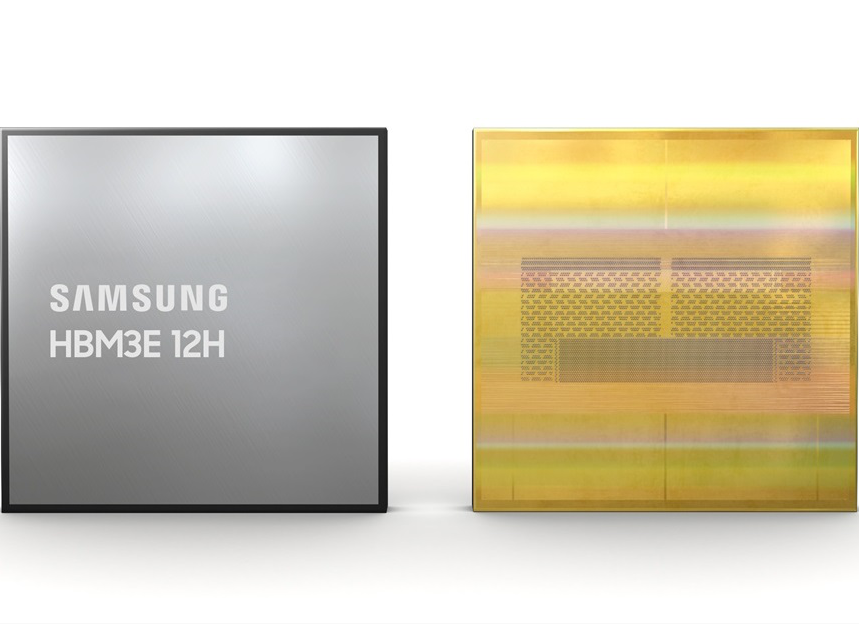
Samsung is issuing a word of caution to investors as it rapidly expands the production of its fifth-generation HBM3E memory, outpacing the market demand. This surge in supply could lead to softer pricing in the near term. Samsung’s management foresees this imbalance affecting market prices and reducing the profitability gap between HBM3E and traditional memory types in the latter half of the year. Despite an increase in volume, margins may remain compressed.
This development unfolds as tech giants like Nvidia and AMD transition to 12-stack HBM3E for cutting-edge AI accelerators. Meanwhile, rivals SK Hynix and Micron are also ramping up production of the denser variant, increasing the likelihood of inventory surplus before a predicted demand surge arrives.
Samsung’s semiconductor division is facing internal challenges, with quarterly operating profit plummeting by 94% compared to the previous year, affected by export controls and inventory adjustments. To counter these setbacks, Samsung is striving to reduce HBM3E production costs in an effort to recapture Nvidia’s business, which has mostly shifted to SK Hynix.
On the brighter side, memory revenue rose by 11% from Q1 as HBM3E shipments increased. Samsung has ambitious plans to scale up production of 128 GB DDR5, 24 GB GDDR7, and 8-gen V-NAND by the end of the year. A significant $16.5 billion agreement to manufacture Tesla’s next-generation AI6 chips in Texas should help stabilize their production facilities, though new US tariffs on Korean products introduce uncertainty into the demand forecast.
Industry experts highlight that Samsung is considering price adjustments while Nvidia validates its 12-layer stacks. Future market dominance might depend more on cost efficiency and production yields than on pure performance metrics. If Samsung can achieve high-yield, cost-effective production ahead of its competitors, it could regain a strong foothold in the lucrative AI-memory market. However, any miscalculations could exacerbate the current oversupply issue, further weakening HBM3E pricing.