Samsung’s Galaxy Z TriFold only hit shelves last December, but it’s already turned into one of the most talked-about foldables in its category. Unfold it and you’re looking at a huge 10-inch display, powered by the Snapdragon 8 Elite and backed by a triple rear camera system. For all that screen and performance, though, Samsung played it safe on power, sticking with a 5,600 mAh lithium-ion battery.
That cautious approach stands out even more now that several Chinese phone makers are moving to silicon-carbon batteries, a newer battery chemistry that can pack more capacity into a similar amount of space. Recent foldables using this tech have pushed battery size much higher, with examples reaching around 6,660 mAh. Samsung is widely expected to adopt silicon-carbon batteries eventually, but one creator decided not to wait.
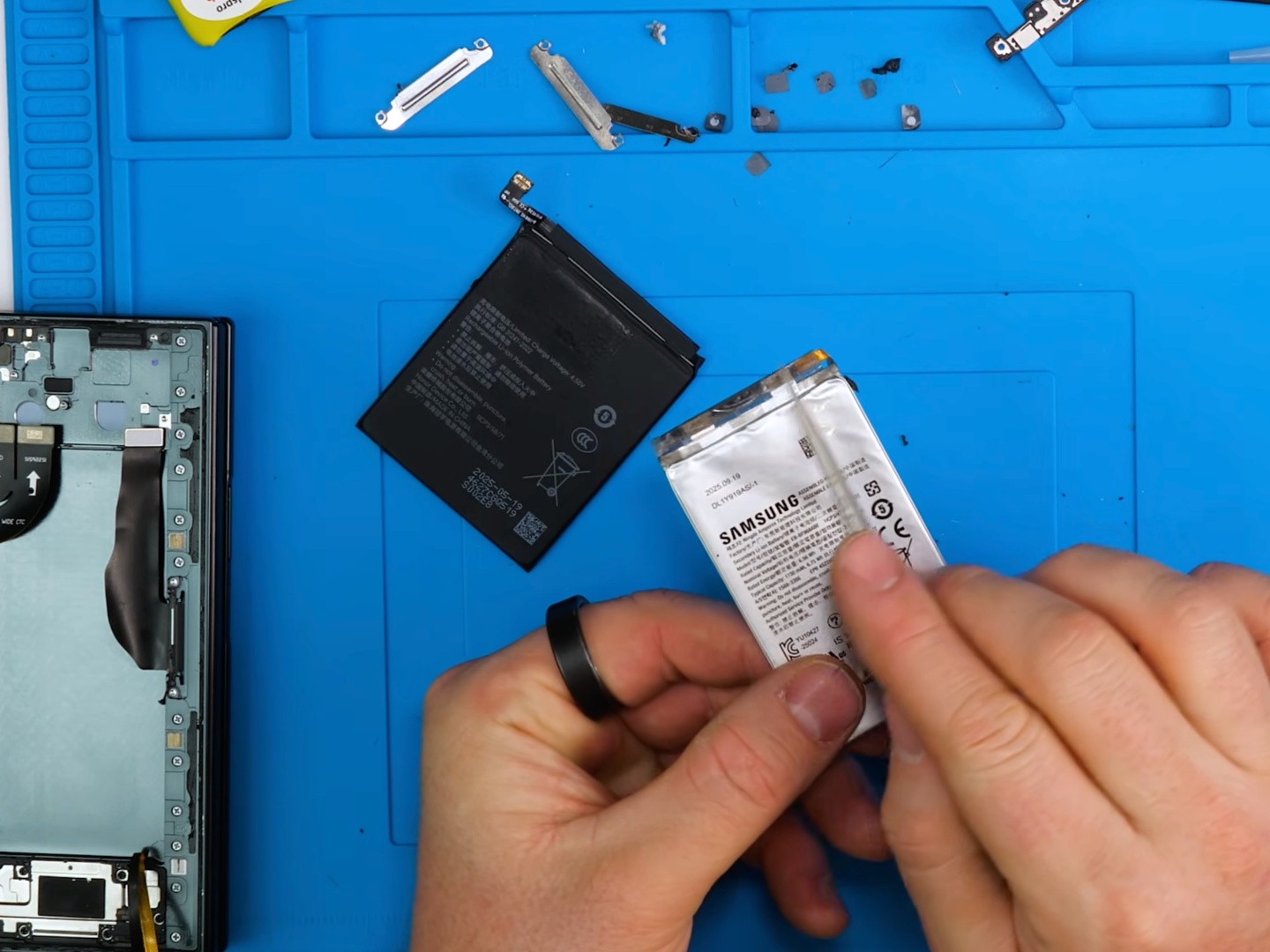
A well-known DIY tech YouTuber from the channel Strange Parts, Scotty Allen, took on a challenging goal: upgrade the Galaxy Z TriFold using silicon-carbon battery cells sourced with help from Honor. On paper, the results are eye-catching, with a claimed jump to 9,600 mAh—about a 71% increase in capacity compared to the original. In reality, the path to get there was messy, expensive, and came with some serious compromises.
The project began with Allen buying a Galaxy Z TriFold in China, then working through the practical limitations that come with trying to retrofit a modern foldable phone. After building mock-ups to test whether the plan could even work, he moved on to a full teardown. The Honor silicon-carbon cells turned out to be slightly wider than Samsung’s original battery compartments, so fitting them required physically modifying the phone’s internals. That meant CNC milling additional space, grinding down part of the hinge mechanism, and even removing the bottom speaker to make everything fit.
Software and power management were another hurdle. Smartphone batteries aren’t just cells—you also have battery management hardware that communicates with the phone. To make the TriFold properly recognize and run on the new batteries, Allen swapped the Honor battery management system on the silicon-carbon packs with Samsung’s own BMS.
Even with careful planning, the build was far from a clean one-and-done. Allen reportedly went through four Galaxy Z TriFold units to finally assemble a functioning hybrid with the “right” combination of salvageable parts. The final phone did power on with the upgraded battery setup, but it wasn’t perfect: the display showed a white line running across it, suggesting the modification process (or repeated teardowns) took a toll.
Another big unknown is performance. While the finished build claimed 9,600 mAh, the project didn’t include battery tests that would confirm real-world capacity, charging behavior, heat management, or long-term durability. Still, the experiment highlights why silicon-carbon batteries are such a big deal for foldables: when internal space is tight and every millimeter matters, higher energy density can translate into noticeably longer battery life—without demanding a thicker phone.
The timing is also interesting because reports suggest Samsung may not be far off from launching a consumer device that uses silicon-carbon battery technology. If that happens soon, it could arrive in a model positioned as an early test case for the new battery approach—potentially something in the next flagship generation, such as a future Galaxy S26 Edge-style device name, depending on what Samsung ultimately calls it.
For now, this DIY upgrade is less a practical guide and more a glimpse into where premium smartphones are headed: bigger batteries, smarter chemistry, and fewer compromises—especially for large-screen foldables that demand more power every year.