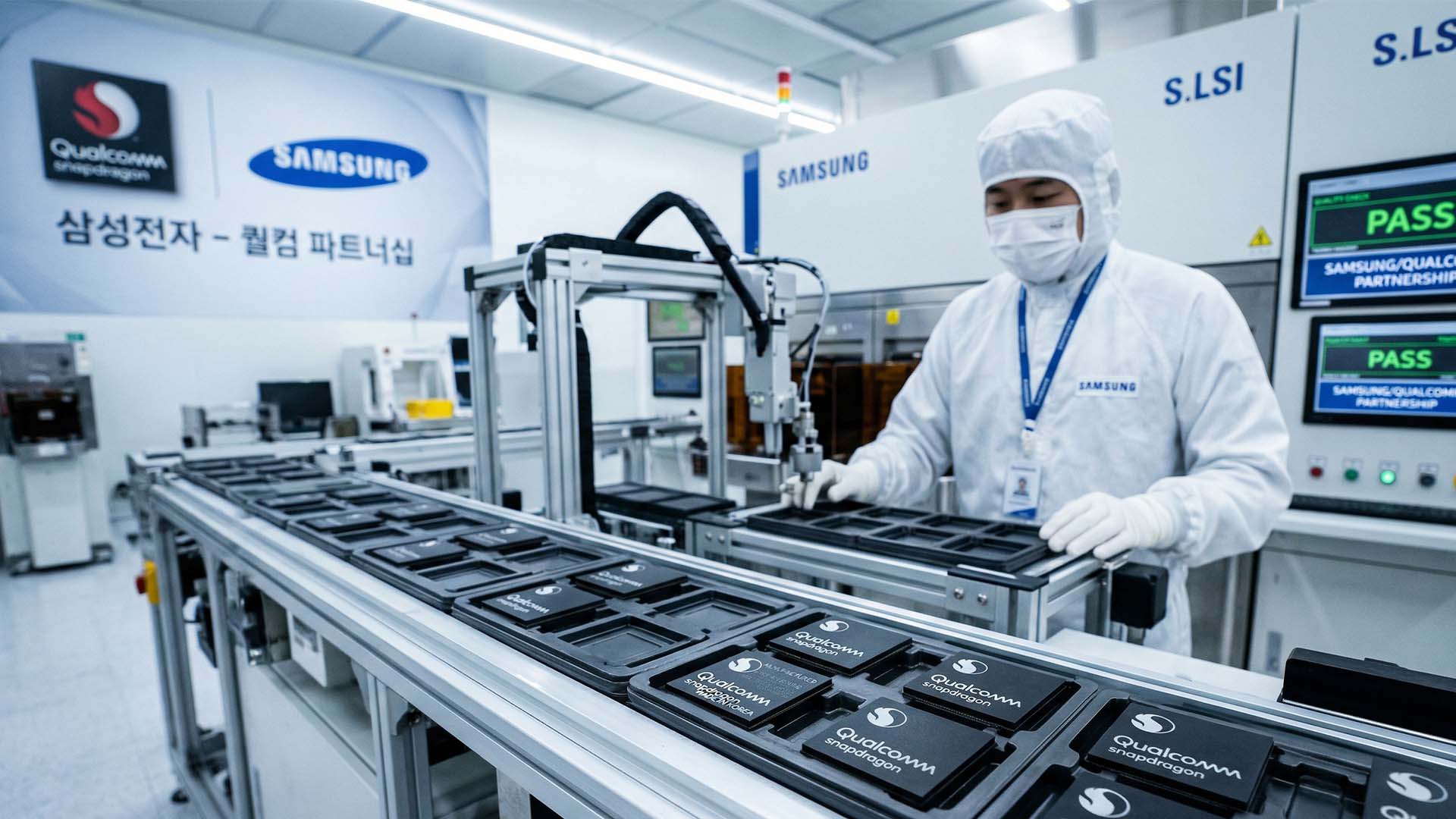
Qualcomm’s next flagship mobile chips, reportedly named Snapdragon 8 Elite Gen 6 and Snapdragon 8 Elite Gen 6 Pro, are now expected to be manufactured exclusively using TSMC’s advanced 2nm N2P process. If this plays out, it would mark yet another year where Qualcomm and Samsung fail to establish a deeper foundry partnership—despite long-running industry talk about Qualcomm wanting more than one supplier for its most important processors.
The main issue appears to be Samsung Foundry’s progress on its own 2nm GAA (Gate-All-Around) node. A new report indicates Samsung is still facing stability challenges, with its 2nm performance not consistently hitting the targets needed for top-tier smartphone chip production. In semiconductor manufacturing, it’s not enough for a process to exist on paper; it needs to deliver predictable results at scale. And for a company like Qualcomm—shipping massive volumes to power premium Android phones worldwide—those results have to meet strict internal benchmarks.
One of the clearest sticking points is yield, a metric that measures how many usable chips can be produced per wafer. The report claims Samsung’s 2nm GAA yield is hovering around 60%. Qualcomm, meanwhile, is said to be aiming for roughly 70% before seriously committing major production. That gap may not sound huge, but in the world of cutting-edge chipmaking, a 10-point yield difference can translate into big swings in cost, supply reliability, and delivery schedules.
This situation also helps explain why TSMC remains Qualcomm’s safest bet, even when it’s expensive. Producing chips on a leading-edge 2nm node is expected to come with a steep price tag per wafer. Sticking with TSMC may mean Qualcomm pays a premium, but it also reduces risk—especially when launch windows for flagship phones are tight and delays can ripple across the entire supply chain.
There’s another practical hurdle for any last-minute foundry switch: timing. By the time companies reach this stage, next-generation chip designs are often already finalized, and many are “taped out,” meaning the design has been handed off to the manufacturer for production preparation. If Qualcomm has already gone deep into the process with TSMC for these chips, moving to another foundry would be difficult, slow, and costly.
Still, Samsung isn’t out of the race long-term. The company is expected to use its second-generation 2nm GAA technology for a future Exynos 2700 chip later this year, suggesting Samsung believes its 2nm roadmap is close to being ready for high-profile products. If Samsung can improve yields and demonstrate consistent performance and stability, it could strengthen its pitch to win major customers like Qualcomm in future generations—and potentially revive the idea of dual-sourcing flagship Snapdragon chips to reduce reliance on a single supplier.
For now, the industry expectation is clear: Qualcomm’s Snapdragon 8 Elite Gen 6 lineup is likely headed for TSMC’s 2nm N2P, while Samsung continues working to close the yield and stability gap that’s keeping the foundry partnership out of reach.