Samsung Pushes AI Factory Automation as Semiconductor Workers Win Major Bonus Deal
Samsung’s semiconductor division is moving quickly toward a future where chip factories rely far less on human intervention. While unionized workers recently secured a major bonus agreement, the company’s growing focus on automation could gradually reduce the leverage employees have in future negotiations.
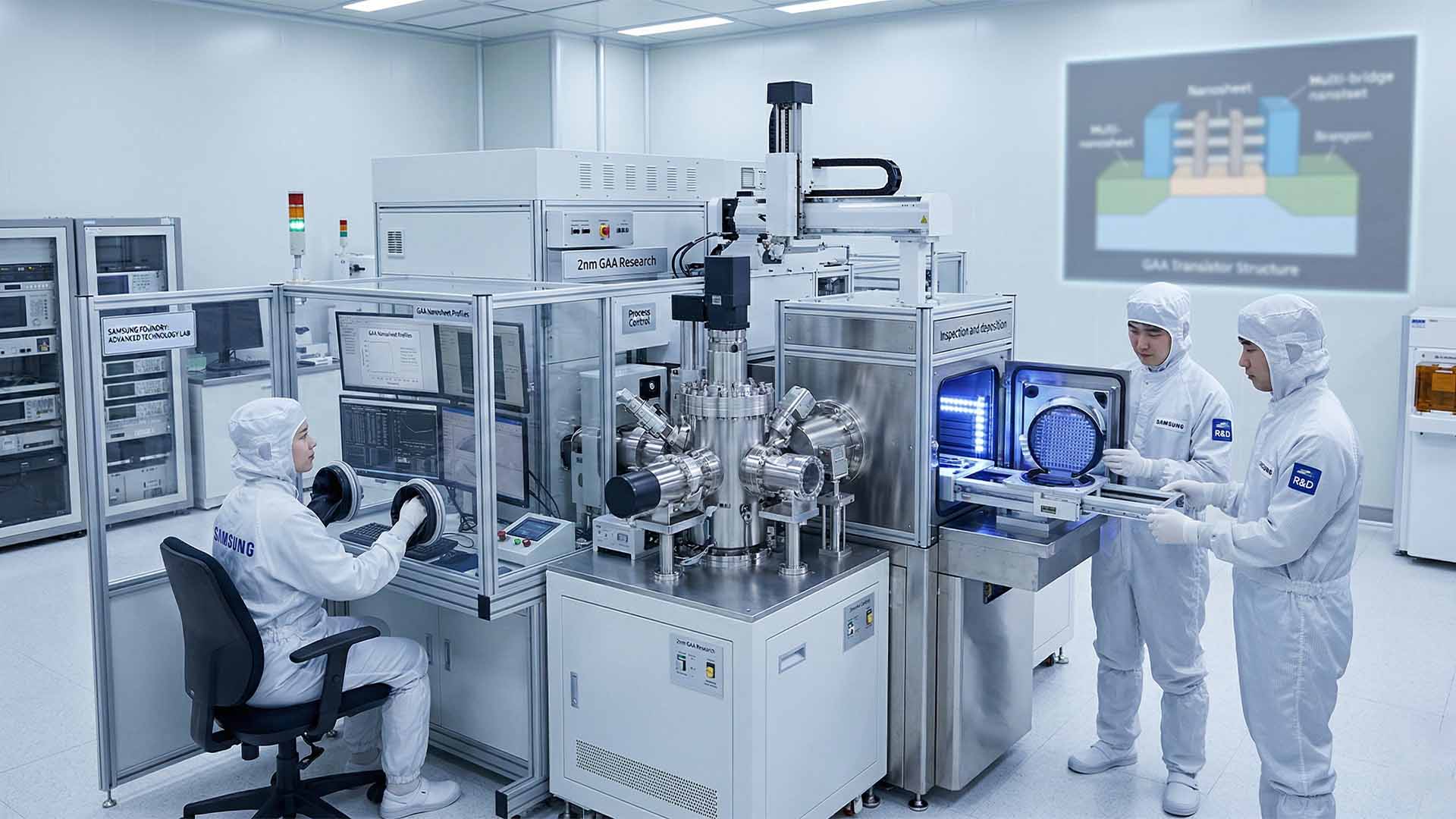
At the center of Samsung’s latest push is a new data-sharing system called the Data Sharing Eco Platform, or DSEP. The platform is designed to share real-time semiconductor manufacturing data with trusted partners, especially equipment suppliers, while also feeding that information into an AI-powered factory operating system.
Samsung’s long-term goal is ambitious: to build a path toward fully automated semiconductor fabs by 2030.
According to reports from South Korea, around 60 partner companies have already joined Samsung’s DSEP initiative. That number is expected to grow as the platform becomes more deeply integrated into the company’s chip production network.
DSEP is more than a basic data-sharing tool. It is designed to collect, process, analyze, and distribute semiconductor process data in real time. By combining partner access with AI-based analysis, Samsung aims to improve chip yield stability, detect defects more accurately, and safely explore advanced manufacturing processes that were previously limited by data security concerns.
One of the most important benefits of DSEP is faster equipment troubleshooting. In the past, some semiconductor equipment was considered too sensitive to move out of the fab, meaning vendors often had to send technicians on-site to diagnose problems. That could slow down production and create delays.
With real-time process data available through DSEP, equipment suppliers may be able to identify issues remotely and recommend fixes much faster. This could help Samsung reduce downtime, improve production efficiency, and keep chip manufacturing lines running with fewer interruptions.
To support this large-scale automation strategy, Samsung’s semiconductor business is also building a High-Performance Computing platform. This HPC system will provide the computing power needed to handle the huge amount of manufacturing data collected and analyzed through DSEP.
The combination of real-time data sharing, AI analysis, and high-performance computing could become a major foundation for Samsung’s next-generation chip factories. If successful, it may help the company compete more aggressively in memory chips, advanced logic, and AI semiconductor manufacturing.
However, the timing of Samsung’s automation push is notable. The company recently reached an agreement with unionized semiconductor workers over performance bonuses after weeks of labor pressure and strike threats.
Under the reported agreement, Samsung workers are set to receive a special performance bonus equal to 10.5 percent of the company’s annual operating profit, as long as operating profit exceeds specific thresholds. The agreement reportedly applies if profits surpass 200 trillion won from 2026 to 2028 and 100 trillion won from 2029 to 2035.
Based on current expectations that Samsung could generate around 300 trillion won in operating profit this year, employees in memory-related divisions could receive bonuses estimated at roughly 600 million won, or about $400,000, per worker.
For now, that represents a major win for Samsung’s semiconductor employees. But the company’s rapid investment in AI-driven factory automation suggests the balance of power may shift over time.
If Samsung succeeds in creating highly automated or fully unmanned chip fabs by 2030, the company could become less dependent on human labor in some parts of the semiconductor production process. That would not only reshape factory operations but could also affect future labor negotiations, workforce planning, and the broader chip industry.
Samsung’s DSEP strategy highlights a larger trend across the global semiconductor sector: chipmakers are racing to use artificial intelligence, real-time data, and advanced computing infrastructure to make fabs more efficient, resilient, and less vulnerable to disruption.
For Samsung, the message is clear. The company is not only trying to increase chip production efficiency today; it is preparing for a future where AI systems may play a central role in running the world’s most advanced semiconductor factories.