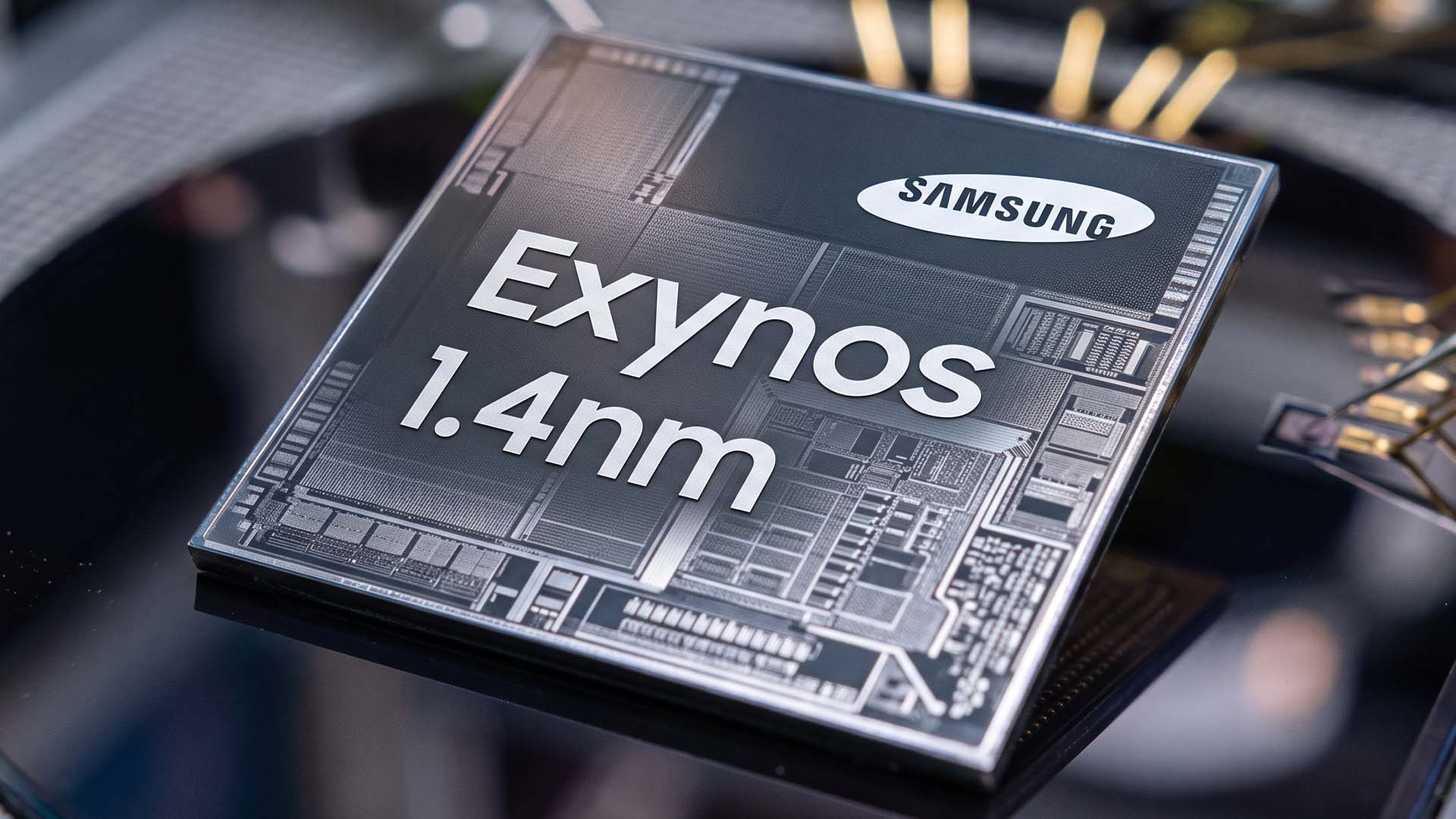
Samsung’s Exynos roadmap may take a more cautious turn as the company appears to be slowing its race toward the most advanced chip manufacturing nodes. Instead of rushing to launch a 1.4nm processor as quickly as possible, Samsung is reportedly planning to stay on its 2nm GAA process for several Exynos generations before moving to 1.4nm with the Exynos 2900.
According to a recent rumor from Kaulenda, Samsung’s upcoming Exynos 2600 will mark the company’s entry into the 2nm era. After that, the Exynos 2700 and Exynos 2800 are also expected to remain on improved versions of the 2nm process. The Exynos 2800 is said to use Samsung’s third-generation 2nm GAA technology, known as SF2P+, which should bring gradual improvements in performance, power efficiency, and chip area.
The biggest shift is expected with the Exynos 2900, which is rumored to become Samsung’s first chipset built on the 1.4nm process. However, that transition may not happen until 2029, putting Samsung roughly a year behind TSMC’s expected 1.4nm mass production timeline in 2028.
While being second may sound like a setback, Samsung’s approach could actually be a smarter long-term strategy. In the past, Samsung often pushed aggressively to compete with TSMC for the title of being first to introduce a newer lithography. That strategy generated attention, but it also created problems when yields were not stable enough for large-scale, profitable production.
This time, Samsung appears to be focusing less on marketing bragging rights and more on improving manufacturing reliability. Advanced chipmaking is not just about shrinking transistor sizes. It is also about producing enough usable chips per wafer to make the process financially worthwhile. If yields are low, each working chip becomes more expensive, which can hurt both profitability and competitiveness.
That is especially important for Samsung’s Exynos division. Even though Samsung designs and manufactures its own chips through different business units, its chip design arm still has to pay for wafers produced by Samsung’s foundry business. The company is not expected to give major internal discounts, meaning a costly and immature node could make Exynos production significantly more expensive.
Reports suggest that 1.4nm wafers could become extremely expensive, with estimates reaching around $45,000 per wafer. If Samsung were to rush into 1.4nm production before the process is mature, the cost per successful Exynos chip could rise sharply. By staying on 2nm longer, Samsung may give itself more time to improve yields, refine performance, and reduce production risks before moving to the next major node.
The rumored Exynos 2600, Exynos 2700, and Exynos 2800 roadmap suggests Samsung wants to build a stronger foundation for its future mobile processors. Rather than making a sudden leap to 1.4nm, the company may use multiple 2nm generations to steadily improve its gate-all-around technology.
This could be particularly important for flagship Galaxy smartphones, where Exynos chips have faced heavy scrutiny over the years. Better efficiency, lower heat output, stronger sustained performance, and improved battery life are all key areas where Samsung needs to deliver. A more mature 2nm process could help the company close the gap with rivals before attempting a more ambitious 1.4nm launch.
If the rumor is accurate, the Exynos 2900 will represent Samsung’s true next-generation leap. By that time, the company may have had several years to stabilize its 2nm production and prepare 1.4nm for commercial use. That could give Samsung a better chance of launching a competitive processor without suffering from the yield issues that have affected its foundry ambitions in the past.
In the semiconductor industry, being first is not always the same as being successful. A smaller process node can look impressive on paper, but if it is too expensive, too difficult to manufacture, or unable to deliver consistent output, it can become a financial burden. Samsung’s reported decision to delay its 1.4nm Exynos chip may be less about falling behind and more about avoiding unnecessary risk.
For now, Samsung’s rumored Exynos roadmap points to a more disciplined strategy: improve 2nm first, stabilize yields, and move to 1.4nm only when the technology is ready for profitable mass production. If the plan works, the Exynos 2900 could become a major turning point for Samsung’s mobile chip business.


