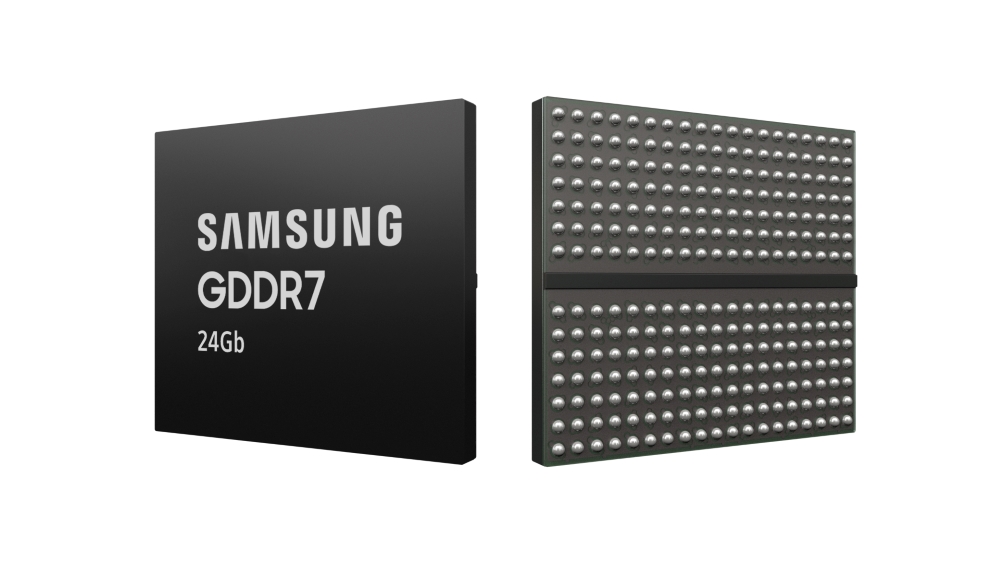
Samsung has just introduced their groundbreaking GDDR7 VRAM modules, featuring an impressive capacity of up to 24 Gb per module with configurations of 3 GB each. These cutting-edge modules promise remarkable speeds of up to 42.5 Gbps, setting a new standard for future GPUs anticipated to hit the market in 2025.
Rumors have been circulating about Nvidia’s potential launch of a 24 GB version of the GeForce RTX 5080, powered by the GB503 GPU complete with a memory interface of 256 bits—necessitating the use of 3 GB VRAM modules. Samsung’s latest innovation could mean this new generation of graphics cards might arrive sooner than previously expected.
Traditionally, consumer graphics cards have maxed out at 2 GB modules, but the shift to 3 GB modules marks an exciting evolution for OEMs. This leap allows for the development of 128-bit GPUs boasting up to 12 GB of VRAM, which is bound to be an attractive option for Nvidia’s next line of laptop graphics.
Samsung’s new GDDR7 modules aren’t just about speed; they are also about efficiency. According to Samsung, these modules are 30% more power-efficient than their GDDR6 predecessors, thanks to the advanced 5th-generation 10 nm manufacturing process used in their production.
The tech world is set to see devices with these 24 Gb GDDR7 modules undergo validation this year, with their market debut anticipated in 2025. While these modules are expected to power gaming GPUs boasting 24 GB or 12 GB of VRAM, it’s projected that they will find even greater application in AI-focused products from both Nvidia and AMD.
This development represents a significant breakthrough in VRAM technology, promising not only to enhance gaming experiences but also to drive forward innovations in AI and machine learning, opening up new possibilities and capabilities across various tech landscapes.