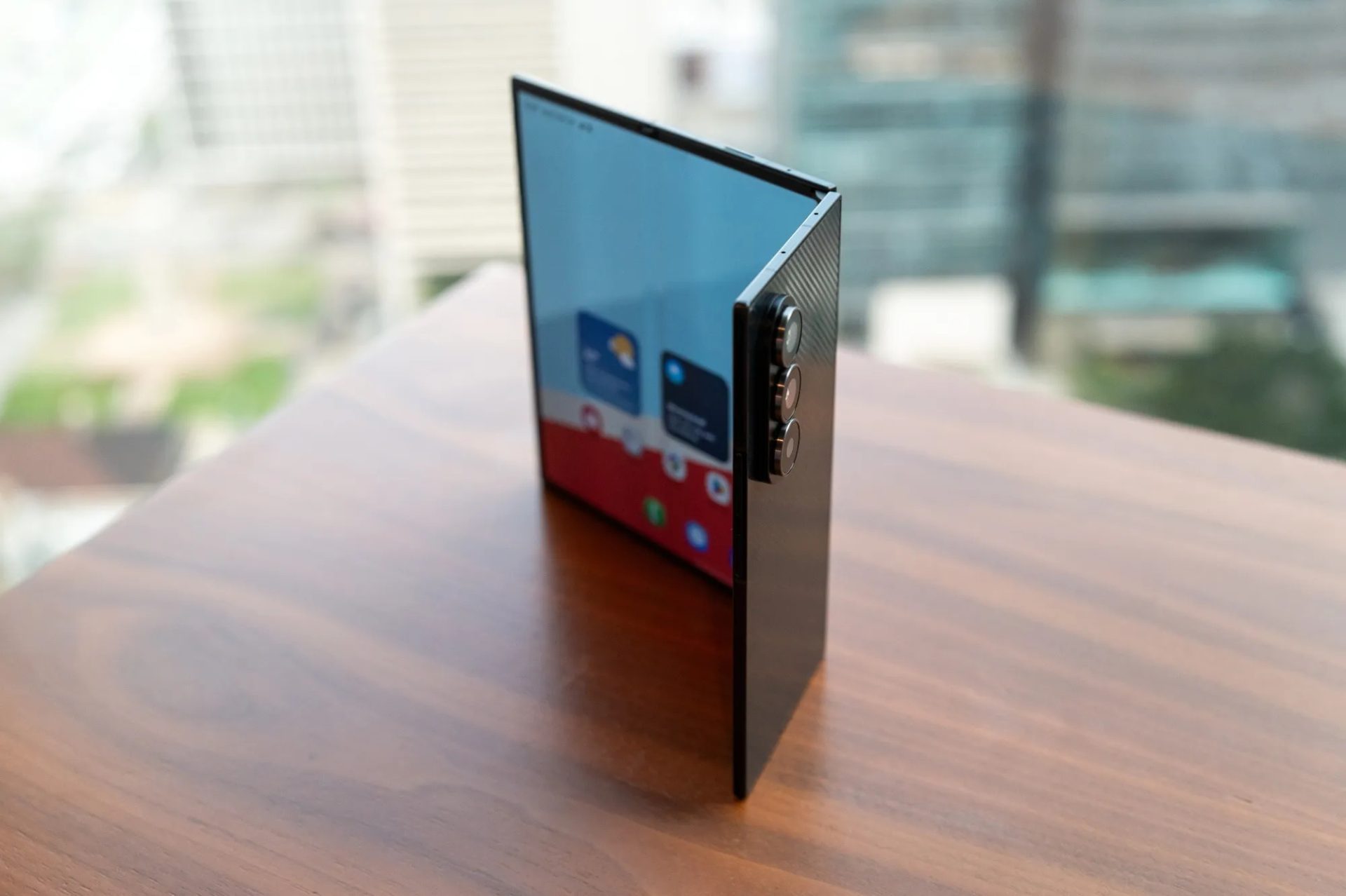
Rumors around Samsung’s triple-fold phone lineup are heating up again. After ongoing chatter that Samsung stopped making the first Galaxy Z TriFold just three months after it launched, a new leak suggests the company is already moving forward with a successor. The early word is that the Galaxy Z TriFold 2 concept has been approved internally, with a potential release window targeted for mid-2027.
A more refined Galaxy Z TriFold 2 could arrive in 2027
According to tipster Yeux1122, Samsung has signed off on a redesigned hinge for the Galaxy Z TriFold 2. The hinge is said to be more refined, ultra-thin, and lightweight—an important step for any triple-folding phone, where durability and thickness can make or break the user experience. The same source claims Samsung is also trying to reduce the overall thickness of the next-generation device, signaling a push toward a sleeker, more practical design than earlier attempts.
If this information holds up, Samsung’s strategy appears to be focused on improving the core engineering of triple-fold foldables before attempting a wider or longer production run.
Another Samsung foldable may use a sliding, extendable display
The leak also mentions a separate foldable device in development featuring an extendable display driven by a mechanical sliding mechanism. This suggests Samsung is exploring alternatives to multi-fold hinges—possibly to achieve a larger screen without adding extra folds or increasing bulk. The reported launch timing for this sliding-display phone is late 2027 or early 2028.
Why the original Galaxy Z TriFold may have ended production so quickly
Separate reports have claimed Samsung halted production of the original Galaxy Z TriFold only three months after launch. While it’s not unusual for experimental devices to have limited production runs, three months is extremely short and has fueled speculation about deeper issues than normal market economics.
One explanation being discussed is resource prioritization. If the device delivered slim margins—or none at all—Samsung may have decided it could no longer justify allocating key components such as memory and application processors to a niche product, especially under tighter internal cost controls.
Samsung Mobile reportedly tightening costs amid margin pressure
The same broader context includes claims that Samsung Mobile is under significant pressure to improve profitability. Reports describe internal cost-cutting moves such as restricting business class travel for many executives on shorter flights and encouraging voluntary retirements, with an aim to reduce overhead substantially.
In another alleged cost-saving step, Samsung Mobile is said to be sourcing around 15 million lower-cost OLED panels—intended mainly for the Galaxy S26 FE and Galaxy A57—from China Star Optoelectronics Technology (CSOT) rather than relying solely on Samsung Display.
What this could mean for Samsung’s foldable future
If Samsung truly is preparing the Galaxy Z TriFold 2 for a mid-2027 debut, it suggests the company hasn’t abandoned the triple-fold idea—it may simply be regrouping. A thinner build, a lighter and more advanced hinge, and experiments with sliding-display technology all point to Samsung continuing to refine what the next era of foldables could look like, even as it navigates higher costs and tougher margins.