Samsung’s next wave of smartphone innovation could go far beyond foldables. The company is reportedly exploring several futuristic display technologies, including a rollable Galaxy Z Roll smartphone, a health-focused OLED screen that can measure biometrics, and a holographic display capable of adding 3D-style depth to supported content.
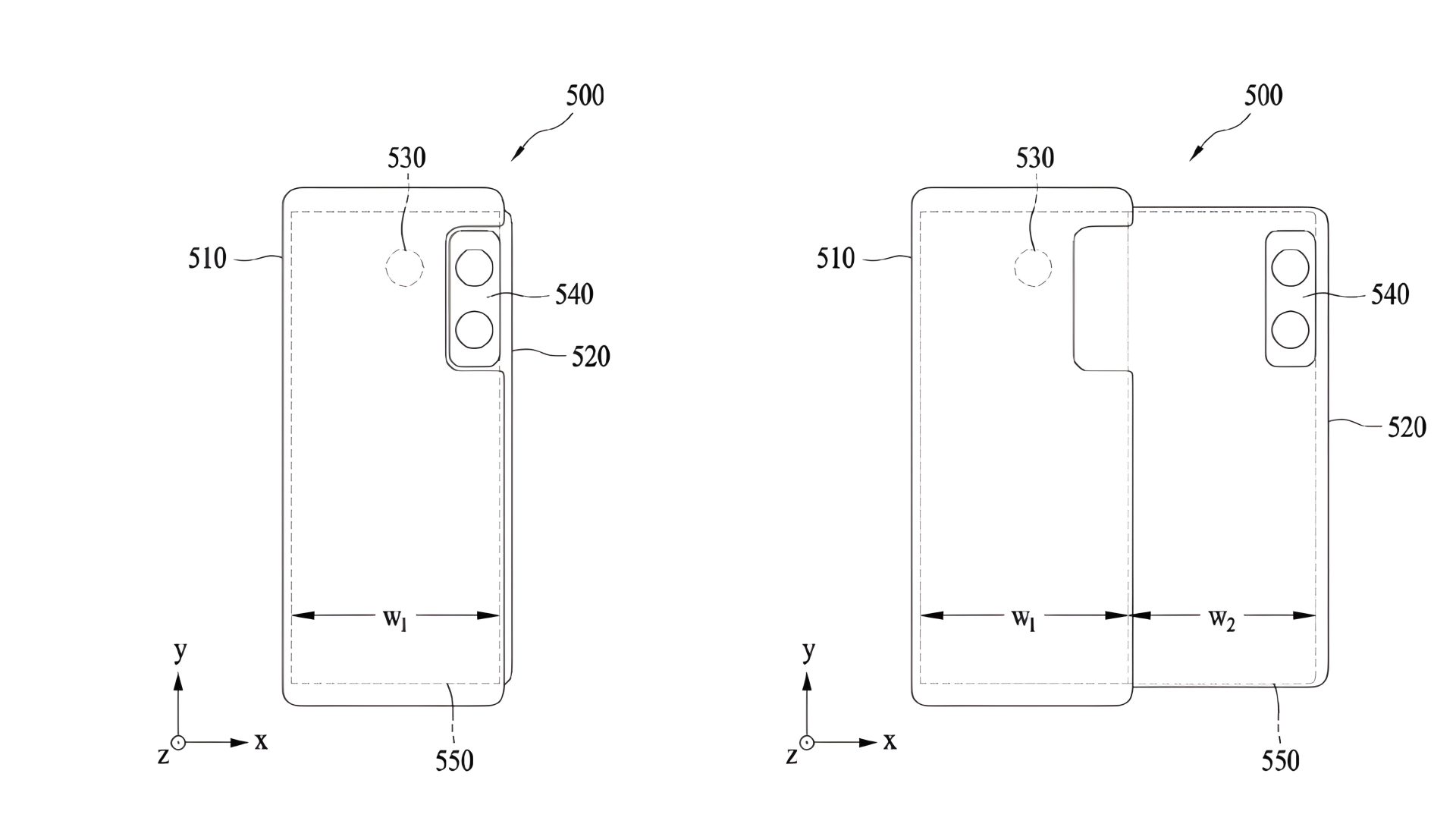
A newly surfaced Samsung patent points to a rollable smartphone design that may arrive under the Galaxy Z Roll name. Unlike the company’s current Galaxy Z Fold and Galaxy Z Flip devices, this concept uses a lateral rollable display that expands outward from the side of the phone.
The patent describes a handset with a punch-hole selfie camera on the front and a triple-camera system on the back. What makes the design especially interesting is the placement of the rear cameras. The camera module appears to sit within the section of the device that rolls outward, creating a distinctive rear profile when the screen is extended.
When the Galaxy Z Roll is fully opened, the vertically aligned rear camera setup fits into a dedicated cutout in the frame. This suggests Samsung is thinking carefully about how to keep the phone practical and visually clean, even with a moving display mechanism.
The idea of a rollable Samsung phone is not entirely surprising. The company recently showed off its Slidable Flex Duet display, which can expand from 8.1 inches to 12.4 inches. That puts it close to tablet-sized territory, showing how rollable and slidable screens could eventually give users a compact phone that transforms into a much larger device for watching videos, multitasking, gaming, or productivity.
Beyond rollable smartphones, Samsung is also working on display technology that could turn future phones into advanced health-monitoring devices.
At a recent display industry event, Samsung demonstrated its Sensor OLED technology. This new screen integrates organic photodiode pixels directly into the same display layer as the red, green, and blue pixels. In simple terms, the display itself can help measure health data using emitted light.
Samsung says this technology could support biometric readings such as heart rate and blood pressure while still offering a sharp 500 PPI pixel density. The company showcased the technology in a 6.8-inch smartphone-sized panel, which strongly suggests it could eventually appear in a future Galaxy device.
If this technology reaches commercial smartphones, it could reduce the need for separate sensors and make health tracking more seamless. Instead of relying only on a smartwatch or dedicated wearable, users may one day be able to place a finger on the phone screen to check certain health metrics.
Samsung is also reportedly developing a holographic display known as MH1 or H1. This display is said to use a nano-structured holographic layer built into the screen, allowing it to create 3D-like depth effects without requiring traditional 3D glasses.
The technology may also use eye-tracking and diffractive beam-steering to improve the holographic effect. That means the display could adjust what the viewer sees based on eye position, making depth effects appear more realistic and natural.
One of the most intriguing details is a patented algorithm that could let users tilt their phone to look around objects in a video. If implemented successfully, this could create a more immersive viewing experience for photos, videos, gaming, augmented reality features, and interactive content.
For regular 2D content, the holographic display is expected to maintain full 4K quality. The depth effect would reportedly activate only when supported content is being displayed, which could help preserve image quality and battery life during everyday use.
Taken together, these developments show that Samsung is not slowing down in display innovation. The Galaxy Z Roll could represent the next major evolution after foldable phones, while Sensor OLED may bring more advanced health tracking directly to smartphone screens. Meanwhile, holographic display technology could open the door to a new kind of mobile entertainment and interaction.
There is still no confirmed launch date for the Galaxy Z Roll, Sensor OLED smartphones, or Samsung’s holographic display devices. However, the patents and public demonstrations suggest that Samsung is actively preparing for a future where smartphones are more flexible, more immersive, and more capable than ever before.