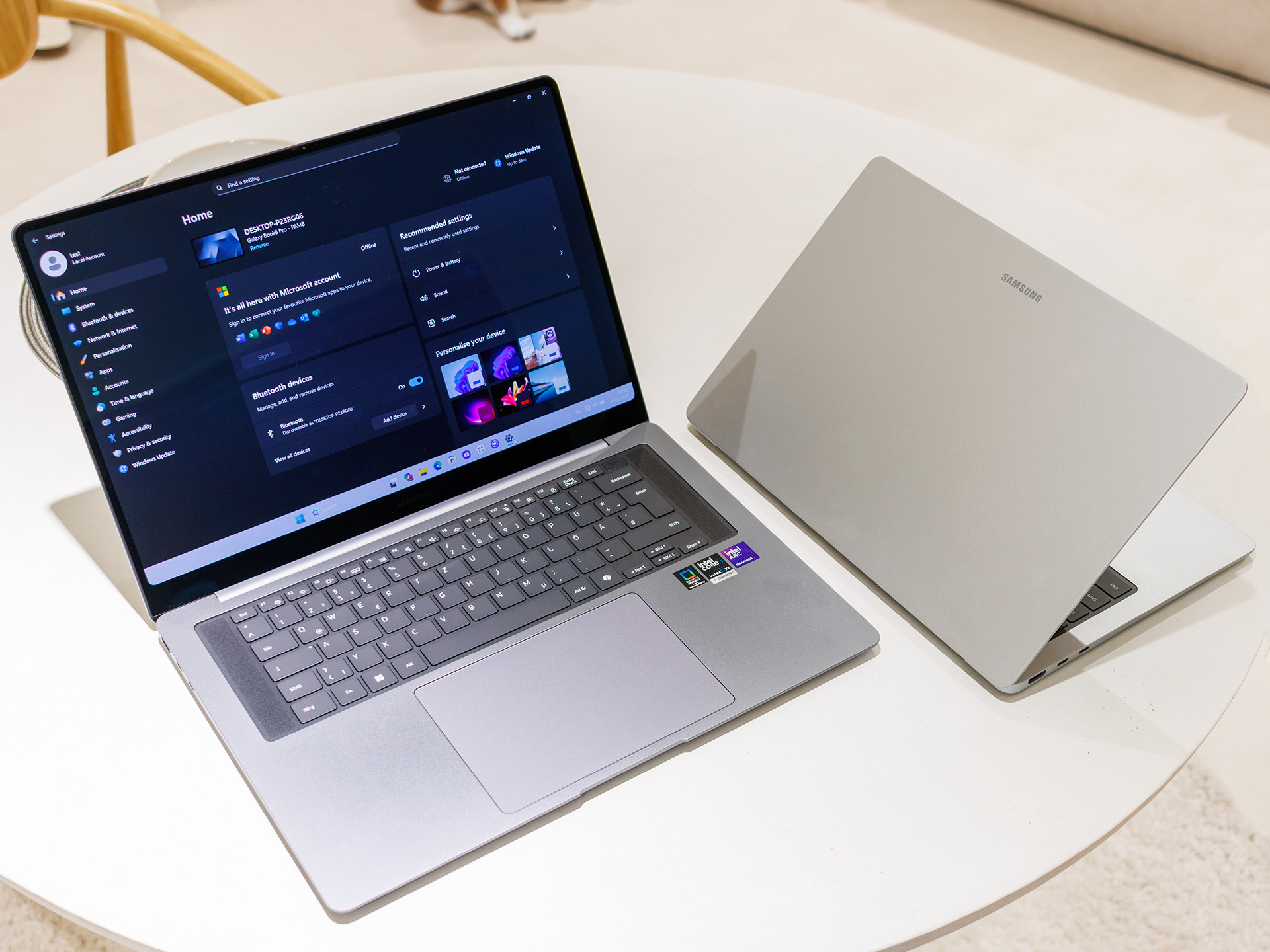
Samsung is expanding its premium laptop lineup with the Galaxy Book6 series, and the standout model is clearly the Galaxy Book6 Ultra. Positioned as the most powerful option in the family, it’s built to appeal to creators, power users, and anyone who wants a big-screen Windows laptop with high-end performance and a display designed for media and productivity.
At the top end, the Galaxy Book6 Ultra can be configured with up to an Intel Core Ultra X9 processor from Intel’s third Core Ultra generation (Panther Lake). However, buyers in Germany won’t get the absolute maximum configuration at launch. The highest option available there initially is “only” the Core Ultra X7, which still targets premium performance but stops short of the very top SKU.
On the graphics side, Samsung leaves room for different types of users: configurations include Intel Arc B390 graphics, as well as NVIDIA GeForce RTX 5060 or RTX 5070 options. That range suggests Samsung is aiming to cover both efficient everyday performance and more GPU-heavy tasks like creative work and gaming.
Despite being a thin-and-light style machine on paper, the Galaxy Book6 Ultra is not ultra-light. The chassis is now 15.4 mm thick, and weight depends on the configuration: 1.79 kg or 1.89 kg. That makes it portable enough for a 16-inch laptop, but still something you’ll notice in a backpack—especially compared to lighter productivity-focused competitors.
One of the biggest draws is the 16-inch Dynamic AMOLED 2X touchscreen. It runs at 2,880 x 1,800 resolution and supports an adaptive refresh rate from 30 Hz to 120 Hz, which helps with smoother scrolling and animation while potentially saving power when high refresh isn’t needed. Samsung lists peak brightness up to 1,000 nits in HDR mode and 500 nits in SDR mode, which should translate into strong real-world visibility and punchy HDR playback. The panel is protected by Gorilla Glass 5 and includes an anti-reflective DXC coating to cut glare. A quick measurement using an Opple Lightmaster also indicated a PWM frequency of 240 Hz.
Cooling is another focus this generation. Samsung says an enlarged vapor chamber improves cooling efficiency by around 35 percent. In an early stress test using FurMark 2 at 1,440p, the fans became clearly audible under load but didn’t come across as excessively loud. A faint whining noise was also noticed from the test device, which may matter to users who are sensitive to high-frequency sounds.
For ports and expansion, the Galaxy Book6 Ultra includes two Thunderbolt 4 ports, one USB-A port, HDMI 2.1, and an SD card slot. The SD slot supports UHS-II speeds up to 312 MB/s (with UHS-I up to 104 MB/s), but it does not support SD Express. Power comes from an approximately 80.2 Wh battery.
Memory and storage options are aimed at mainstream premium buyers rather than extreme workstation configurations. The Galaxy Book6 Ultra is available with up to 32 GB of RAM and up to 2 TB of SSD storage. A 64 GB RAM version is not currently planned for Germany, with high memory prices cited as the reason. Color choices are simple: the model is offered exclusively in gray.
Audio is a strong point, at least from first impressions. The laptop features a six-speaker setup with Dolby Atmos support, and early listening impressions describe the sound as rich and wide—an important upgrade for people who watch movies, edit video, or simply want better built-in speakers without relying on headphones.
Overall, the Galaxy Book6 Ultra shapes up as a high-quality, powerful 16-inch notebook with a standout AMOLED touchscreen, modern connectivity, and serious performance options. The trade-offs are clear: it’s on the heavier side for its class, and depending on the specs you choose, it can get very expensive.