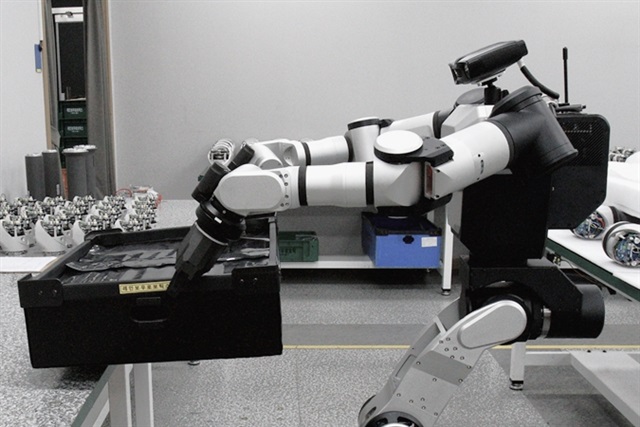
Samsung Electronics is stepping up its robotics ambitions with the launch of a dedicated physical AI research lab focused on humanoid robot control and manipulation. The new lab signals a deeper commitment to building robots that can move, interact, and perform tasks more naturally in real-world environments.
The research center will focus on one of the biggest challenges in humanoid robotics: giving machines the ability to understand physical spaces and respond with precise, useful actions. While robot hardware has advanced quickly, creating software that allows humanoid robots to balance, grasp objects, navigate homes or workplaces, and safely interact with people remains a major hurdle.
By investing in physical AI, Samsung is moving beyond robotics as a hardware business and into the intelligence systems that make robots practical. Physical AI refers to artificial intelligence designed for machines that operate in the real world, combining perception, decision-making, motion control, and object manipulation. For humanoid robots, this technology is essential because they must handle unpredictable environments rather than simple, pre-programmed tasks.
Samsung has already shown growing interest in robotics through previous investments and internal development efforts. The creation of a dedicated lab suggests the company wants to accelerate its work in next-generation automation, service robots, and humanoid platforms. These technologies could eventually support industries such as manufacturing, logistics, healthcare, home assistance, and smart living.
The timing is also significant. Global competition in humanoid robotics is intensifying as major technology companies race to develop machines that can assist with labor shortages, improve productivity, and take on repetitive or physically demanding work. Samsung’s experience in semiconductors, sensors, displays, artificial intelligence, and consumer electronics could give it a strong foundation for building advanced robotic systems.
Humanoid robots require a complex combination of technologies, including cameras, sensors, actuators, AI models, batteries, and high-speed processors. Samsung already has expertise in many of these areas, which may help the company create more integrated and capable robotic platforms over time.
The new physical AI lab is expected to strengthen Samsung’s ability to develop smarter robot control systems. Instead of only building robots that can move, the goal is to create machines that can adapt, learn, and perform useful actions with human-like coordination. This includes tasks such as picking up objects, opening doors, responding to obstacles, and operating safely around people.
Samsung’s move reflects a broader shift in the tech industry. Robotics is no longer viewed only as a niche engineering field. It is becoming a major part of the future of artificial intelligence, automation, and connected devices. As AI systems become more powerful, companies are looking for ways to bring that intelligence into physical machines that can assist in daily life and industrial settings.
Although Samsung has not revealed detailed product plans tied to the lab, the launch highlights its long-term interest in humanoid robotics. The company appears to be positioning itself for a future where intelligent robots become part of homes, workplaces, and public spaces.
With its new physical AI research lab, Samsung is making it clear that robotics will play an important role in its next wave of innovation. The focus on humanoid control and manipulation could help the company develop robots that are not only advanced in design, but also capable of performing meaningful tasks in the real world.


