Ryzen 7 7800X3D Reportedly Burns Out on MSI X870 Motherboard Despite Updated BIOS Safeguards
A troubling new Ryzen 7 7800X3D failure has surfaced online, raising fresh questions about AM5 platform reliability, motherboard voltage behavior, and the long-term safety of AMD’s 3D V-Cache processors.
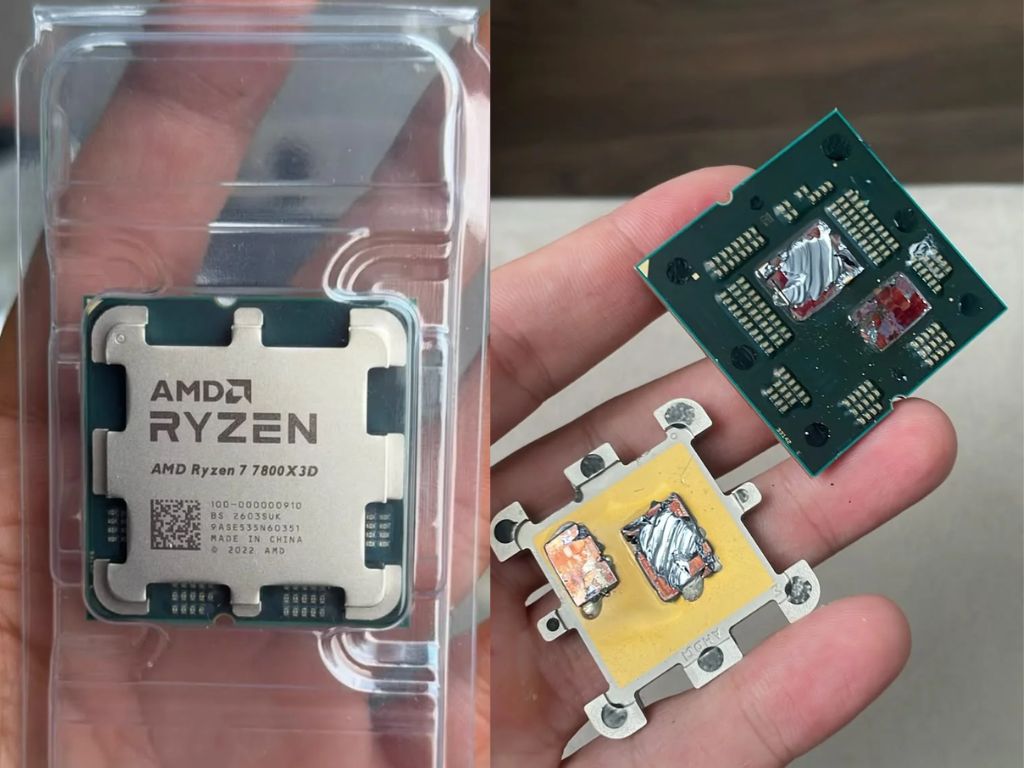
According to a report shared by a PC enthusiast on Reddit’s r/pcmasterrace community, a three-month-old AMD Ryzen 7 7800X3D suddenly died after regular gaming use. The processor reportedly showed visible burn marks and physical swelling, while the MSI X870-P WIFI motherboard it was installed in was also severely damaged.
What makes this case especially concerning is that the system was not manually overclocked. The user says the only BIOS change made was enabling EXPO for a Lexar DDR5-6000 memory kit. CPU voltages, power limits, and other settings were allegedly left at their default values.
The system was reportedly working normally before the failure. CPU temperatures appeared fine, with no obvious warning signs before the PC suddenly shut down. Afterward, the machine entered a boot loop and would no longer function properly.
This incident sounds uncomfortably familiar to longtime AM5 users. In 2023, several Ryzen 7000-series processors, especially X3D models, were reported to have burned out due to excessive SoC voltage. At the time, AMD responded with firmware updates that capped SoC voltage at 1.30V and adjusted thermal protection behavior through AGESA updates.
Those changes were designed to prevent motherboard firmware from pushing unsafe voltage levels into Ryzen CPUs. The update also tuned protection features such as PROCHOT Control and PROCHOT Deassertion Ramp Time, which help manage thermal safety and emergency throttling behavior.
However, this newer report is harder to explain. The MSI X870 platform launched after those protections were already known, and modern X870 motherboards should include the relevant safeguards from day one. Current AGESA versions are far newer than the 2023 firmware that originally addressed the issue.
That makes the failure unusual. If the board was running updated firmware and default settings, the cause may not be as straightforward as the original 2023 burnout cases.
There are a few possible explanations, though none have been confirmed. One possibility is that a localized voltage or heat issue developed in a way that was not accurately reflected by normal CPU temperature sensors. In other words, the cooler may have kept the reported temperature looking normal while a small area of the chip package experienced damaging heat.
Another possibility is a brief voltage spike or transient event that happened too quickly for the motherboard firmware or CPU protection mechanisms to catch in time. Such events are difficult to diagnose without detailed electrical testing.
The situation is further complicated by one important detail: the CPU was reportedly delidded before the RMA process was completed. Delidding involves removing the processor’s integrated heat spreader, usually to improve cooling performance or inspect the chip. While enthusiasts sometimes do this, it can void warranty coverage or make an RMA much more difficult.
The owner says an RMA is currently in progress, but it remains unclear whether AMD will approve a replacement or refund given the physical modification to the chip.
For Ryzen 7 7800X3D owners, the takeaway is simple: keep your motherboard BIOS fully updated, especially on AM5 systems running X3D processors. Even if this case turns out to involve user error, a rare hardware fault, or damage caused during delidding, it is still a reminder that BIOS updates are not optional for modern gaming PCs.
The Ryzen 7 7800X3D remains one of the best gaming CPUs available thanks to its strong performance and 3D V-Cache design, but AM5 users should stay cautious. Enable EXPO only after confirming that the motherboard is running a stable, recent BIOS, and keep an eye on reported SoC voltage, CPU temperatures, and system stability.
At this stage, there is no evidence that this is a widespread new issue affecting MSI X870 motherboards or Ryzen 7 7800X3D processors. Still, sporadic reports like this are enough to make PC builders pay attention, especially when the damage appears similar to the AM5 burnout failures that AMD previously worked to fix.