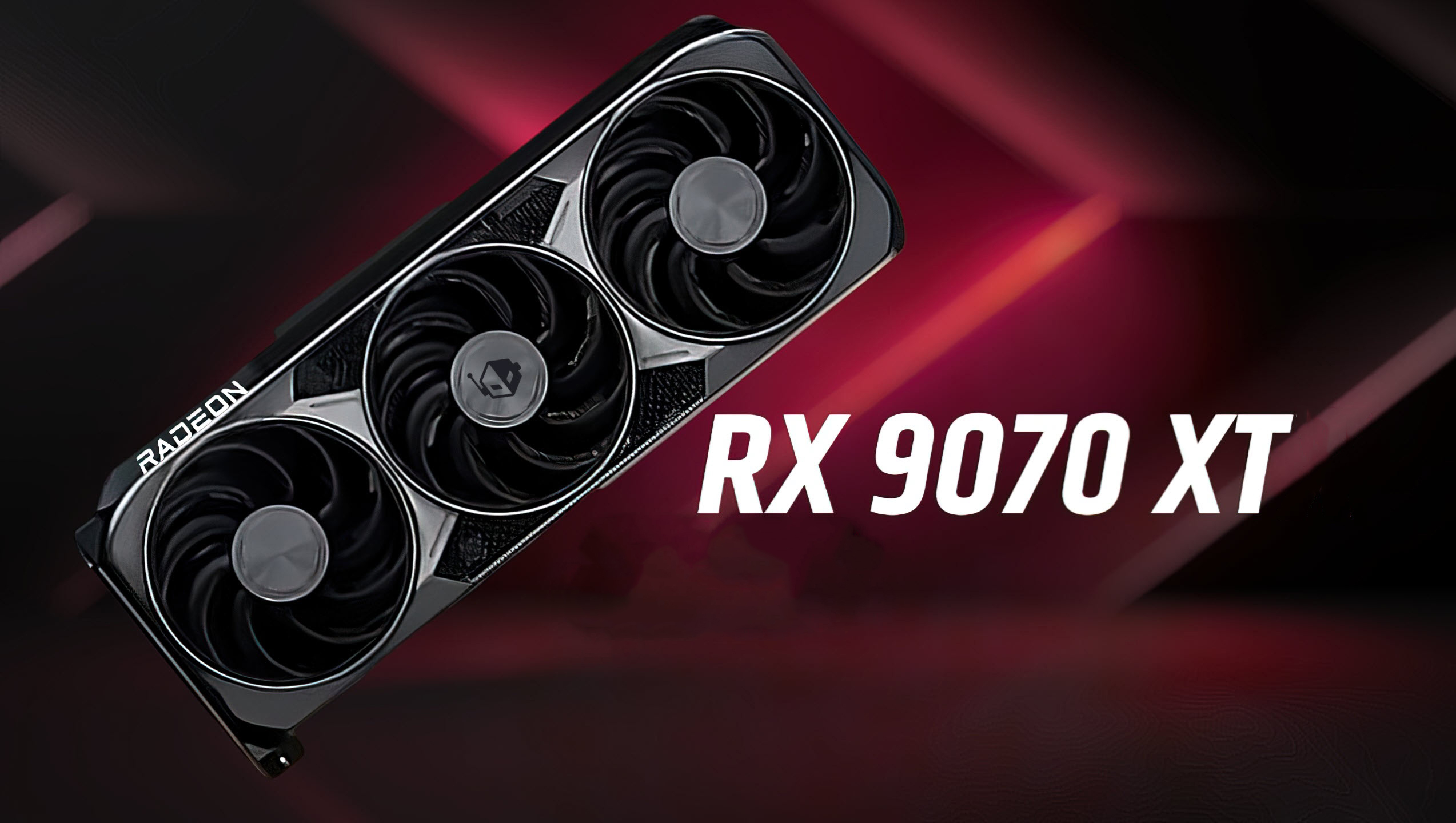
A major milestone just hit the German graphics card market: weekly GPU sales at major retailer Mindfactory finally pushed past the 1,000-unit mark for a single model. But while that sounds like a win for the broader market, the latest numbers suggest NVIDIA’s new RTX 50-series still isn’t capturing German buyers the way many expected. Instead, AMD continues to dominate attention, unit sales, and overall market share.
The clear standout is AMD’s Radeon RX 9070 XT. It didn’t just lead the charts—it surged to around 1,015 units sold in a single week. That’s a notable jump compared to recent weeks when it fell just short of the 1,000-unit line. Even more striking: the RX 9070 XT on its own outperformed NVIDIA’s combined weekly GPU sales total, even after counting some older GeForce models and entry-level cards. NVIDIA reportedly moved about 940 units in total during the same period, while overall AMD GPU sales climbed close to 2,000 units for the week.
Behind the chart-topping RX 9070 XT, AMD’s Radeon RX 9060 XT remains the second-biggest seller, with the 16GB versions appearing to account for most of the demand. That continued appetite for higher VRAM configurations lines up well with what PC gamers and creators have been prioritizing recently—more memory headroom for modern titles, higher-res textures, and longer-term usability.
On the NVIDIA side, the GeForce RTX 5070 Ti is the strongest performer among RTX 50-series cards, selling around 240 units last week. The RTX 5080 takes second place within NVIDIA’s lineup at roughly 210 units, which is especially interesting given its current pricing in Germany, hovering around the 1,100–1,300 euro range. Meanwhile, the RTX 5060 Ti (notably the 16GB variants) also shows solid traction at about 160 units.
One of the more surprising shifts is the GeForce RTX 5070 slipping down the internal RTX 50-series ranking, despite being widely viewed as a value-friendly choice on paper. The numbers suggest buyers are either stretching their budgets upward to the RTX 5080 or targeting specific configurations like the 16GB RTX 5060 Ti instead of settling in the middle.
At the very top end, the GeForce RTX 5090 appears to be the slowest-moving of the RTX 50 family in this weekly snapshot, with only about 35 units sold. On AMD’s side, the Radeon RX 9070 also sits surprisingly low compared to its XT sibling, and even trails older RDNA 3 options like the Radeon RX 7600 and RX 7900 XTX. That likely comes down to pricing bands and positioning—those cards appeal to different budgets and use cases, and buyers may simply see clearer value in alternatives at each tier.
Intel’s Arc cards continue to play a smaller role in this market segment at Mindfactory, and the latest sales show older Arc models outperforming newer ones in the weekly tally, suggesting momentum remains limited.
When everything is added up, AMD is currently the top GPU seller at Mindfactory by a wide margin, controlling roughly 66% of unit sales. However, NVIDIA narrows the gap when revenue is considered, thanks to significantly higher average selling prices. The reported average selling price sits around 733 euros for NVIDIA GPUs versus about 527 euros for AMD, highlighting the impact of premium GeForce pricing—even when overall unit sales lag behind.
The takeaway from this week’s German GPU sales is hard to miss: AMD’s RX 9070 XT is the card shoppers are snapping up in volume, the RX 9060 XT continues to draw attention (especially in 16GB form), and NVIDIA’s RTX 50-series—while present—still isn’t producing the kind of runaway demand you might expect from a fresh generation.