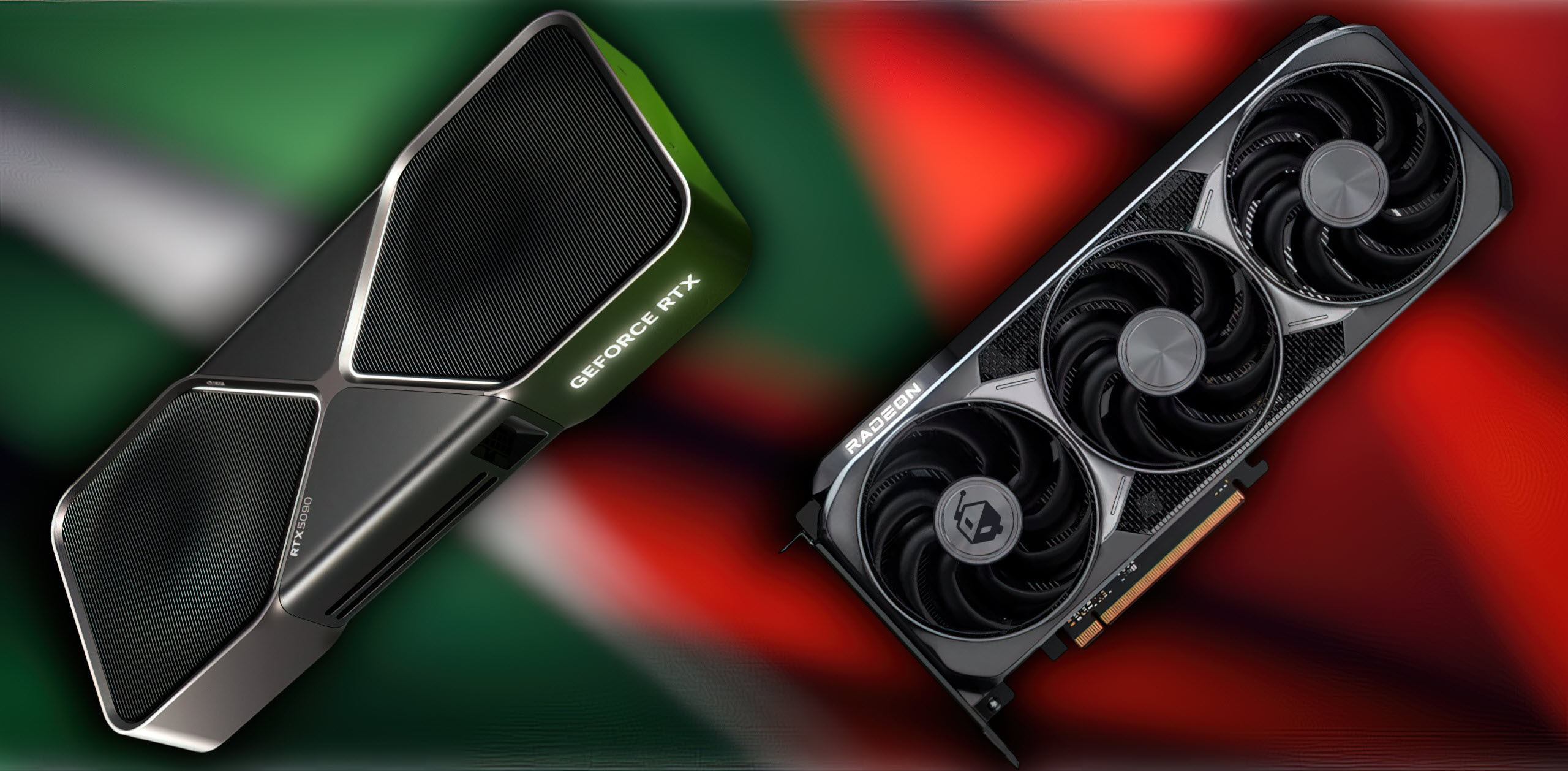
NVIDIA and AMD GPU prices could be headed for a major shake-up in early 2026, and if the latest industry chatter is accurate, gamers may be looking at the steepest graphics card pricing the DIY PC market has ever seen. The biggest headline is the projected cost of NVIDIA’s next flagship: the GeForce RTX 5090 is rumored to climb as high as $5,000 in the months following the start of the increases.
The expectation of higher GPU prices has been circulating for a while, with multiple reports pointing to the first quarter of 2026 as the turning point. Now, industry sources cited by a Korean outlet suggest the driver isn’t just general demand, but rising memory costs—specifically DRAM—pushing manufacturing expenses higher across both consumer graphics cards and data center GPUs.
Timing-wise, AMD is reportedly preparing to begin raising prices as early as January 2026, with NVIDIA following in February 2026. Rather than a single overnight jump, the changes are expected to roll out in steps, with gradual increases month after month. If that happens, pricing could become increasingly confusing across retailers as each wave of stock reflects a new cost baseline.
These increases are expected to affect today’s current-generation lineups, including NVIDIA’s GeForce RTX 50 series (Blackwell) and AMD’s Radeon RX 9000 series (RDNA 4). That’s a big deal because, until recently, many GPUs were finally trending below MSRP thanks to seasonal promotions and holiday discounts. If memory costs continue climbing and vendors adjust pricing as suggested, those “good deal” windows may close quickly.
The RTX 5090 rumor is particularly jarring. The card reportedly launched around $2,000 at MSRP, and a rise to $5,000 would represent roughly a 2.5x increase. Even if the upper-end estimate ends up being a worst-case scenario, it highlights how sensitive high-end GPU pricing has become to component costs and supply channel pressure.
One industry insider claims memory alone has pushed GPU manufacturing costs up dramatically, with the memory portion allegedly contributing to an 80% cost overage. While the exact figure is difficult to verify from the outside, the broader point tracks with what many PC builders have seen before: when memory pricing moves sharply, it can ripple through the entire graphics card market.
At the same time, there’s renewed discussion around graphics card availability—especially for more mainstream models. Some talk suggests NVIDIA is cutting back production of certain GeForce RTX 5060 Ti and RTX 5070 GPUs, but other claims argue the situation is more complicated than simple “reduced manufacturing.” Instead, supply may be getting pulled into alternative channels, with significant volumes of consumer GPUs being purchased in parts of Asia for customized AI-focused deployments.
Reports describe large third-party sellers moving thousands of blower-style GPUs—covering everything from the RTX 5060 Ti and RTX 5070 to higher tiers like the RTX 5070 Ti and RTX 5080—aimed at non-gaming workloads. Blower designs are often preferred for dense, multi-GPU environments because they can exhaust heat more directly, which makes them attractive for specialized builds and repurposed compute setups.
It doesn’t stop with standard models, either. There are also claims that modified “AI” variants have appeared, including cards marketed with expanded VRAM—such as alleged 32GB versions connected to higher-end GPUs like the RTX 4080 and RTX 5080—positioned specifically toward AI and compute buyers. Whether these are niche modifications or a growing parallel market, the net effect is the same for gamers: more competition for supply, more price volatility, and fewer straightforward upgrades at reasonable prices.
If these trends continue into 2026—rising DRAM costs, rolling vendor price increases, and consumer GPUs increasingly diverted into AI-adjacent markets—PC gamers may face a frustrating year. For anyone planning a new build or a long-awaited GPU upgrade, the smartest play may be to watch pricing closely through late 2025, track real retail trends (not just MSRPs), and be ready to act quickly when genuine value appears before the next round of increases takes hold.