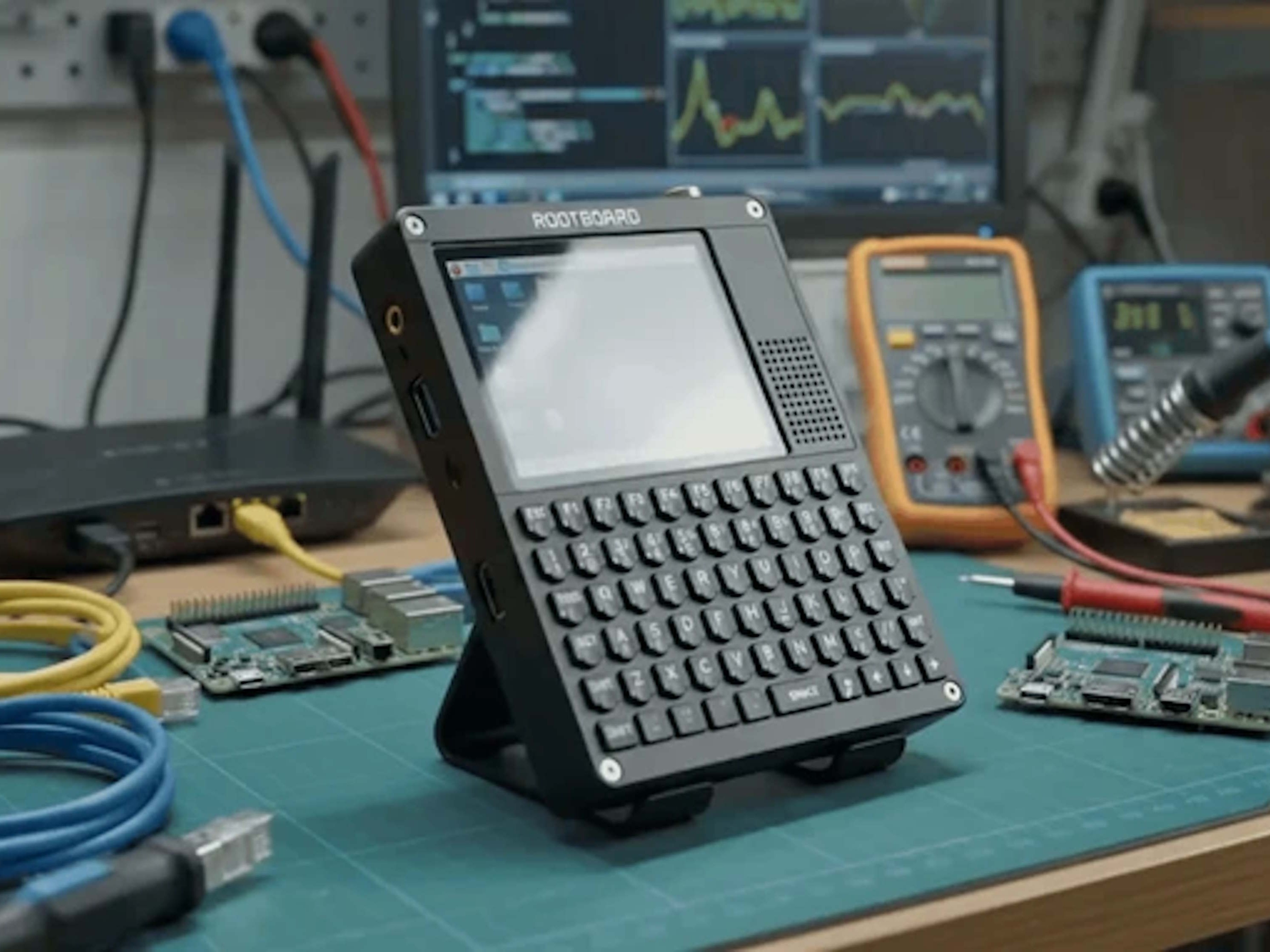
RootBoard turns the Raspberry Pi Zero into a pocket-friendly mini laptop
RootBoard is a new Raspberry Pi-based handheld computer designed for users who want a compact, portable, and open device for lightweight computing, coding, writing, and DIY projects. Built around the Raspberry Pi Zero family, it combines a small color display, integrated keyboard, built-in battery, and speakers into a mobile form factor that feels closer to a mini laptop than a typical single-board computer setup.
The device is currently seeking support through a crowdfunding campaign. Early supporters can reserve a unit for around $115, though that price does not include shipping or the Raspberry Pi board itself. As with any crowdfunded hardware product, buyers should keep in mind that delays, specification changes, or production challenges are possible. The developer currently expects deliveries to begin in November 2026.
RootBoard is designed to work with the Raspberry Pi Zero 2 W and the older Raspberry Pi Zero W. These boards are affordable and energy-efficient, but they are not as powerful as larger Raspberry Pi models. That means the device is best suited for lightweight tasks such as terminal work, basic programming, text editing, simple web use, retro-style projects, and portable Linux experimentation rather than demanding desktop workloads.
One of the main attractions of RootBoard is its built-in 70-key keyboard. This gives it a major advantage over many small DIY handheld systems that rely on touch input or external accessories. While it is unlikely to offer the same feel as a premium mechanical keyboard, the layout should make longer typing sessions more practical, especially for coding, note-taking, or command-line use.
The handheld also includes a 3.5-inch color display. However, detailed screen specifications have not yet been confirmed, so important details such as resolution, brightness, panel type, and viewing quality remain unknown. Because the project is still in development, the final hardware may differ from the current design.
For portable use, RootBoard features an integrated battery, allowing it to operate away from a desk or power outlet. Built-in speakers are also included, enabling direct audio playback without requiring external hardware. These additions make the device feel more complete as a standalone Raspberry Pi mini computer.
RootBoard could appeal to makers, students, Linux hobbyists, Raspberry Pi fans, and anyone interested in compact open hardware. Its strongest selling point is convenience: instead of connecting a Raspberry Pi to a separate screen, keyboard, power bank, and audio device, RootBoard packages everything into one handheld system.
Still, potential buyers should be cautious. The required Raspberry Pi is not included, the supported boards have limited performance, several technical specifications are still unclear, and the product has not yet reached final production. For users who understand those limitations, RootBoard could become an interesting portable Raspberry Pi computer with plenty of room for experimentation.