Ribbie Turns Live MLB Games Into Charming 8-Bit Pixel Art Broadcasts
Baseball already has plenty of stats, live trackers, fantasy tools, and play-by-play apps. But Ribbie offers something different: it transforms real-time Major League Baseball data into a retro 8-bit broadcast filled with animated pixel art, arcade-style visuals, and miniature ballparks that feel like they belong in a classic video game.
Created by Eric Brownrout, Ribbie is designed for fans who want to follow MLB games in a more visually enjoyable way. Traditional game trackers can be useful, but they often feel plain and purely functional. Ribbie takes the same kind of live baseball information and presents it through a playful pixel-art world that makes checking the score, watching a matchup, or tracking a favorite player feel far more entertaining.
The idea started when Brownrout generated a pixel-art image of Philadelphia Phillies slugger Kyle Schwarber for his fantasy baseball team logo. He liked the style so much that he began thinking about how the same aesthetic could be used for baseball data and live game visualization. After discovering MLB’s public StatsAPI, he realized it could be possible to recreate an entire baseball game in pixel form.
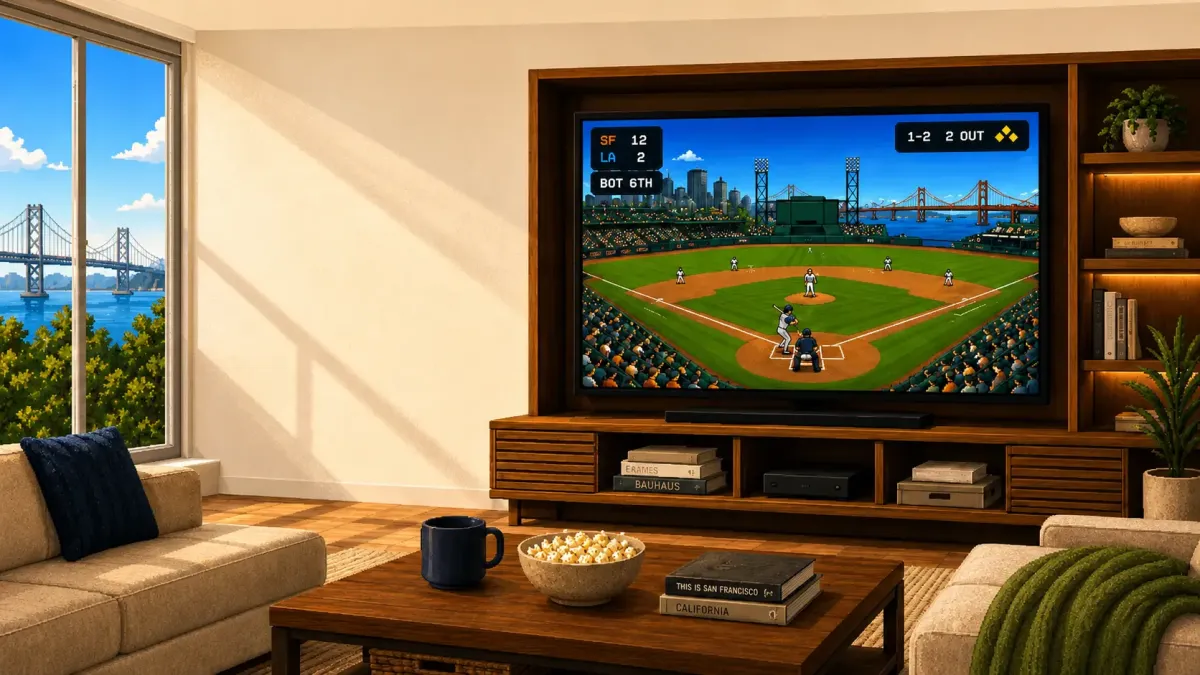
The result is Ribbie, a fan-made website that lets users step into a virtual pixel-art living room, browse live MLB games, and choose one to watch. The name is a playful nod to RBI, or runs batted in, one of baseball’s most recognizable stats.
Once a game is selected, Ribbie displays the action in a retro broadcast style. Users can view the game inside the pixel living room or zoom in for a more practical full-screen look at the action. The experience feels nostalgic, almost like watching baseball through the screen of an old-school console, but the data behind it is live and modern.
Unlike standard MLB game trackers, which usually focus on clean charts, base diagrams, and text updates, Ribbie emphasizes personality and atmosphere. Each stadium and player is represented with unique pixel-art visuals, giving every game its own look and charm. Even with the artistic presentation, the essentials are still easy to follow: the score, pitcher, batter, runners on base, and live play-by-play information are all visible.
Because Ribbie pulls data from MLB’s public API, it can deliver much of the same game information fans expect from mainstream live baseball trackers. The difference is in the presentation. Instead of simply reading that a player is at bat or that runners are on base, users see the game unfold in a tiny animated baseball world.
Brownrout used AI coding tools to speed up development and bring the project to life much faster than would have been possible on his own. He used one tool to help create the image and sprite-generation workflow and another to assist with web app development. Since he had never built a video game before, Ribbie became both a technical experiment and a creative passion project.
That sense of experimentation is part of what makes Ribbie stand out. It is not trying to replace a full live video broadcast or compete with official baseball platforms. Instead, it offers a fresh way to follow games casually, especially for fans who enjoy baseball statistics, fantasy baseball, retro gaming, or pixel art.
Ribbie has also added fantasy baseball support, allowing users to input their rosters and track which of their players are currently active in live games. This makes the site more useful for fantasy managers who want a quick and fun way to monitor their players without jumping between multiple box scores.
For Brownrout, one of the biggest appeals is the look of the miniature stadiums. He has described the pixel-art ballparks as deeply satisfying, comparing their charm to the appeal of cozy pixel-based games where small worlds feel alive in the palm of your hand. That same feeling carries into Ribbie, where a live MLB game becomes a tiny animated scene rather than a static data feed.
The project also arrives at a time when many internet products are built around ads, subscriptions, tracking, or aggressive monetization. Ribbie feels different because it is free, non-commercial, and clearly positioned as an unaffiliated fan project. It is built as a love letter to baseball rather than a business trying to control the fan experience.
There are still questions about how long fan-made sports projects like this can survive, especially when they use real-time data connected to major leagues and players. Brownrout has pointed to the fact that baseball statistics have historically been treated as factual information, which helps explain why fantasy baseball platforms and third-party stat tools have been able to exist. He also notes that the same public data source is widely used across fantasy sites, stats platforms, live discussion threads, and fan projects.
For now, Ribbie continues to grow as a side project. Brownrout, who also works in the AI software space, is still adding new features in his spare time. Upcoming improvements include more sound effects and fuller animations, making it easier for users to leave a game running in the background and follow along casually.
He has even been recording his own audio clips for calls like “Ball,” “Strike,” and “Out,” giving the project an even more personal, homemade feel. It is the kind of detail that shows Ribbie is not just another baseball tracker. It is a creative tribute to the sport, built by someone who clearly enjoys both the numbers and the magic of the game.
For MLB fans looking for a new way to follow live baseball, Ribbie offers something rare: real-time game data wrapped in nostalgic, colorful, 8-bit charm. It turns box scores and play-by-play updates into a tiny digital ballpark, making baseball feel a little more fun, a little more relaxed, and a lot more memorable.