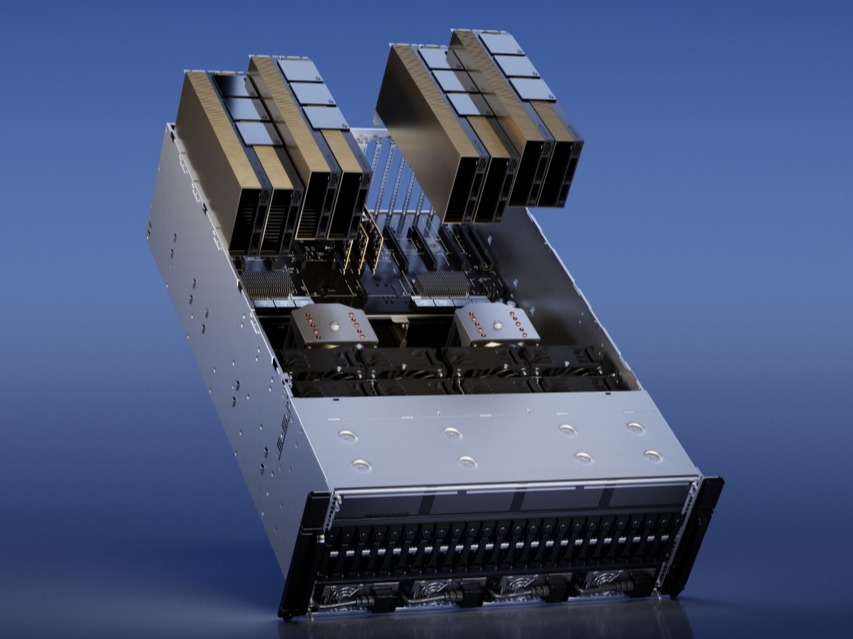
Nvidia is making a strategic push to regain traction in the Chinese market with its upcoming RTX 6000D graphics card. This ambitious effort involves shipping up to two million units by the end of 2025. Built on TSMC’s advanced 4 nm process, the RTX 6000D utilizes GDDR7 memory to deliver impressive bidirectional bandwidth of approximately 1,100 GB/s, all while complying with U.S. export regulations.
The company’s CEO, Jensen Huang, demonstrated Nvidia’s commitment by visiting China for the third time this year on July 14, where he introduced the RTX 6000D and other compliant GPUs to key partners. This visit underscores Nvidia’s determination to reclaim a market that once contributed over 13% to its annual revenue.
Nvidia has faced significant obstacles due to export restrictions dating back to 2022, which impacted products like the A100 and H100, as well as their successors. These limitations have resulted in substantial financial setbacks, including $4.5 billion in inventory impairments and a $2.5 billion loss in unrealized revenue.
Despite the challenges, Nvidia remains optimistic. Chinese competitors such as Huawei and Cambricon continue to grapple with production constraints, high costs, bandwidth issues, and a software disadvantage compared to Nvidia’s CUDA. This situation positions the RTX 6000D favorably if Nvidia manages to secure sufficient GDDR7 supplies.
A successful launch would boost TSMC’s 4 nm production and potentially restore a significant portion of Nvidia’s China revenue, which has dropped to below 5% due to recent bans. Ultimately, the RTX 6000D represents a critical lifeline for Nvidia, testing the boundaries of U.S. regulatory allowances for downgraded AI hardware.