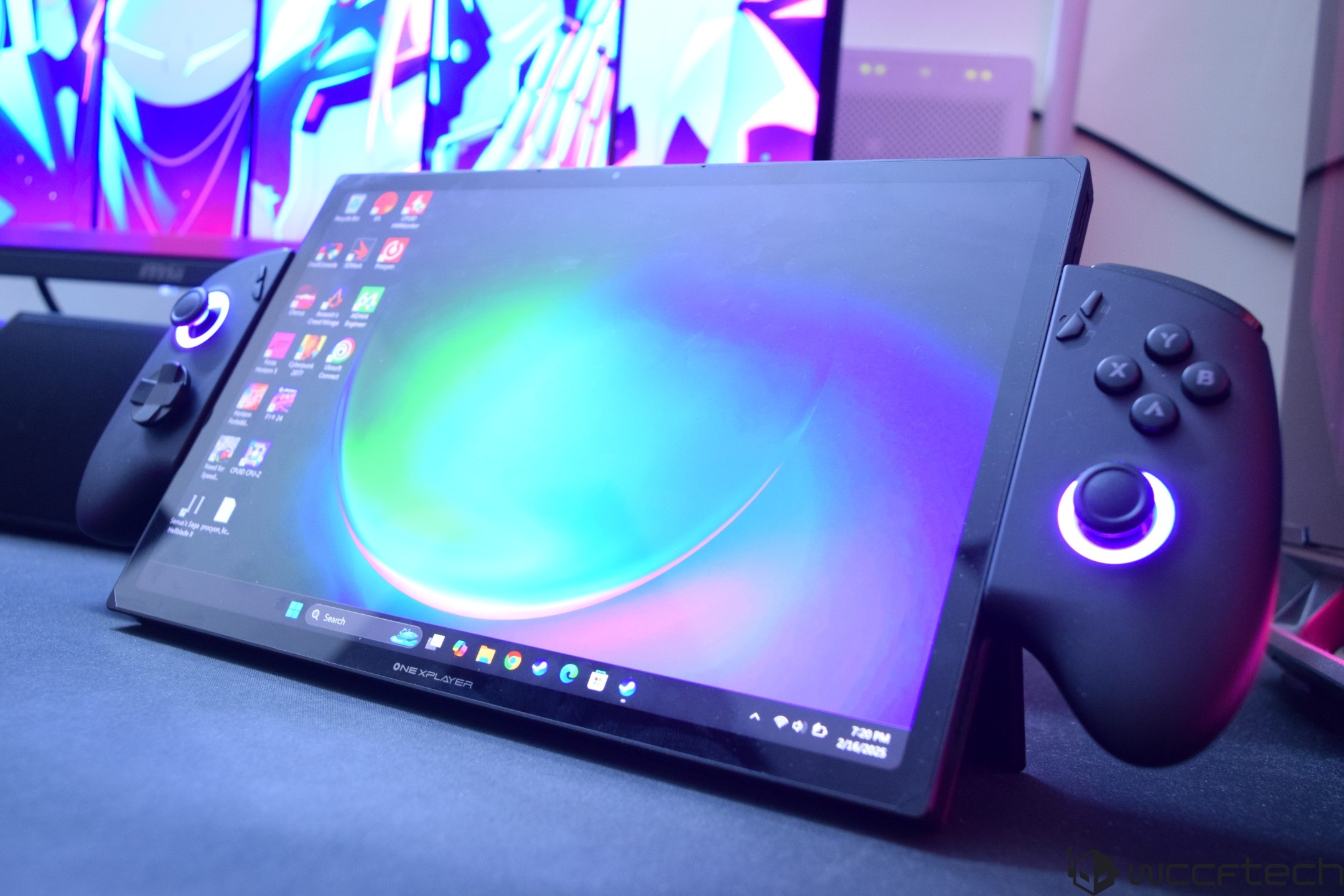
Gaming enthusiasts, welcome to a new era of portable gaming with the OneXPlayer X1 Pro! This innovative gaming handheld is making waves by bringing desktop-like performance to the palm of your hand. With a price tag of $1359, this device is a testament to how far PC gaming handhelds have come, boasting cutting-edge technology and performance features that rival even some laptops.
The OneXPlayer X1 Pro is powered by the mighty AMD Ryzen AI 9 HX 370 APU, a powerhouse processor featuring 12 cores and 24 threads. The clever mix of 4 Zen 5 and 8 Zen 5C cores allows for an impressive blend of power and efficiency. While the base clock speed starts at 2.0 GHz, it can hit heights of 5.1 GHz, ensuring that the most demanding games and applications run smoothly. The APU’s efficient architecture ensures balanced power consumption, maxing out at just 30 watts on this device.
Beyond just processing power, the handheld is significantly enhanced by the latest RDNA 3.5 architecture, bringing an upgraded and especially efficient gaming experience. This boasts a Radeon 890M GPU with 16 compute units, capable of clocking up to 2.9 GHz. Gamers will appreciate its ability to support cutting-edge upscaling, frame generation features, and advanced latency reduction technologies – all critical to maximizing performance in a compact form.
The device also shines with its AI capabilities, integrated with an XDNA 2 NPU providing a whopping 50 AI TOPS, making it one of the fastest in its category. Whether you’re gaming or multitasking, this ensures an efficient and responsive user experience.
In terms of memory, the OneXPlayer X1 Pro doesn’t disappoint. Fitted with 32 GB of LPDDR5X memory, it also has options for expansion up to 64 GB. Storage-wise, users get a 1 TB SSD with room for upgrade, plus a MicroSD card reader that supports large capacities, meaning you’ll never run out of space for your favorite titles.
The 10.95-inch LTPS display offers a vivid visual experience, with a resolution of 2560×1600 and a refresh rate of 120Hz. Its high brightness level of 540 nits ensures that your screen is visible even in the brightest environments, while the color accuracy enhances your gaming immersion.
Connectivity options are plentiful with USB 4.0 ports, wireless features like WiFi 6E, and Bluetooth 5.3, making sure you stay connected anytime, anywhere. A robust 65.02Whr battery ensures lengthy gaming sessions, and the 100W Gallium Nitride fast charger keeps the fun going with rapid recharges.
The handheld’s design includes detachable joysticks with satisfying tactile feedback and a comfortable grip, complete with RGB lighting for added flair. For those who love to tweak, the “Turbo” mode button provides access to performance tuning, allowing adjustments on-the-fly to fan speeds and power profiles.
Performance results highlight the OneXPlayer X1 Pro’s ability to compete with high-caliber laptops, especially shining in tasks like Blender for creative professionals. AMD’s architecture choice grants the device a leading edge in both gaming and productivity, proving that handhelds are far more than just a compromise on performance.
In conclusion, this gaming handheld is perfect for anyone wanting an immersive gaming experience in a portable package. It redefines what’s possible in gaming handhelds, proving that size doesn’t need to sacrifice power or performance. For those eager to game on the go without limits, the OneXPlayer X1 Pro awaits!When it comes to high-performance laptops and handheld gaming devices, the competition is fierce, making each new entry an exciting prospect for tech enthusiasts. Let’s delve into the performance capabilities of some of the standout models in the market, with a particular focus on the AMD Ryzen AI 9 HX 370’s feats across various benchmarks.
The AMD Ryzen AI 9 HX 370, featured prominently in the OneXPlayer X1 Pro, has made waves with its impressive performance benchmarks. In CPU-Z testing, it edges out its predecessor, the Ryzen AI 9 365, by an average of 12.2%, indicating a promising improvement in computational tasks while maintaining commendable single-core strength.
Switching gears to Cinebench 2024, the Ryzen AI 9 HX 370 matches up closely to its Intel counterparts’ single-core performances but outshines the Ryzen AI 9 365 with a 15.5% boost overall. This improvement is crucial for those who rely on their machines for intensive rendering tasks.
However, the Ryzen AI 9 HX 370 doesn’t always maintain its advantage. In Geekbench 6 tests, the chip performs under constraints due to its limited thermal design power (TDP), slightly trailing behind its earlier version, the 365. Even with these restrictions, the single-core score still reflects a respectable 3.2% improvement.
In office productivity, specifically UL Procyon testing, the AMD Ryzen AI 300 series demonstrates similar capabilities to one another, showcasing consistency across the board. Meanwhile, the ASUS Zenbook S14, powered by Intel’s Core Ultra 7 258V, offers an engaging alternative with its high efficiency in multi-core tasks.
With synthetic performance tests like WinRAR, the Ryzen AI 9 HX 370 leapfrogs over the 365 by a 10% margin, which could hint at its proficiency in file management tasks that require heavy data crunching.
The gaming prowess of the OneXPlayer X1 Pro is particularly highlighted through its GPU, the Radeon 890M. In synthetic graphics benchmarks, such as 3DMark Speed Way, we see the Radeon iGPU narrowly surpass competing models, showcasing its strength in ray-tracing tasks—albeit Intel’s Arc series iGPUs aren’t far behind, providing a tough challenge in specific scenarios.
On the other hand, benchmarks like 3DMark Port Royal emphasize Intel’s formidable lead over the Radeon iGPUs, with a significant 27.4% edge when it comes to rendering ray-tracing effects. This varied performance is further highlighted in non-ray-tracing tests, where Intel’s architecture shines, particularly evident in tests like 3DMark Steel Nomad.
Overall, each of these devices, whether powered by AMD’s or Intel’s latest CPUs and GPUs, brings something unique to the table, catering to distinct needs from gaming and rendering to daily productivity. As technology advances, the margin by which these devices improve offers a glimpse into a competitive future where each iteration seeks to push the boundaries of what’s possible in mobile computing.In the world of gaming hardware, not all devices are created equal, especially when we delve into the performance of integrated graphics, or iGPUs. The Radeon 890M has been making waves, showcasing its prowess over the Radeon 880M by being a notable 5.5% faster in many DirectX 11 games.
Going beyond synthetic evaluations, real-world gaming tests bring the Radeon 890M’s capabilities into sharper focus. In Cyberpunk 2077 running at a medium preset with a resolution of 1200P, the Radeon 890M holds its ground against Intel’s top iGPU solutions, an impressive feat for a device operating at just 30W.
Forza Horizon 5 further illustrates the Radeon 890M’s strengths, delivering a 27% performance increase compared to its predecessor, the Radeon 880M, and a 14% advantage over its Intel competitors. Similarly, in F1 24, it offers a 40% boost in performance, making it a standout choice for those seeking a robust gaming experience within the confines of an iGPU.
When tackling Horizon Zero Dawn with FSR 2 enabled, the Radeon 890M reaches a commendable 58 FPS, setting a new benchmark for iGPU performance. Even in demanding titles like Metro Exodus, it manages reasonable results, albeit with some struggles to maintain a smooth 30 FPS with ray tracing enabled.
Yet, the true charm of the OneXPlayer X1 Pro lies in its versatile design and efficiency. Despite being thermally constrained with a maximum TDP of 30W, it manages to maintain high efficiency while operating at high performance. Its design includes a single-fan cooling system, efficiently maintaining temperatures around 77 degrees Celsius during intense gaming sessions—well within safe limits.
The device’s 65.02 Wh battery supports up to 3-4 hours of gaming at full power, with longer life in a reduced power mode, ensuring uninterrupted entertainment.
With its high-resolution display and 120Hz refresh rate, the OneXPlayer X1 Pro offers vibrant visuals that seem almost OLED-like, enhancing the overall gaming and viewing experience. The sleek design, combined with fast charging capabilities, makes it a premium choice for those willing to invest $1359 for top-tier performance. This model’s adaptability allows it to transform from a handheld to a laptop or tablet, catering to various usage preferences.
For users interested in a more budget-friendly option, the OneXFly F1 Pro promises to deliver strong gaming capabilities at a price below $1000, making it a compelling alternative for handheld gaming enthusiasts.
Overall, the OneXPlayer X1 Pro stands out as a high-performing, adaptable, and visually appealing gaming device, carving out a niche for those seeking a portable yet powerful gaming experience. Its competitive edge, backed by AMD’s robust technology, makes it a formidable contender in the gaming handheld market.