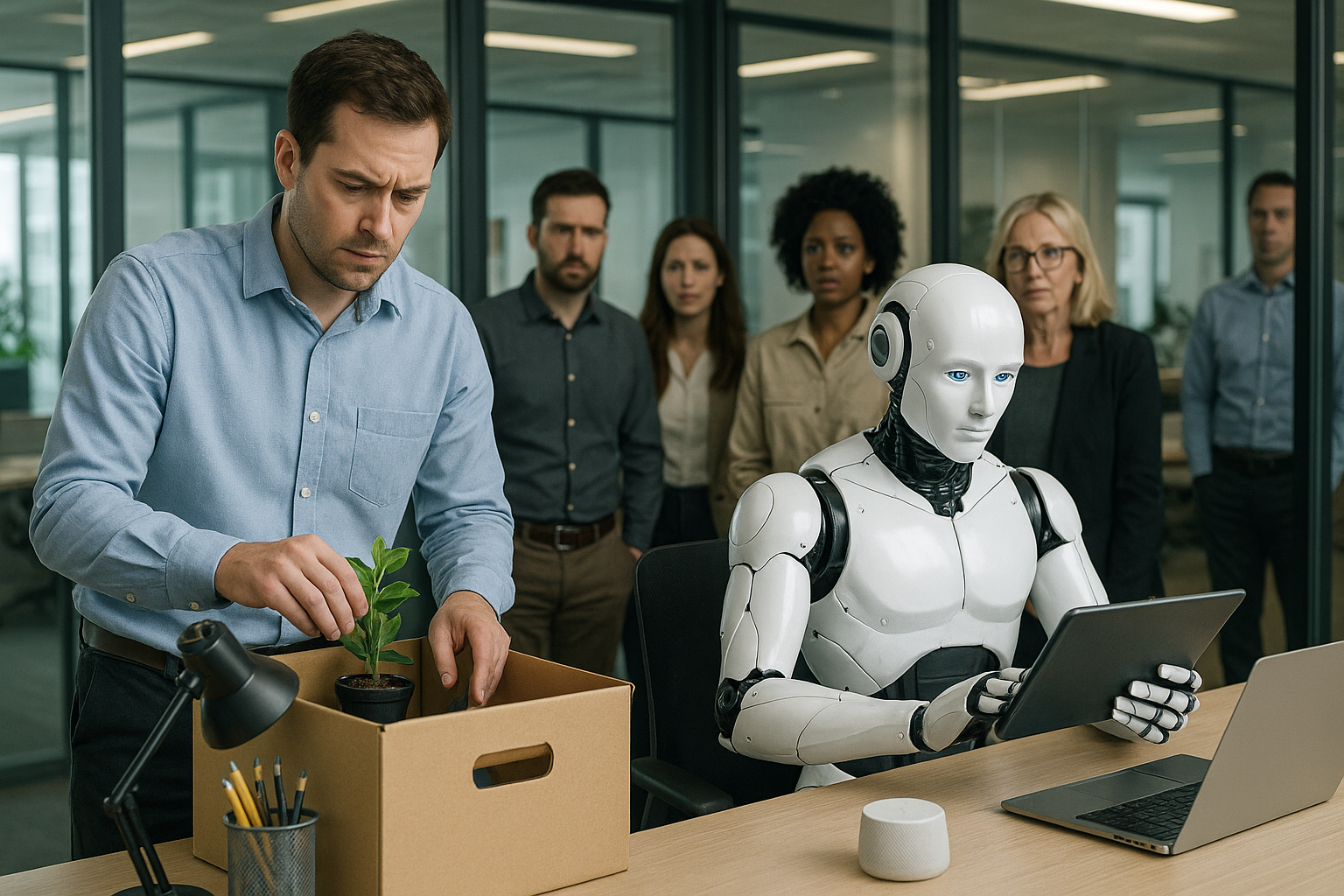
AI hasn’t triggered mass job losses—at least not yet. That’s the takeaway from a new Yale University study published on October 1, 2025 by Martha Gimbel, Molly Kinder, Joshua Kendall, and Maddie Lee. Nearly three years after the launch of ChatGPT, the researchers find no clear evidence that generative AI has reshaped the US labor market in a way that resembles a jobs crisis.
The team set out to answer a simple question with big implications: Is AI changing employment faster than past technologies did? To find out, they compared today’s trends with three benchmark periods: the personal computer era (1984–1989), the internet boom (1996–2002), and a recent pre-AI control window (2016–2019). Their analysis drew on CPS labor data, estimates of AI exposure from OpenAI, and usage data from Anthropic.
Here’s what they found:
– Shifts in the occupational mix are modest and fall within historical norms.
– Even in highly exposed industries like information and finance, there’s no clear, AI-driven wave of job losses.
– Among college graduates aged 20 to 24, the data show slightly larger employment shifts, but the reasons are murky. Small sample sizes and broader economic forces make it hard to pin changes squarely on AI.
The authors urge caution. Much of the “exposure” analysis relies on theoretical models, and real-world usage data remains limited. They argue that more transparent, granular information—ideally at the company level—from AI firms is essential to accurately track how tools are being adopted and how that affects jobs.
Placing today’s AI moment in historical context is revealing. Prior waves of transformative tech, from PCs to the early web, took years or even decades to reshape employment patterns in visible ways. Expecting AI to overhaul the job market in just 33 months may be unrealistic.
Not everyone is convinced. A widely discussed Reddit thread in r/technology pushed back hard, pointing to real-world layoffs, hiring freezes, and growing productivity pressure on employees. The most common critiques: the observation window is too short to capture structural change, usage data isn’t representative, and there’s general skepticism toward academic studies when personal experiences tell a different story.
The bottom line for workers, employers, and policymakers is patience paired with vigilance. Early signals don’t show widespread AI-induced unemployment, but the story is still being written. Watching how adoption scales, how tasks shift within roles, and how wages and productivity move will matter far more over the next few years. Better data from AI providers—and continued, transparent research—will be key to understanding the true impact of generative AI on jobs and the broader labor market.