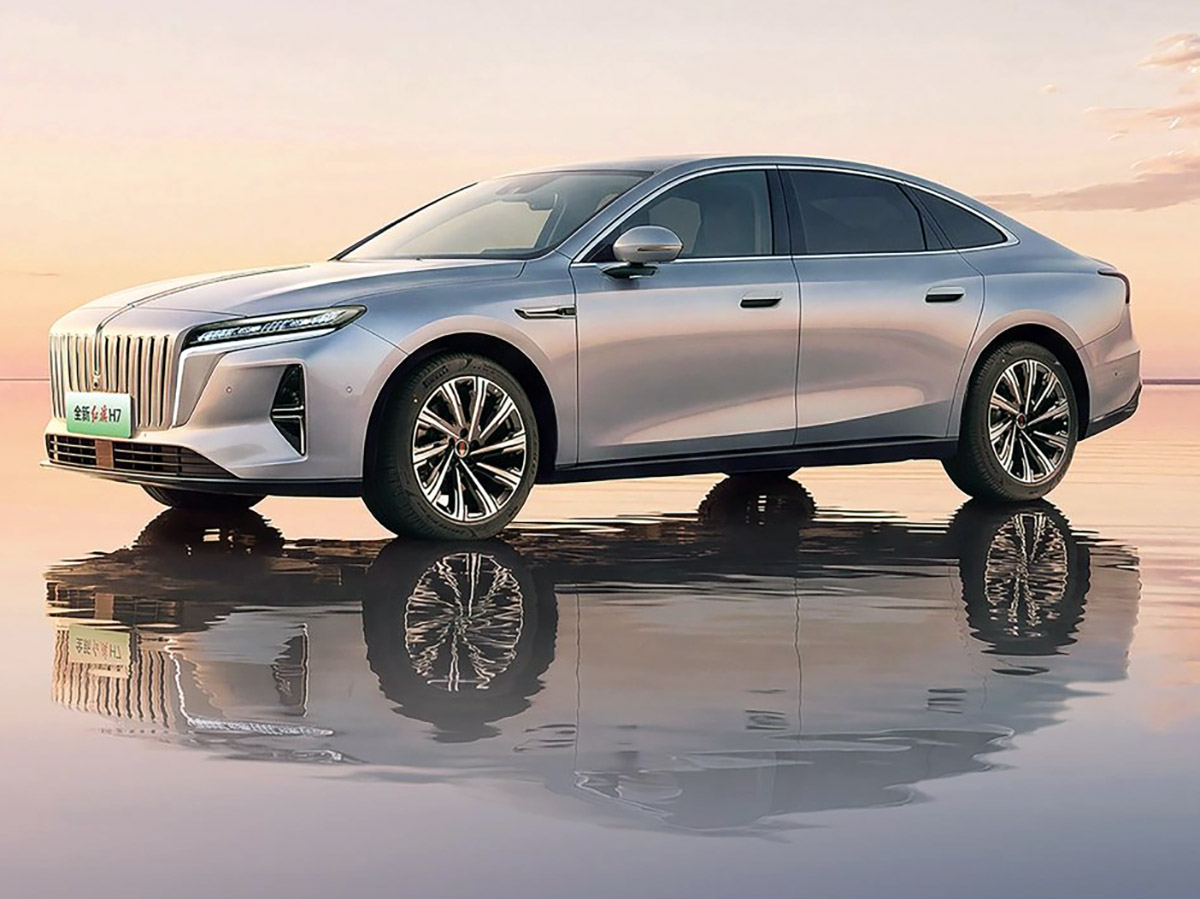
Hongqi H7 Sets New World Record With 1,812-Mile Driving Range
The Hongqi H7 has officially entered the record books as the production passenger car with the longest driving range ever achieved on public roads. The flagship sedan from FAW traveled an astonishing 2,916.171 kilometers, or about 1,812 miles, using a full tank of fuel and a fully charged battery.
That figure pushes the Hongqi H7 far ahead of the previous record, beating it by more than 300 kilometers. For drivers who worry about long-distance travel and charging availability, this achievement highlights why extended-range electric vehicles are becoming one of the most interesting segments in the auto industry.
The Hongqi H7 is an extended-range electric vehicle, often called an EREV. Unlike a traditional hybrid, an EREV primarily drives on electric power, while its gasoline engine works mainly as a generator to recharge the battery and keep the electric motors running. This setup allows the car to offer EV-like driving while avoiding the limitations of relying only on public charging stations.
In China, the Hongqi H7 starts at the equivalent of around $27,000, making its record-setting range even more impressive. The sedan uses a 1.5-liter turbocharged engine and is available with either a ternary lithium battery or an LFP battery. It offers up to 240 kilometers of pure electric range on China’s CLTC testing cycle before the gasoline generator is needed.
Once the battery charge is depleted, the H7 is rated at a claimed fuel consumption of 4.4 liters per 100 kilometers. Its 1.5T engine is also notable for its high thermal efficiency of 45.21 percent, helping the vehicle stretch every drop of fuel as far as possible. Another practical advantage is that the engine can run on more affordable 92-octane gasoline, since it does not directly power the wheels in the same way as a conventional combustion car.
As with many official range figures, the numbers are based on China’s CLTC cycle, which tends to be more optimistic than real-world driving conditions in markets such as the United States. Even if the estimate were reduced significantly under stricter testing, the Hongqi H7 could still potentially deliver around 1,200 miles of total range when fully fueled and charged. That is far beyond what most conventional gasoline cars, hybrids, or electric vehicles can manage.
The rise of extended-range electric vehicles is especially strong in China, where automakers are racing to offer long-distance capability without depending entirely on ultra-fast charging infrastructure. EREVs give buyers the quiet, responsive feel of electric driving for daily commutes, while the onboard generator provides peace of mind on longer trips.
This trend is becoming so important that even companies known for their electric vehicle ambitions are moving into extended-range technology. Several major Chinese automakers are developing EREVs with larger batteries, longer electric-only driving ranges, and more efficient generator engines. Some upcoming models are expected to offer more than 500 kilometers of pure electric range before the gasoline generator is needed.
Hongqi has also been building momentum beyond the H7 sedan. Its HS6 SUV previously set a major range record for SUVs, traveling 2,327 kilometers before the H7 went even further in the passenger car category. Other automakers have also been chasing endurance records, including hybrid and fully electric models that have achieved impressive single-trip results under controlled conditions.
Still, record-breaking range figures should not be confused with everyday driving results. Weather, speed, terrain, traffic, tire choice, payload, and driving style can all make a major difference. Most owners will not see the same numbers during normal use, but the direction of progress is clear.
The Hongqi H7’s 1,812-mile achievement shows how quickly extended-range electric vehicles are evolving. While the world waits for better battery energy density, solid-state batteries, and faster charging networks, EREVs may serve as a highly practical bridge between gasoline cars and fully electric vehicles.
For many drivers, the appeal is simple: electric driving for daily use, gasoline backup for long trips, and far less concern about where the next charging station might be. If more vehicles can deliver this kind of efficiency and range at competitive prices, range anxiety could become far less important in the future of transportation.