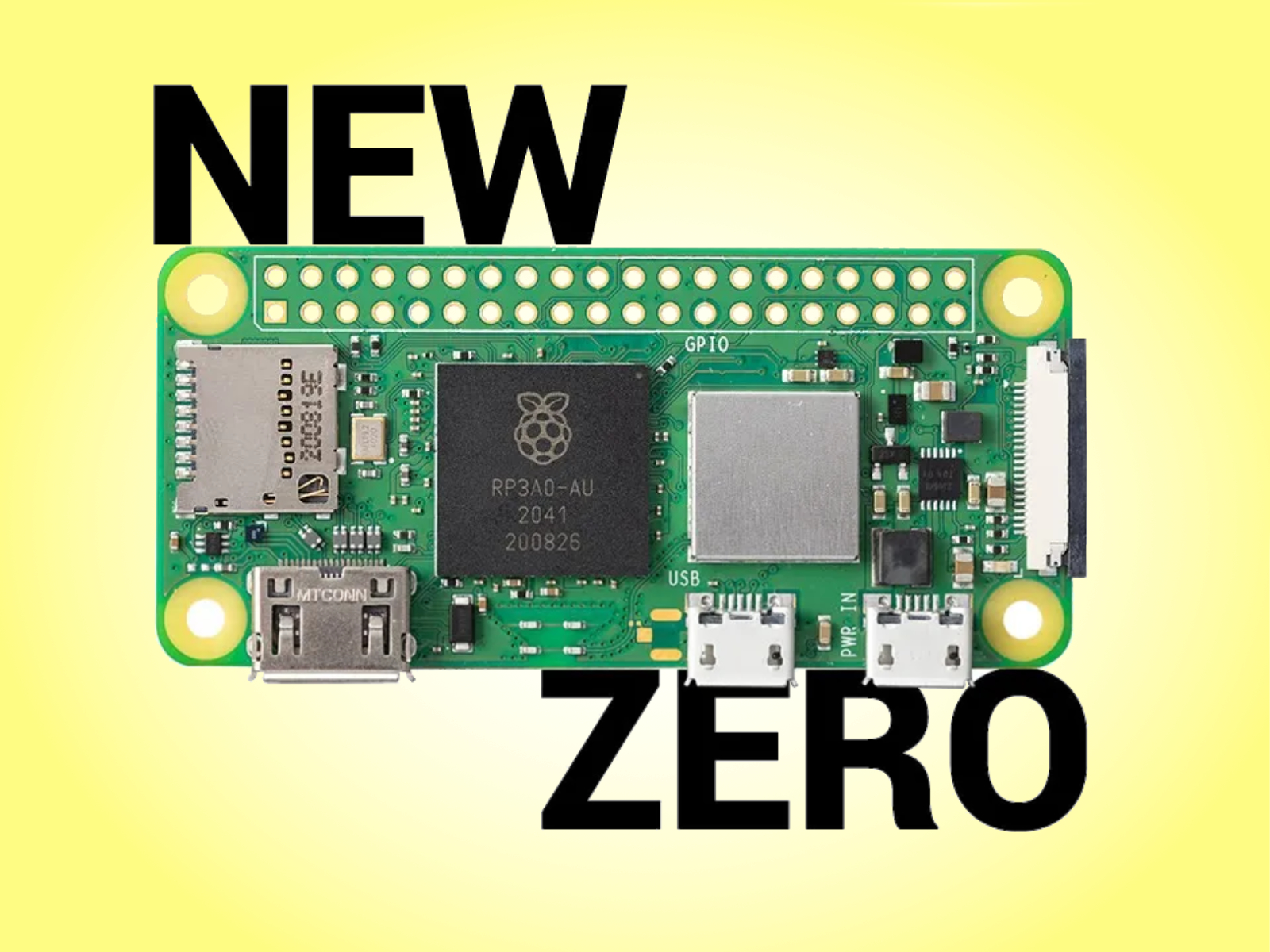
Raspberry Pi Zero 3 W could be coming, but price and memory costs may delay it
The Raspberry Pi Zero 2 W is starting to show its age. Launched in late 2021 with an original price of $15, the compact single-board computer quickly became a popular choice for makers, hobbyists, IoT projects, and anyone looking for a tiny yet capable Raspberry Pi board with wireless connectivity. A version with a pre-soldered GPIO header, the Raspberry Pi Zero 2 WH, was also introduced for users who wanted an easier setup without soldering.
Now, attention is turning to the next possible model: the Raspberry Pi Zero 3 W.
Raspberry Pi CEO Eben Upton recently shared early thoughts about the long-rumored Zero 3 W during a Reddit AMA. While he did not confirm a launch date, his comments suggest that a new Zero-series board is possible. He described the idea of a Raspberry Pi Zero 3 W as “quite feasible,” which is encouraging news for fans of the ultra-compact Pi lineup.
However, the next model may not arrive as quickly as many users hope.
The original Raspberry Pi Zero launched in 2015 at just $5, making it one of the most affordable single-board computers ever released. The Zero 2 W followed roughly six years later, bringing a major performance upgrade while keeping the same tiny form factor. Based on Upton’s comments, the Zero 3 W is unlikely to follow a predictable release schedule, mainly because of hardware and pricing challenges.
One of the biggest issues appears to be memory cost. Upton noted that a future Zero-branded board may need to use a dual-sided design to fit both DRAM and a newer system-on-chip. That could make the board more powerful, but it would also increase production complexity.
The bigger challenge is the current cost of LPDDR4 and LPDDR4X memory. These newer memory types remain expensive, and using them in a Raspberry Pi Zero 3 W could push the final retail price much higher than expected. Upton suggested that, under current market conditions, a Zero 3 W would likely arrive at a “rather un-Zero-like price point.”
That matters because affordability has always been central to the Raspberry Pi Zero identity. The Zero line is known for being small, low-cost, and accessible. If the Raspberry Pi Zero 3 W launched at a significantly higher price, it could lose part of what makes the series so appealing.
For now, Raspberry Pi appears to be waiting for better memory pricing before moving forward with a new Zero model. The company may need to secure enough LPDDR4 or LPDDR4X stock at more reasonable prices before it can offer a board that matches the expectations of the Zero lineup.
A Raspberry Pi Zero 3 W would likely attract strong interest if it delivers improved performance, modern wireless features, and better efficiency while staying close to the compact size and low-cost appeal of earlier models. Makers would welcome a faster board for robotics, smart home devices, portable projects, lightweight servers, and embedded computing.
Still, the key question remains price. If Raspberry Pi can keep costs under control, the Zero 3 W could become one of the most exciting single-board computer releases in the company’s lineup. If memory prices remain high, the wait may continue.
For now, the Raspberry Pi Zero 2 W remains the current choice for users who want a tiny wireless Pi, while the Raspberry Pi Zero 3 W stays on the horizon as a realistic but not yet confirmed upgrade.