Raspberry Pi CM5 Gives an Aging HP ProLiant MicroServer a Modern Second Life
Old servers often end up forgotten in a closet or sent off as electronic waste once their processors, memory, and storage can no longer keep up with modern workloads. But one hardware enthusiast has shown that aging equipment does not always need to be replaced. With a clever custom motherboard built around a Raspberry Pi Compute Module 5, an old HP ProLiant MicroServer has been transformed into a much more capable home server.
The project centers on the HP ProLiant MicroServer N40L, a compact server originally built with an older AMD processor and DDR3 memory. While this hardware was useful in its time, it is now limited by today’s standards. Running modern home server applications, storage services, lightweight virtualization tasks, or network tools can quickly expose the weaknesses of the original CPU and RAM setup.
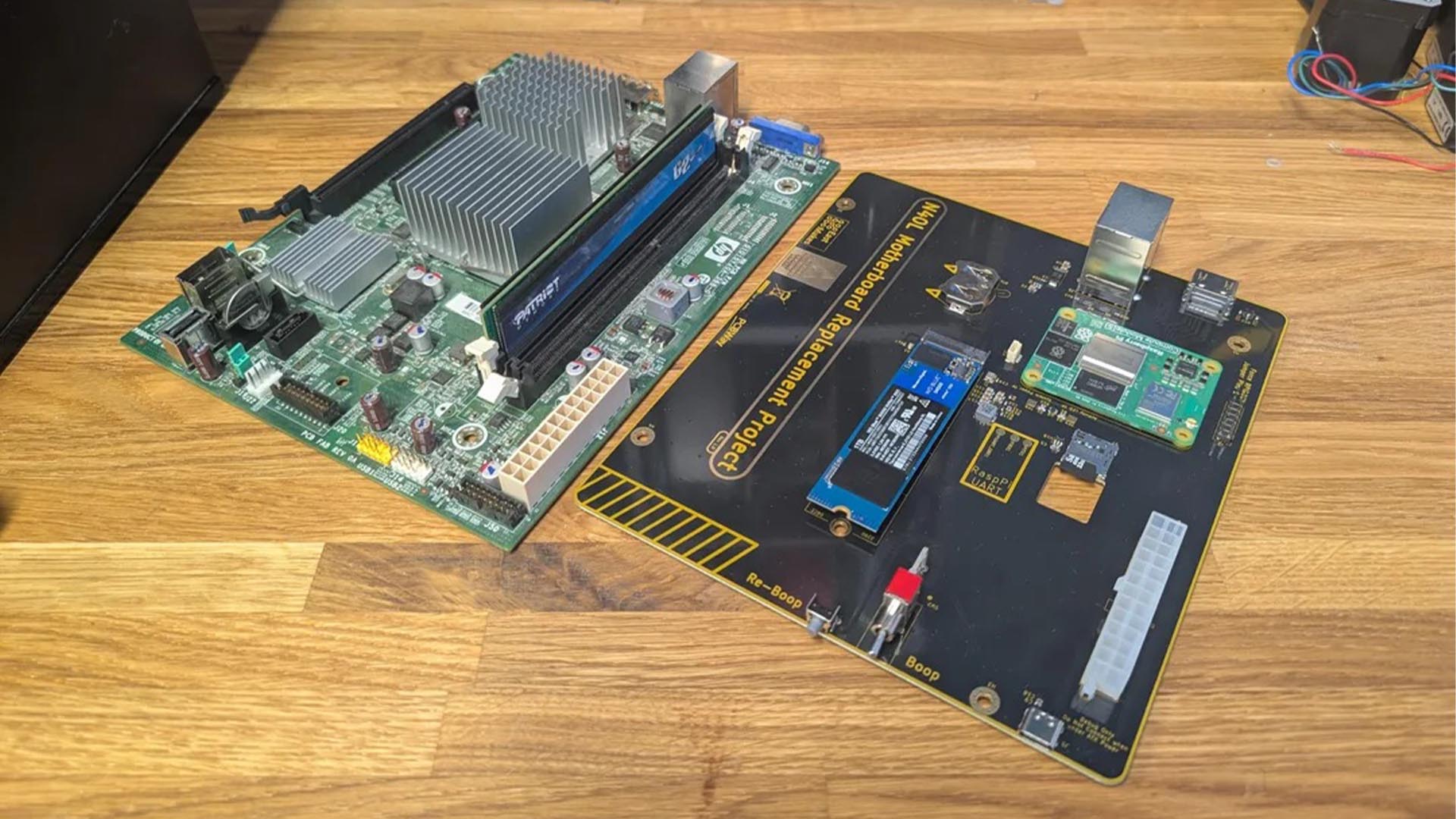
Rather than retire the machine, a Reddit user known as “EastMakes” decided to upgrade it in a far more creative way. Instead of simply swapping in another old motherboard or buying a new server, the user designed a replacement board that allows the Raspberry Pi CM5 to sit inside the original MicroServer chassis.
The Raspberry Pi CM5 may be small, but it offers a surprisingly capable foundation for compact computing projects. Its system-on-chip design combines the processor, memory, and networking capabilities in a highly efficient package. Compared with the original hardware inside the HP MicroServer, the CM5 can deliver a meaningful performance improvement while using far less physical space.
One of the most important upgrades in this build is the addition of an M.2 NVMe SSD. This gives the refreshed server much faster storage performance than older mechanical drives or slower storage interfaces. For a home server, faster storage can make a major difference when handling file transfers, application loading, database access, or operating system responsiveness.
The custom motherboard was also designed with practicality in mind. A 24-pin power connector is positioned on the board so it can connect directly to the MicroServer’s existing power supply. This helps preserve the original hardware layout and avoids unnecessary power compatibility headaches.
The board also includes Ethernet and USB ports placed to match the original server chassis cutouts. That attention to detail makes the project feel less like a rough modification and more like a carefully planned modernization of the system. Keeping the original case functional and clean is a big part of what makes this upgrade so appealing.
Another fun detail is found along the front edge of the board, where the creator added tactile buttons labeled “Boop” and “Re-Boop.” The first is likely used as the power button, while the second appears to serve as a reset switch. It adds a bit of personality to an otherwise technical build and shows how custom projects can be both practical and playful.
This Raspberry Pi CM5 server upgrade is a great example of how older hardware can be reused instead of discarded. Many aging servers still have durable cases, power supplies, drive bays, and cooling layouts that are perfectly usable. By replacing the outdated computing core with a modern compact module, builders can extend the life of these systems for years.
For home lab users, NAS builders, and Raspberry Pi enthusiasts, this kind of project highlights the growing potential of small-form-factor computing. A tiny compute module can now replace older full-size server components while offering better efficiency, improved performance, and a much smaller footprint.
It also reflects a larger trend in DIY computing: upcycling old PCs and servers with modern low-power boards. Instead of sending working hardware to a landfill, enthusiasts can turn outdated machines into media servers, backup systems, personal cloud storage, network monitoring tools, or lightweight development machines.
The HP ProLiant MicroServer N40L may no longer be powerful in its original form, but this Raspberry Pi CM5 motherboard project proves that old hardware can still have a future. With smart engineering and a bit of creativity, a once-outdated server can become a useful, efficient, and modern machine again.