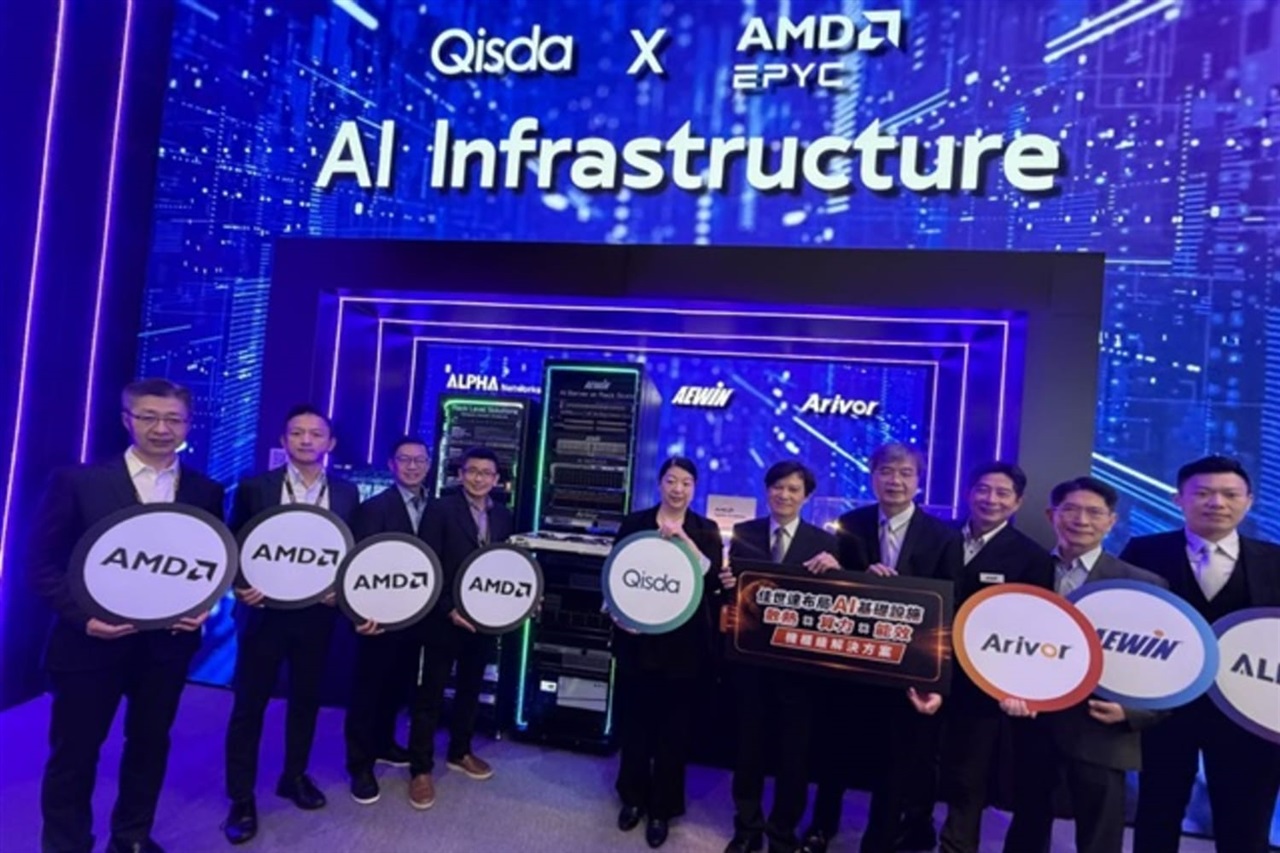
Qisda Speeds Up AI Transformation With a Full Ecosystem Strategy
Qisda is moving faster to reposition itself as a major AI solutions provider as competition in the artificial intelligence market continues to heat up. Under the leadership of President Cally Ko, the company is reshaping its AI roadmap with a broader vision that goes beyond hardware manufacturing and focuses on building a complete AI ecosystem.
The company’s new direction reflects the growing demand for intelligent infrastructure across industries. As businesses adopt AI for automation, data analysis, smart manufacturing, healthcare, enterprise services, and connected devices, demand is rising for providers that can support both large-scale computing and real-world AI deployment.
Qisda is now working to strengthen its role across key areas of the AI value chain, including data centers, edge computing, and integrated AI applications. This approach could help the company serve customers that need end-to-end solutions, from high-performance computing environments to AI systems that operate closer to where data is created.
Cally Ko’s leadership appears to be focused on turning Qisda into more than a traditional technology manufacturer. The company is aiming to build an AI-driven business model that combines infrastructure, devices, software integration, and industry-specific solutions. By doing so, Qisda hopes to capture more opportunities as enterprises look for reliable partners to help them deploy AI at scale.
Data centers remain a critical part of this strategy. As AI models become more complex, companies require stronger computing power, efficient server systems, and scalable infrastructure. Qisda’s push into AI data center solutions positions it to benefit from the surge in demand for computing resources driven by generative AI, machine learning, and cloud-based services.
At the same time, edge AI is becoming increasingly important. Instead of sending all data to centralized servers, edge computing allows AI processing to happen closer to devices, factories, hospitals, vehicles, and retail locations. This can reduce latency, improve privacy, and enable faster decision-making. By expanding into edge AI, Qisda is targeting a fast-growing market where speed and efficiency are essential.
The company’s transformation also signals a wider shift in the technology industry. Many hardware-focused firms are now racing to add AI capabilities to their portfolios as customers seek smarter, more connected systems. Qisda’s strategy suggests it wants to move up the value chain by offering complete AI solutions rather than individual components.
If successful, this transition could strengthen Qisda’s competitiveness in the global AI market. With a roadmap that connects data center infrastructure, edge computing, and practical AI applications, the company is positioning itself for long-term growth in one of the most important technology sectors of the decade.
As AI adoption continues to accelerate, Qisda’s ability to create a full ecosystem may become a key advantage. The company’s next challenge will be turning its expanded roadmap into real-world solutions that meet the needs of businesses looking to modernize operations, improve efficiency, and unlock new value through artificial intelligence.