PS6 ray tracing just got real: Sony and AMD detail the hardware behind the next big leap
Sony and AMD are teaming up on the silicon that will power the next generation of PlayStation, and the pieces are finally clicking into place. After months of leaks pointing to up to 3x higher rasterization performance and as much as a 12x jump in ray tracing compared to PS5, both companies have outlined the technologies that make those numbers believable.
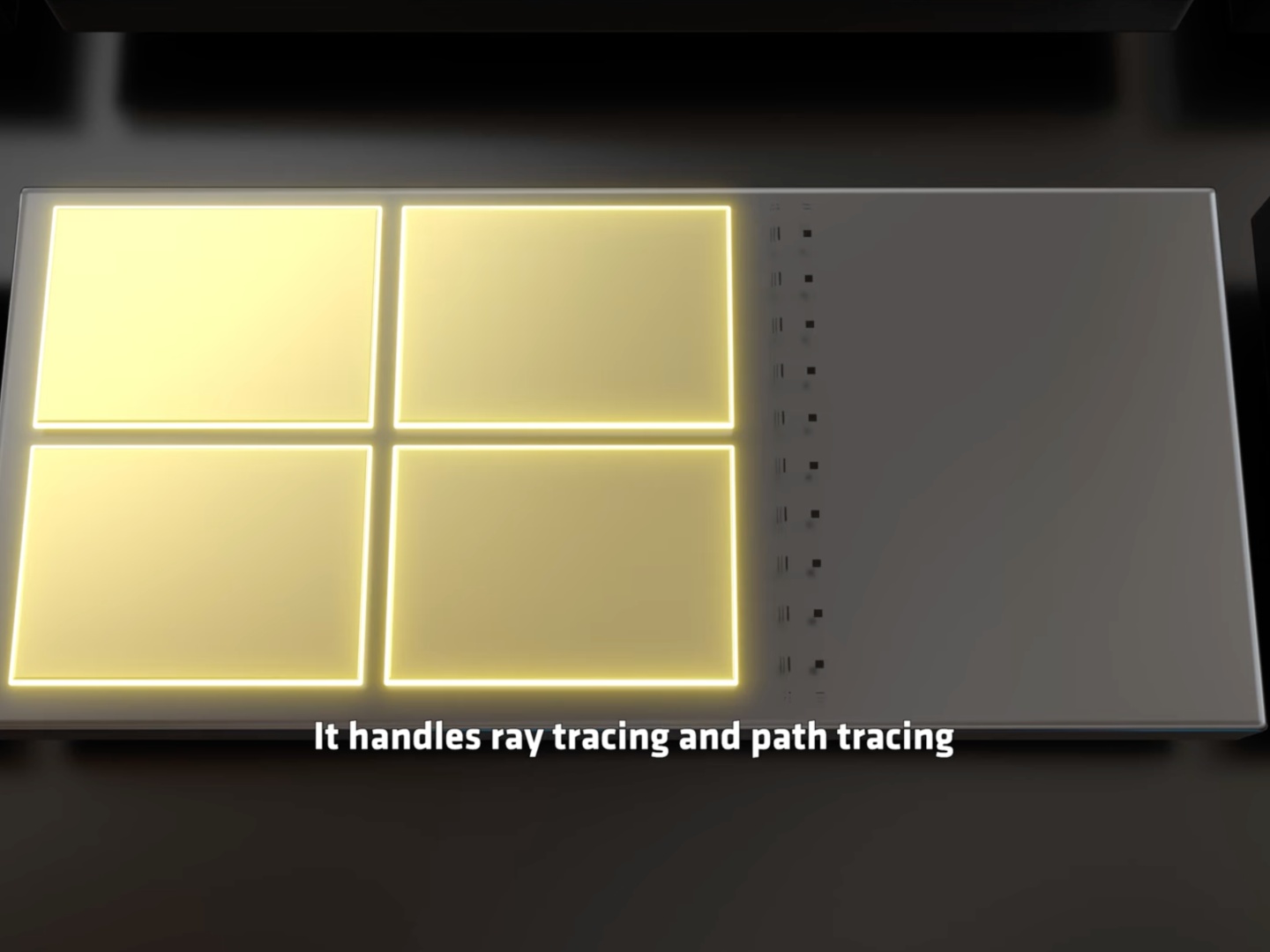
In a recent discussion, AMD’s Jack Huynh sat down with lead console architect Mark Cerny to preview what’s coming to a future console. The headline feature is a new block of dedicated ray tracing hardware called Radiance Cores. Instead of relying on general-purpose GPU shader cores and the CPU to crunch through ray traversal and path tracing, Radiance Cores handle those tasks directly in hardware, dramatically streamlining the ray tracing pipeline.
By moving traversal logic into fixed-function silicon, the GPU’s shader resources are freed to focus on shading and lighting, while the CPU can dedicate more cycles to geometry, physics, and simulation. Cerny described two layers of acceleration: the inherent speed gains from cleaning up the pipeline, and a further boost from having the ray tracing hardware operate independently from the shader cores.
Radiance Cores build on AMD’s work with Neural Radiance Caching for FSR Redstone, aiming to deliver real-time ray tracing and even path tracing without the massive performance penalties seen on current-gen consoles. For players, that translates to richer global illumination, more accurate reflections and shadows, higher-quality denoising, and the potential for better frame rates and resolutions with ray tracing enabled.
AMD also previewed Universal Compression, a new approach to memory bandwidth efficiency. Current consoles rely heavily on Delta Color Compression (DCC), which mostly targets textures and render targets. Universal Compression goes broader and deeper, analyzing virtually every type of data headed to memory. The goal is to reduce bandwidth pressure across the board—one of the biggest constraints on consoles like PS5 and PS5 Pro—unlocking more consistent performance, fewer bottlenecks, and more room for higher-fidelity assets.
While Cerny didn’t put a name or a date on the hardware, he confirmed these advancements are planned for a future console in the coming years. AMD emphasized that the technologies won’t be exclusive to one system; any gaming platform built on an AMD SoC stands to benefit.
What this could mean for the next PlayStation
– Up to 3x faster rasterization and as much as 12x faster ray tracing versus PS5, based on widely reported targets
– Dedicated Radiance Cores for ray and path tracing, reducing reliance on shader cores and the CPU
– Higher-quality lighting and reflections with fewer compromises on resolution and frame rate
– Universal Compression to ease memory bandwidth limits, enabling bigger worlds, cleaner streaming, and more detailed scenes
– More headroom for developers to push complex simulations, geometry, and advanced rendering techniques
If the leaked performance targets hold, the PlayStation 6 era could finally deliver the kind of ray-traced visuals PC players associate with high-end GPUs—without sacrificing playability. With AMD and Sony aligning on dedicated RT hardware and smarter data compression, the next console generation looks set to turn ambitious lighting and effects into everyday features rather than rare showpieces.