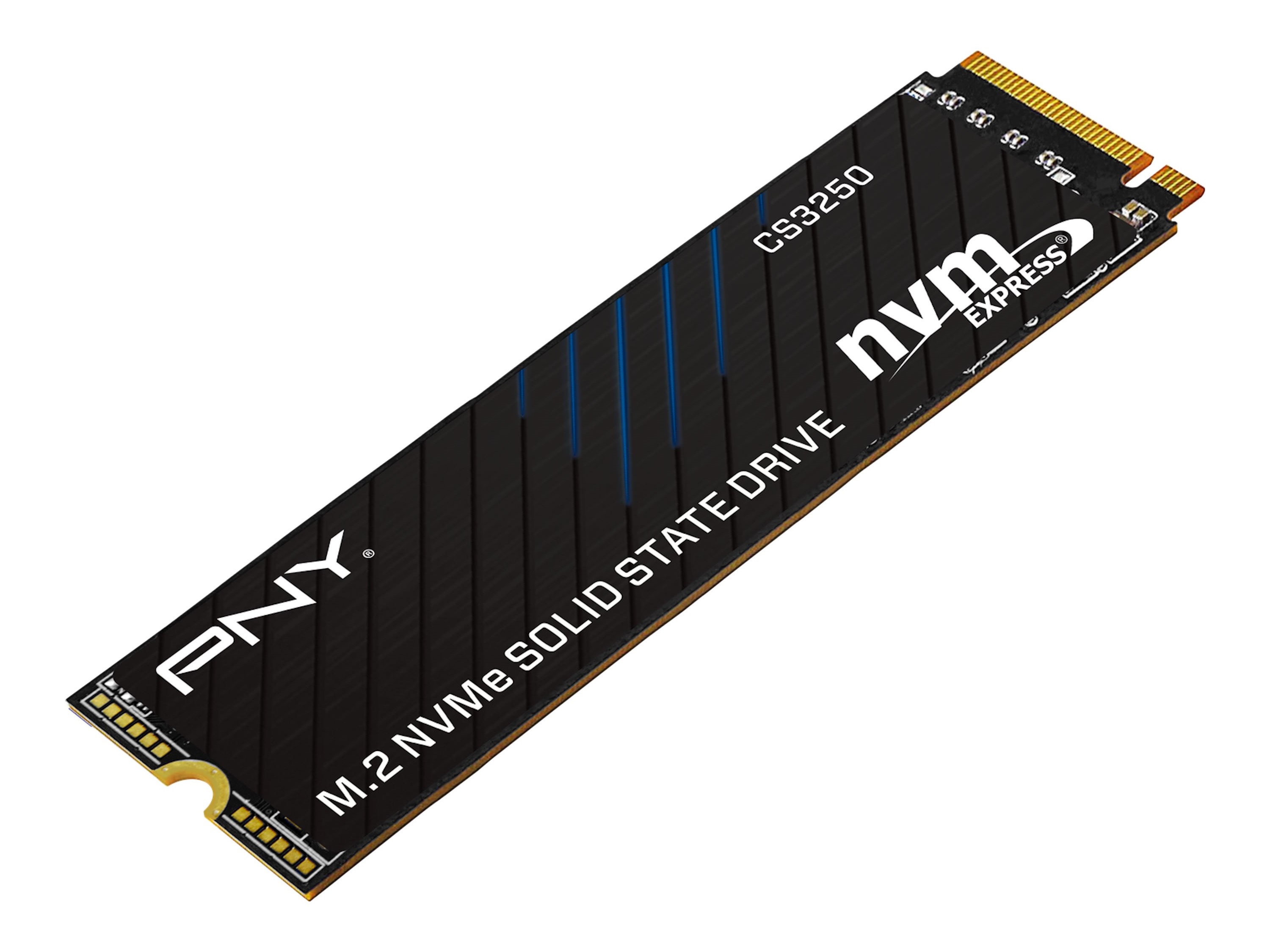
PNY CS3250 PCIe 5.0 SSD promises up to 14,900 MB/s without a premium price
If you’ve been waiting for PCIe 5.0 speeds to reach a sensible price, PNY’s new CS3250 should be on your radar. This M.2 2280 NVMe drive taps into a PCIe 5.0 x4 interface to deliver headline-grabbing sequential performance, with read speeds up to 14,900 MB/s. Write speeds vary slightly by capacity: the 1 TB model is rated up to 13,500 MB/s, while the 2 TB version peaks at 14,000 MB/s. In everyday workloads, that small difference is unlikely to be noticeable.
Built on 3D flash storage, the CS3250 is designed to push beyond the ceiling of PCIe 4.0 drives, which typically top out around 8,000 MB/s. While the company hasn’t detailed the cache configuration, it’s worth noting that many high-speed SSDs can slow once their cache is saturated, so real-world results will depend on your workload. The drive carries a stated MTBF of 1,500,000 hours.
Pricing is aggressive for a PCIe 5.0 SSD: the 1 TB model is expected at $126, and the 2 TB version at $220. A 4 TB variant is in the pipeline, with availability to be announced.
Key takeaways:
– Up to 14,900 MB/s sequential read speeds via PCIe 5.0 x4
– Sequential write speeds up to 13,500 MB/s (1 TB) and 14,000 MB/s (2 TB)
– M.2 2280 form factor with 3D flash
– MTBF of 1,500,000 hours
– Launch pricing of $126 (1 TB) and $220 (2 TB)
– 4 TB model coming soon
Who it’s for:
– Gamers and creators who want ultra-fast level loads and project file transfers
– Power users moving massive media libraries or 4K/8K assets
– Anyone building a next-gen PC with PCIe 5.0 support and looking for top-tier speed per dollar
Before you buy, make sure your motherboard supports PCIe 5.0 on the M.2 slot to hit these peak speeds. As with any high-performance NVMe drive, adequate cooling is recommended to sustain performance under heavy workloads. With its blend of cutting-edge throughput and accessible pricing, the CS3250 looks like a compelling upgrade path for anyone ready to step into the PCIe 5.0 era.