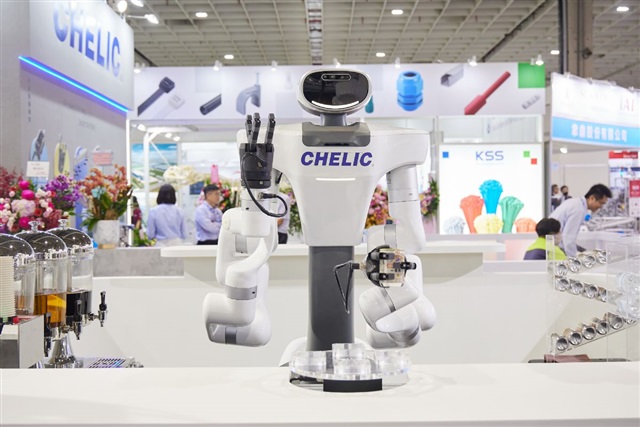
Humanoid robots are still far from becoming everyday machines in homes, factories, hospitals, and public spaces, but their impact on the technology supply chain is already starting to show. As physical AI continues to advance, demand for high-performance sensors, MEMS chips, and edge computing hardware is expected to rise sharply.
Unlike traditional industrial robots, humanoid robots are designed to move, balance, react, and interact in environments built for humans. To do this safely and effectively, they require a dense network of sensors that can detect motion, pressure, orientation, sound, proximity, and environmental changes in real time. This makes them far more sensor-dependent than many conventional robotic systems used in controlled factory settings.
Industry observers believe this growing need for advanced sensing could create a major opportunity for MEMS suppliers. MEMS, or micro-electromechanical systems, are tiny chip-based components used in devices such as accelerometers, gyroscopes, microphones, pressure sensors, and other compact sensing technologies. These components already play a key role in smartphones, vehicles, wearables, drones, and industrial equipment. Humanoid robots could become the next major growth market.
The reason is simple: a humanoid robot may need several times more sensors than a standard robot. Balance, walking, object handling, obstacle avoidance, voice interaction, and situational awareness all depend on constant streams of data. Every joint, limb, camera system, and control module may require accurate sensing to help the robot make fast decisions.
This shift is closely tied to the rise of physical AI, a term used to describe artificial intelligence that operates in the real world rather than only on screens or in cloud-based software. For physical AI to work properly, machines must be able to perceive their surroundings, process data quickly, and respond with precision. That increases the importance of edge computing, where data is processed directly inside the robot instead of being sent back and forth to remote servers.
Edge AI hardware could become just as important as the sensors themselves. Humanoid robots need extremely low-latency decision-making, especially when walking, lifting objects, avoiding people, or working in unpredictable environments. Fast local processing can improve safety, reduce delays, and make robots more independent.
For component suppliers, this could open a long-term growth cycle. Even if the revenue earned from each individual robot remains moderate, the total market could become significant if humanoid robots move closer to commercial-scale production. Companies involved in MEMS chips, sensor fusion, power management, processors, and AI accelerators may all benefit as robotics manufacturers increase production and refine their designs.
However, mass adoption is not guaranteed in the near term. Humanoid robots still face major challenges, including high production costs, battery limitations, durability concerns, software complexity, and safety requirements. Many models remain in the testing, demonstration, or early deployment stage. Still, the direction of the market is becoming clearer: robots are becoming more intelligent, more mobile, and more reliant on advanced sensor systems.
Factories and warehouses are likely to be among the first major adoption areas. In these settings, humanoid robots could assist with repetitive handling tasks, inspection, machine operation, and movement through spaces originally designed for human workers. Healthcare, elder care, retail, logistics, and home assistance may follow later as the technology becomes more reliable and affordable.
The growing interest in humanoid robotics is also changing how suppliers plan for future demand. Sensor makers and chip manufacturers are watching the market closely because robot designs could require large volumes of compact, efficient, and durable components. As competition increases, robotics companies may look for sensors that offer better accuracy, lower power consumption, smaller size, and stronger performance in difficult environments.
This could lead to faster innovation across the MEMS and sensor industries. Technologies originally developed for consumer electronics or automotive systems may be adapted for robots, while new robotics-focused components could emerge. Over time, humanoid robots may influence sensor design in the same way smartphones once accelerated development in cameras, motion sensors, microphones, and compact chips.
The broader technology market could also feel the effects. As humanoid robots become more capable, demand may rise for AI processors, memory, connectivity modules, batteries, actuators, and specialized software platforms. This creates a wider ecosystem where robotics growth supports multiple areas of the semiconductor and electronics supply chain.
For now, humanoid robots are not yet a mainstream product. But their future sensor requirements are already shaping expectations. If physical AI continues moving from research labs into real-world use, MEMS chips and advanced sensors could become some of the most important building blocks of the next robotics era.