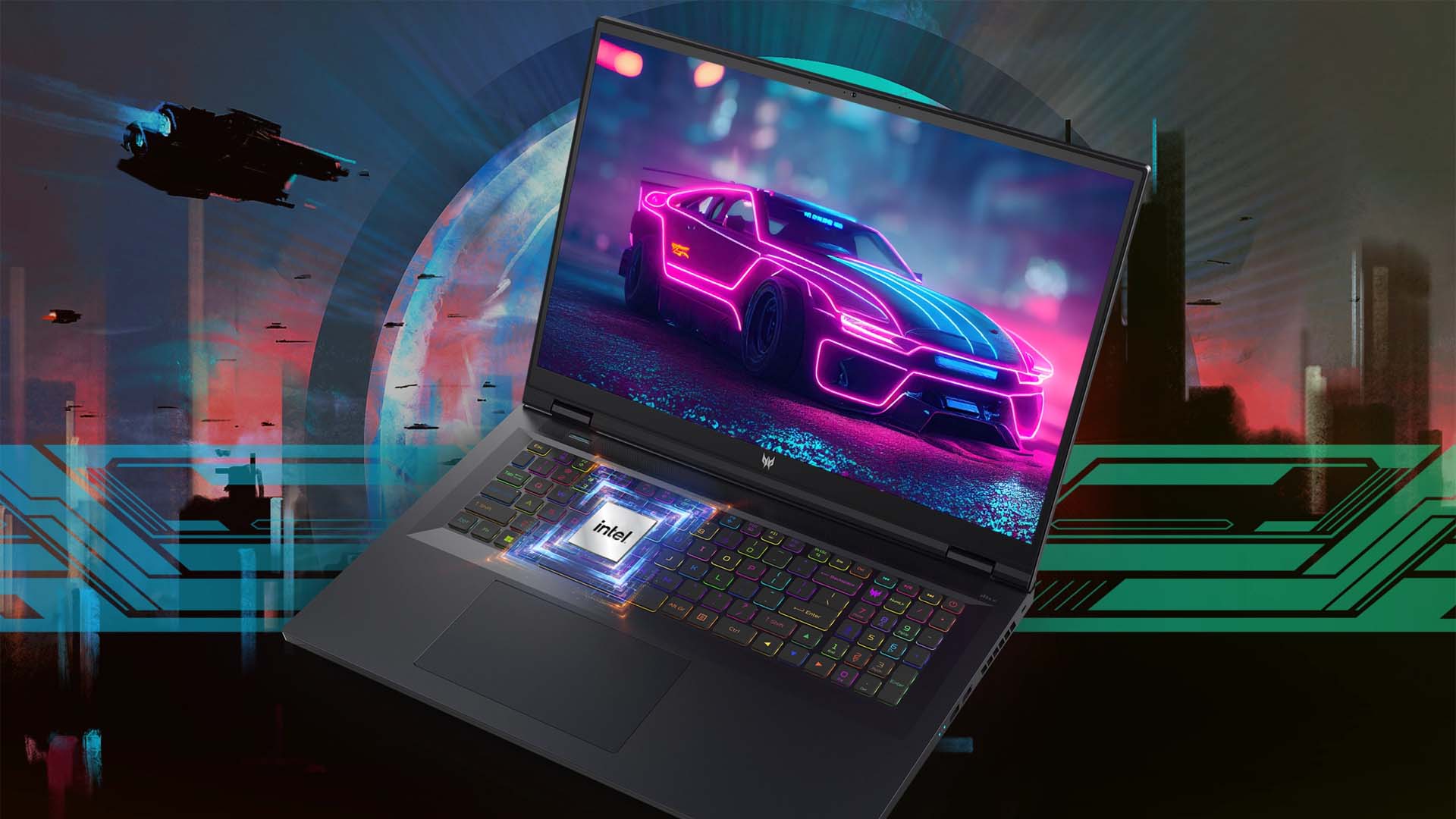
An Acer Predator Helios gaming laptop owner received an unexpected hardware swap after dealing with severe overheating issues on a model powered by Intel’s Core i9-14900HX. The original laptop reportedly suffered from extreme temperature spikes and throttling, even during light tasks such as watching YouTube videos. What began as a service request for a thermal paste replacement eventually turned into a full replacement offer from Acer, giving the owner a newer Predator Helios model with upgraded internal hardware.
The owner, posting on Reddit under the username “Admirable_Job8155,” said the Core i9-14900HX-powered Predator Helios had become difficult to use due to heat-related problems. Instead of continuing to rely on undervolting tools such as ThrottleStop, the user decided to take the laptop to an Acer service center, hoping the company would repaste the CPU and improve thermals.
However, Acer reportedly chose to replace the motherboard rather than simply refresh the thermal paste. The situation became more complicated when the required motherboard for that exact model was unavailable, leaving the laptop stuck in repair limbo. After a long wait, the owner escalated the case, and Acer responded by offering a brand-new Predator Helios configuration.
The replacement laptop comes with Intel’s newer Core Ultra 9 275HX processor, an NVIDIA GeForce RTX 5070 Ti laptop GPU, and 32GB of dual-channel DDR5 memory running at 6,400MT/s. On paper, that looks like a strong upgrade over the previous Core i9-14900HX and RTX 4080 laptop configuration, especially thanks to faster memory and newer GPU features.
Performance-wise, the situation is a little more nuanced. In traditional rasterized gaming performance, the laptop version of the RTX 4080 can still be slightly faster than the RTX 5070 Ti in some cases. However, the RTX 5070 Ti benefits from NVIDIA’s newer Multi Frame Generation technology, which can deliver a higher frame generation multiplier than the previous RTX 4000 laptop series. Combined with faster DDR5 memory, the newer Predator Helios should still provide an excellent gaming experience, especially in supported titles.
The replacement model also brings a major display upgrade. The older Predator Helios used an IPS LCD panel, while the newer version features an OLED display with a 240Hz refresh rate and peak brightness of more than 600 nits. For gamers and content creators, that is a significant improvement. OLED panels typically deliver deeper blacks, stronger contrast, faster response times, and more vibrant colors compared to standard IPS screens.
Still, the owner noticed some compromises. The older Predator Helios reportedly had a full metal body, while the newer model uses a metal lid but relies on plastic for much of the remaining chassis. For buyers who value premium materials and sturdy construction, this could feel like a downgrade despite the improved internal hardware and display.
Another difference is the GPU power limit. The RTX 5070 Ti in the replacement laptop is said to run with a 140W power limit, while the older RTX 4080 configuration had a higher 175W limit. A higher power limit can help a laptop GPU sustain stronger performance, but in gaming laptops, thermals often matter more than raw wattage. Many high-end mobile GPUs hit temperature limits before they can maintain their maximum rated power for long periods.
For users trying to get the best balance of gaming performance, noise, and thermals, undervolting the GPU through tools such as MSI Afterburner can be a smart option. A well-tuned undervolt may allow the graphics chip to maintain similar clock speeds while consuming less power and producing less heat. That can be especially useful in thin or high-performance gaming laptops where cooling capacity is limited.
Overall, the new Acer Predator Helios appears to be a strong replacement despite a few trade-offs. The move from an Intel Core i9-14900HX and RTX 4080 laptop to a Core Ultra 9 275HX and RTX 5070 Ti model brings newer platform features, faster DDR5 memory, and a much better OLED display. The lower GPU power limit and reduced metal construction may disappoint some users, but the improved screen, newer hardware, and better overall package make the replacement a compelling upgrade.
For gaming laptop buyers, this case also highlights an important lesson: specifications alone do not tell the whole story. CPU and GPU names matter, but cooling design, power limits, display quality, build materials, and long-term reliability are just as important when choosing a high-end gaming laptop.