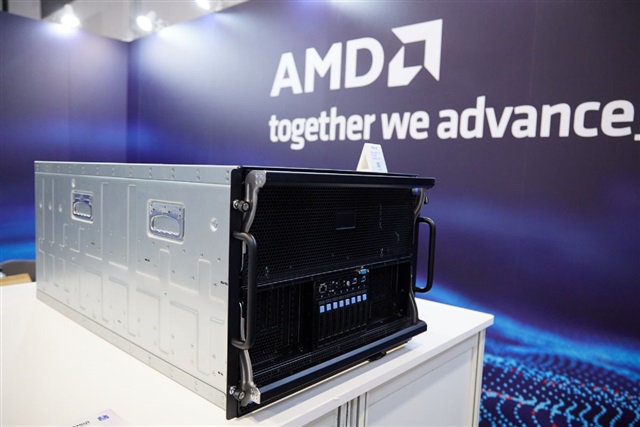
A new industry alliance is taking shape to push Ethernet to the forefront of AI data center networking. At the 2025 Open Compute Project Global Summit, the Ethernet for Scale-Up Networking (ESUN) Alliance made its debut, bringing together some of North America’s most influential AI and infrastructure leaders—including OpenAI, Meta, AMD, Nvidia, Microsoft, and Broadcom. Their shared mission: accelerate the shift to high-performance, Ethernet-based fabrics purpose-built for AI at massive scale.
Why this matters right now
AI models are exploding in size and complexity, and the networks that connect thousands of GPUs and accelerators have become a critical bottleneck. Training and inference at hyperscale require predictable latency, staggering bandwidth, and the ability to scale seamlessly as clusters grow. By rallying behind Ethernet, the ESUN Alliance aims to deliver a more open, interoperable foundation that can keep pace with AI’s rapid evolution while lowering total cost of ownership.
What ESUN is setting out to do
While full technical details will unfold over time, the Alliance’s focus is clear: make Ethernet the default, high-performance fabric for AI scale-up and scale-out environments. That means aligning hardware, software, and optics across vendors to ensure clusters can be built, expanded, and optimized without lock-in or fragmentation.
In practical terms, expect the group to champion:
– Common specifications for Ethernet-based AI fabrics that prioritize low latency, high throughput, and reliability
– Interoperability across NICs, switches, accelerators, and software stacks
– Reference designs and best practices that shorten deployment timelines
– Testing, validation, and potential certification paths to guarantee real-world performance at scale
– Contributions that span data plane and control plane innovations to improve congestion management and end-to-end efficiency
Why Ethernet for AI
Ethernet’s momentum in data centers is no accident. It offers a broad ecosystem, rapid innovation cycles, and economies of scale. For AI teams, that translates into choice among vendors, faster access to cutting-edge components, and the ability to fine-tune networks as workloads evolve. By unifying behind open, Ethernet-based approaches, the ESUN Alliance is betting that data centers can achieve both top-tier performance and long-term flexibility.
Who’s involved and why it’s notable
The companies backing ESUN represent every layer of the AI stack: leading research labs and model developers, hyperscale cloud providers, GPU and CPU designers, and end-to-end networking silicon and software. With these players aligned, the Alliance is positioned to influence everything from switch architectures and NIC capabilities to software frameworks that better exploit the underlying fabric.
What this could change for AI infrastructure
If ESUN delivers on its goals, AI builders could see:
– Faster time to train and time to deploy through better network utilization
– More predictable performance under heavy, bursty AI workloads
– Lower costs via open standards and competitive vendor ecosystems
– Smoother cluster growth without wholesale redesigns
– A clearer roadmap for data center teams planning multi-year AI investments
Alignment with open compute principles
Launching at the Open Compute Project Global Summit signals a commitment to open collaboration. Community-driven development has a strong track record in accelerating practical, scalable designs, and ESUN’s approach appears to follow that ethos—shipping frameworks and guidance that the industry can adopt, iterate on, and standardize.
What to watch next
As the Alliance ramps up, keep an eye out for technical milestones and early deployments:
– Initial specifications and performance targets tailored to AI training and inference clusters
– Reference architectures that balance cost efficiency with peak throughput
– Tooling and test suites that validate interoperability across multi-vendor environments
– Case studies from hyperscale data centers that demonstrate real-world gains
The bottom line
AI is pushing data center networks harder than ever, and the industry is responding in unison. By coordinating around Ethernet for scale-up networking, the ESUN Alliance aims to turn a fragmented landscape into an open, high-performance foundation that can evolve as quickly as AI itself. With so many major players aligned, Ethernet’s role in next-generation AI infrastructure looks set to grow—and fast.