Taiwan’s NYCU and Phison Partner to Build Smarter GPU Resource Management Platform
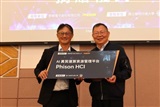
Taiwan’s National Yang Ming Chiao Tung University (NYCU) is joining forces with Phison Electronics to develop a new GPU resource management platform designed to make campus computing more efficient, flexible, and accessible.
The collaboration focuses on improving how high-performance computing resources are allocated and used across the university. As demand for artificial intelligence, data science, machine learning, and advanced research workloads continues to rise, universities are under growing pressure to manage GPU capacity more effectively. By working with Phison, NYCU aims to create a smarter system that can help researchers and students access the computing power they need while reducing idle resources and improving overall utilization.
The new platform is expected to support heterogeneous computing environments, where different types of processors and hardware resources work together to handle complex tasks. This approach is especially important for AI development, where workloads often require a combination of GPUs, storage technologies, and optimized computing infrastructure.
For NYCU, the initiative could strengthen its position as a major research institution in Taiwan’s technology ecosystem. Efficient GPU management can help accelerate academic research, improve training for AI-related programs, and support innovation in fields such as semiconductors, autonomous systems, biomedical technology, and big data analytics.
Phison Electronics, widely known for its expertise in storage and controller technologies, brings industry experience that can help bridge the gap between academic research and real-world computing infrastructure. The partnership highlights the growing importance of collaboration between universities and technology companies as AI workloads become more demanding.
By building a dedicated GPU resource management platform, NYCU and Phison are taking a practical step toward making advanced computing resources easier to manage and more widely available. The project reflects a broader trend in higher education and enterprise technology: maximizing computing efficiency while preparing for the rapid expansion of AI-driven applications.
As artificial intelligence continues to reshape research and industry, partnerships like this could play an important role in building the next generation of intelligent computing infrastructure.