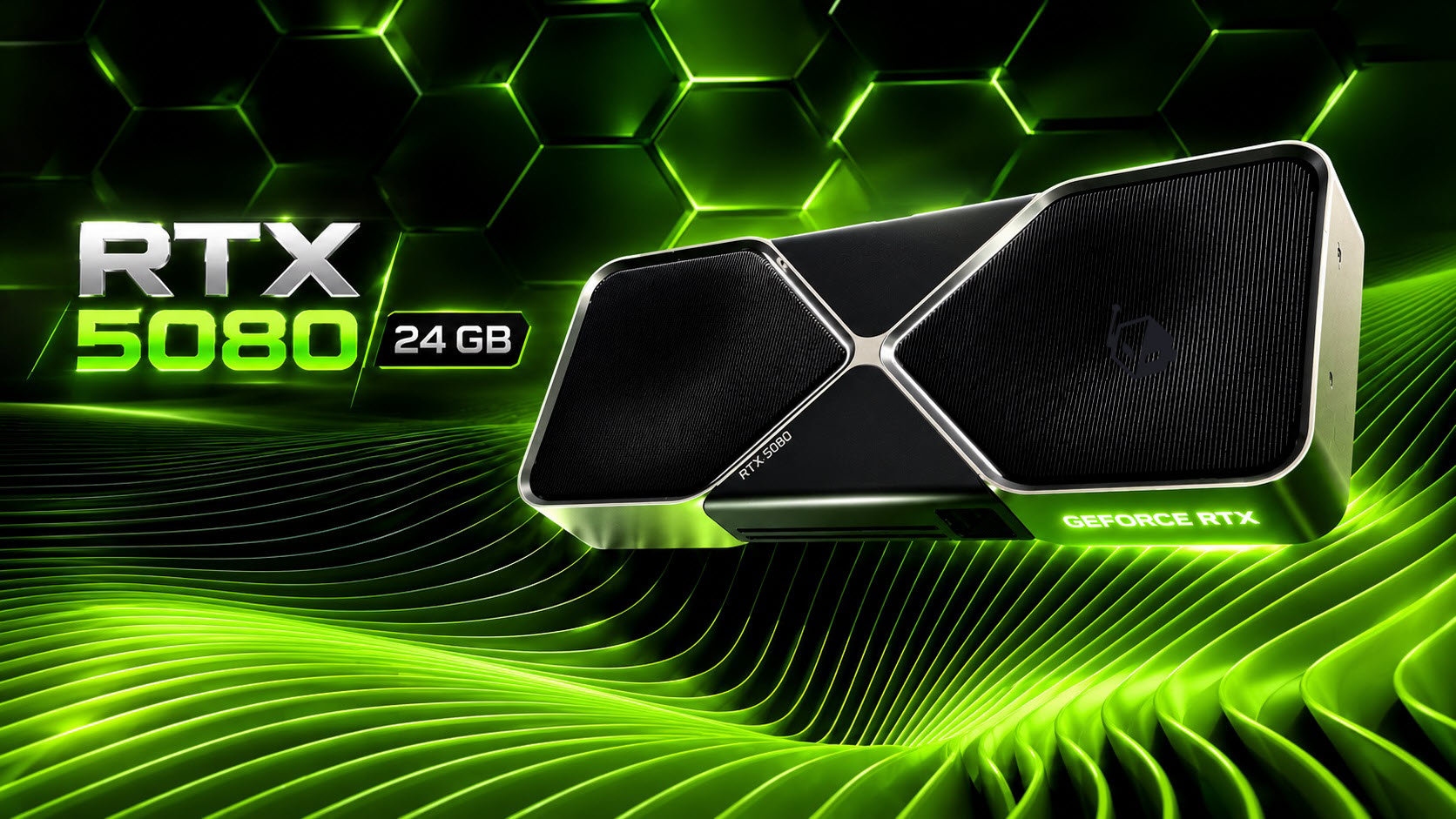
NVIDIA RTX 5080 24GB Reportedly Cancelled as GDDR7 Memory Costs Rise
NVIDIA may no longer be moving forward with a 24GB version of the GeForce RTX 5080, according to new industry reports. The rumored high-memory model was expected to replace or sit above the current RTX 5080 16GB, but rising GDDR7 memory costs appear to have changed those plans.
The main issue is said to be the price and availability of 3GB GDDR7 memory modules. The current RTX 5080 16GB uses 2GB GDDR7 chips, which are also used across much of the RTX 50 series lineup. A 24GB RTX 5080 would require higher-capacity 3GB modules, and those chips are reportedly much harder to secure at a reasonable price.
Because of this, NVIDIA is now expected to continue producing the RTX 5080 16GB instead of replacing it with a 24GB variant. Earlier rumors suggested the 16GB model could be discontinued, especially after the card briefly disappeared from NVIDIA’s official marketplace. However, graphics cards are often listed and removed depending on supply, region, or availability, so that move does not necessarily confirm cancellation.
The biggest challenge for a 24GB RTX 5080 would have been pricing. Reports suggest that using 3GB GDDR7 modules could have pushed the card’s price dramatically higher. Some estimates claimed the RTX 5080 24GB could have approached the $2,000 range, which would be nearly double the launch price of the RTX 5080 16GB Founders Edition.
That kind of pricing would have made the card difficult to position in the market. While more VRAM is attractive to gamers, creators, and AI-focused users, a major price jump could reduce demand, especially when high-end GPU prices are already under pressure.
The RTX 5080 16GB is still facing limited availability at retailers, and some custom models have seen steep price increases. Recent reports suggested that certain partner cards could rise significantly in price, with some increases reaching as much as $1,200 depending on the model and region. In that environment, launching an even more expensive 24GB version could have created further backlash from buyers.
For now, the RTX 5080 16GB appears set to remain NVIDIA’s main offering in this segment. While a 24GB model would have appealed to users who need more memory for demanding workloads, the cost of GDDR7 memory seems to have made the product less practical.
If the reports are accurate, NVIDIA’s decision reflects the current state of the GPU market: memory supply, production costs, and final retail pricing are becoming just as important as raw performance. Gamers and PC builders hoping for a higher-VRAM RTX 5080 may have to wait until memory prices improve or until NVIDIA adjusts its lineup in the future.


