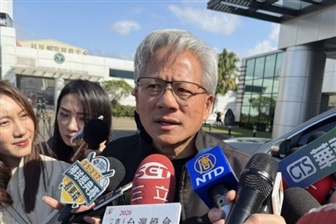
Nvidia CEO Jensen Huang landed in Taiwan on the afternoon of January 29, 2026, quickly drawing attention as debate continued over the future of the global semiconductor supply chain. His visit comes amid widespread reports claiming the U.S. government is planning to move 40% of Taiwan’s chipmaking capacity to the United States—an idea that has sparked headlines and speculation across tech and financial circles.
Speaking in Taiwan, Huang addressed the discussion directly and pushed back on how the situation has been framed. He clarified that the “40%” figure being circulated is being misunderstood. Rather than suggesting an attempt to relocate 40% of Taiwan’s existing semiconductor output, Huang indicated the number refers to new capacity that could be built, not a transfer of current production away from Taiwan.
The distinction matters for anyone watching the semiconductor industry closely. Taiwan remains a central hub for advanced chip manufacturing, and the suggestion that nearly half of its capacity could be shifted elsewhere naturally raises concerns about supply stability, business continuity, and geopolitical risk. Huang’s remarks aim to reduce uncertainty by emphasizing that expansion in the United States is more about adding manufacturing capability than stripping existing capacity from Taiwan.
His comments also highlight a broader reality shaping the tech sector in 2026: chip production is becoming more geographically diversified. Governments and manufacturers are increasingly focused on strengthening supply chain resilience, securing access to advanced manufacturing, and reducing dependence on any single region. For companies like Nvidia—deeply reliant on cutting-edge semiconductors—clarity around capacity planning is critical for product roadmaps, AI hardware demand, and long-term investment decisions.
Huang’s Taiwan trip reinforces how closely the world is watching semiconductor manufacturing strategy. As countries compete to grow domestic chip production, industry leaders are working to balance expansion plans with the practical limits of building advanced fabs—and the importance of maintaining strong partnerships in established manufacturing centers like Taiwan.