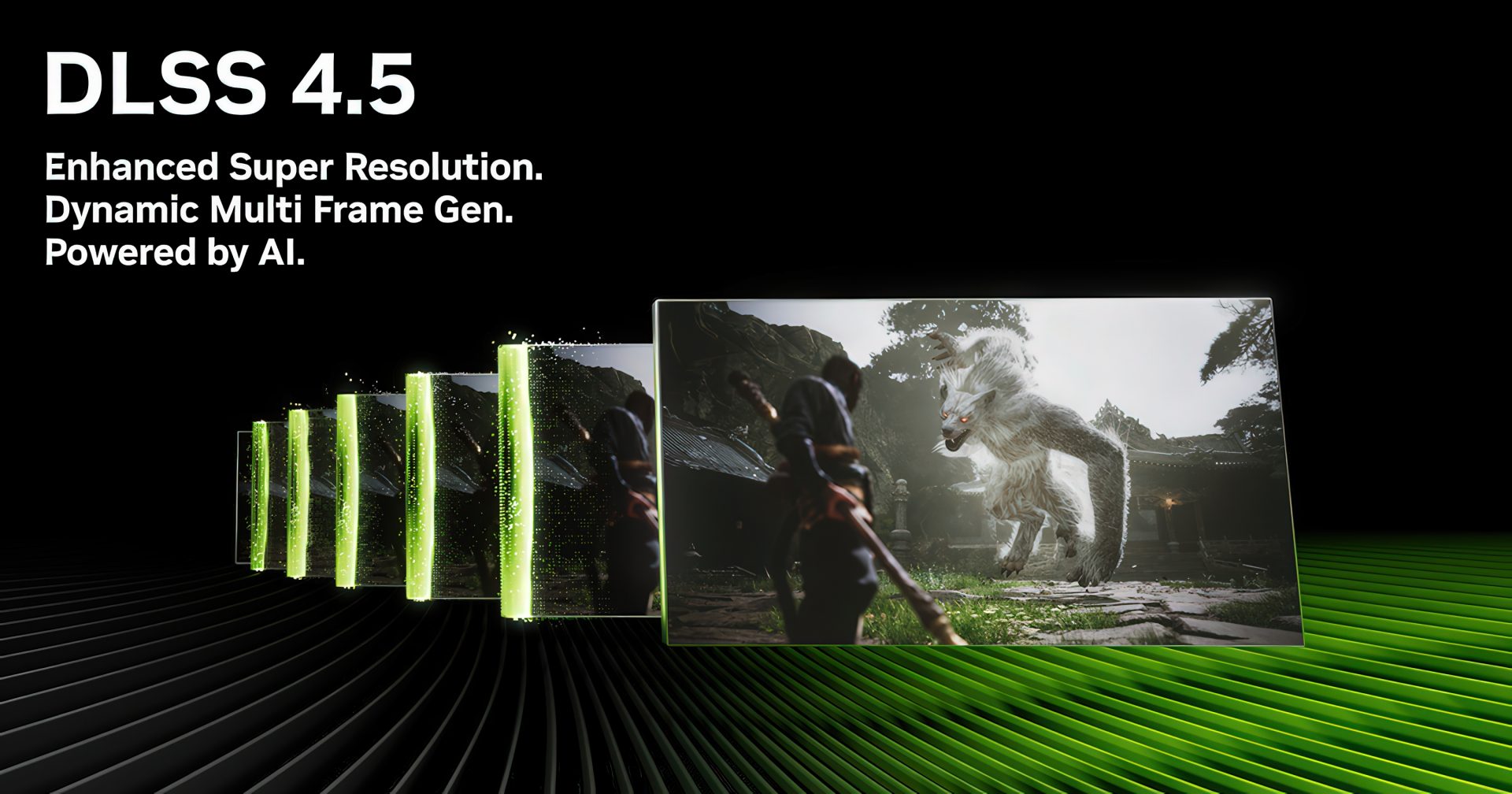
NVIDIA’s next big DLSS upgrade, DLSS 4.5 Dynamic Multi-Frame Generation, is expected to roll out soon. But according to early user reports, some PC gamers are already getting it to work right now through a behind-the-scenes update delivered via the NVIDIA App.
Here’s what’s happening. Even though Dynamic Multi-Frame Generation isn’t officially exposed as a selectable feature inside the NVIDIA App yet, users say NVIDIA is pushing key components through Over-the-Air (OTA) updates. Reports point to Streamline 2.11 and a newer DLSS build (310.6.0) being delivered in the background, setting the stage for the feature to function before it’s formally “switched on” for everyone.
The workaround that’s gaining attention is tied to enabling DLSS Overdrive in the NVIDIA App. With Overdrive enabled, users report that Dynamic Multi-Frame Generation becomes active—despite the option not appearing in the app’s normal menus. Additionally, some users claim they can manually force it by using NVIDIA Profile Inspector, searching for a setting labeled “DLSSG mode,” and changing its value to hex 4.
DLSS 4.5 RTX Super Resolution has been available since January, but the more performance-focused additions—DLSS 4.5 6X Frame Generation and the new Dynamic Multi-Frame Generation—are the features many players have been waiting for. The appeal is straightforward: higher perceived frame rates and smoother gameplay, especially on high-refresh-rate monitors, without needing the GPU to fully render every single frame.
To understand why Dynamic Multi-Frame Generation is a big deal, it helps to compare it to traditional Multi-Frame Generation (MFG). Standard MFG works by inserting extra “generated” frames between real rendered frames. NVIDIA has expanded this approach so it can generate up to five additional frames. The tradeoff is that pushing higher multipliers can increase the chance of visual artifacts, especially in fast motion or scenes with fine detail.
Dynamic Multi-Frame Generation aims to solve that by being more adaptive. Instead of always generating a fixed amount of extra frames (like 4X or 6X), it can dynamically generate anywhere from one to five frames depending on what’s needed to better match your monitor’s refresh rate and keep gameplay feeling fluid. In theory, that means you get smoother motion when you need it, but fewer generated frames when you don’t—helping preserve visual clarity and reducing the artifacting that can appear when frame generation is pushed too hard.
In short, early reports suggest the building blocks for DLSS 4.5 Dynamic Multi-Frame Generation may already be arriving through NVIDIA App OTA updates, and a few users have found ways to activate it ahead of the official switch. Anyone who prefers a safer route can simply wait for NVIDIA’s full public release and in-app toggle, but the early findings are a strong hint that the launch is imminent.