NVIDIA Unveils Stunning Blackwell GB202 GPU Die Shots and GDDR7 Memory, ASUS GeForce RTX 5090 Astral Reaches 3.4 GHz Overclock Under LN2, Approaching a 1000W Power Draw
ASUS has unveiled jaw-dropping images of the highly anticipated GeForce RTX 5090’s Blackwell GB202 GPU and its GDDR7 memory, along with some incredible overclocking feats. The GeForce RTX 5090 Astral, a flagship model, has achieved new heights with overclocking exceeding 3 GHz, pushing the power envelope of this already formidable GPU nearly to its edge.
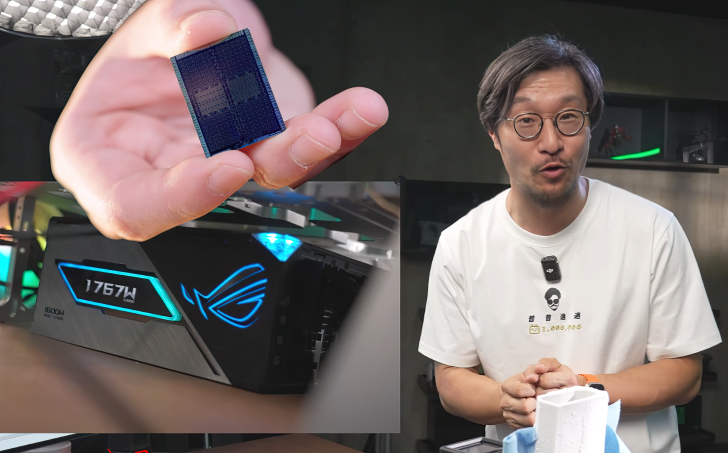
ASUS’s China Manager, Tony Yu, embarked on an impressive overclocking journey with the ROG GeForce RTX 5090 Astral GPU by employing liquid nitrogen (LN2) cooling. This setup allowed the card to reach a staggering GPU frequency of 3390 MHz and push its memory frequency to an astounding 34 Gbps—marking a 21% boost over the standard 28 Gbps frequency. Such achievements have set the stage for professional enthusiasts to further push these limits as they attempt to break more records.
For performance testing, the RTX 5090 was put through its paces in various benchmark tests, including 3DMark Time Spy Extreme, Fire Strike Ultra, Port Royal, and Wild Life Extreme. The results revealed a solid performance boost: a 25% increase in 3DMark Port Royal, 18% in Time Spy Extreme, and 12% in FireStrike Ultra. Achieving these numbers required cranking up the boost clock by a remarkable 41%, reaching 3.4 GHz—nearly 1 GHz more than the base NVIDIA GeForce RTX 5090. This power-hungry beast consumed approximately 1000W, with overall system power close to 1800W.
Tony Yu also shared detailed, high-resolution die images of the NVIDIA GB202 “Blackwell” GPU and GDDR7 memory, featured in the RTX 5090. The NVIDIA RTX Blackwell GPUs, crafted with TSMC’s state-of-the-art 4nm process, boast up to 92 billion transistors. They offer unmatched performance with 4000 AI TOPS, 380 RT TFLOPs, and 125 TFLOPS of FP32 compute power. Additionally, the introduction of the GDDR7 memory interface elevates bandwidth to a blazing 1.8 TB/s, setting the stage for mesmerizing gaming experiences.
GDDR7 technology represents a significant leap forward from its predecessor, GDDR6/X, doubling bandwidth and data rates while maintaining superior energy efficiency. The support for PAM4 signaling and the top-notch PCB materials enhances overall system performance, making the RTX 50 GPUs a marvel of engineering.
The impressive NVIDIA Blackwell GB202 GPU, measuring 922mm², is a 21% die size increase on the same technology node, factoring into NVIDIA’s $2000 price tag for the RTX 5090 GPUs. While a potential Titan or Ti variant remains speculative, the possibility of a specialized workstation variant with expanded core configurations and memory could be a prospect yet to be revealed.