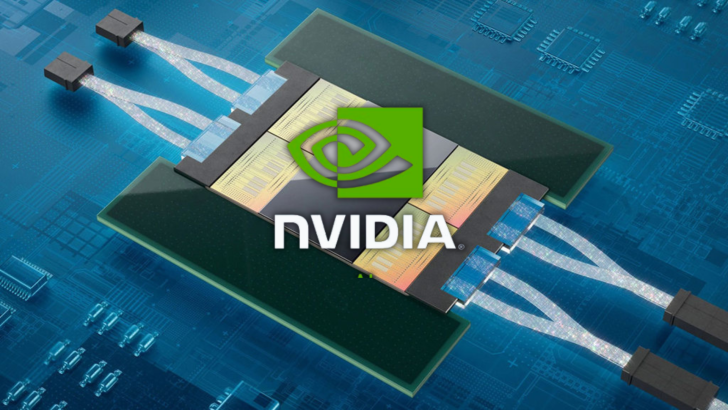
NVIDIA is pushing the boundaries of AI accelerators with an innovative approach that could redefine how such devices are built and operate. At the 2024 International Electron Devices Meeting (IEDM), NVIDIA unveiled its ambitious plan to incorporate “silicon photonic” technology into their next-generation AI accelerators.
As the demands for AI computing accelerate, the industry faces a pressing need for groundbreaking advancements in chip packaging techniques. Silicon photonics (SiPh) has emerged as a promising alternative to traditional methods, offering the potential for higher bandwidth and lower latency, crucial for handling the vast computational needs of AI applications.
NVIDIA’s forward-thinking strategy involves the use of silicon photonics interposers that swap out conventional electrical interconnects. This integration aims to enhance data transfer efficiency by minimizing energy loss, thus paving the way for more energy-efficient operations.
A key highlight of NVIDIA’s vision is the vertical stacking of GPU tiles, a technique that promises increased chip density while reducing spatial demands. Dubbed as “GPU tiers,” this configuration involves vertically stacking four GPU tiles to streamline data flow and potentially enable power-saving measures. Moreover, NVIDIA plans to bolster this setup by 3D-stacking DRAM chips—six per tile—further exemplifying their commitment to maximizing performance and efficiency.
While this blueprint appears promising, it is not without challenges. Silicon photonics is still a nascent technology, and for it to become integral in mainstream applications, high-volume production practices need to be developed. Moreover, the aggressive nature of 3D stacking presents significant thermal management hurdles that NVIDIA will need to address through innovative cooling solutions.
Expert Ian Cutress anticipates that this ambitious implementation by NVIDIA could take shape as early as between 2028 and 2030, considering the technical hurdles to be overcome.
NVIDIA’s bold vision for AI computing underscores the company’s dedication to innovation. As they explore the frontier of silicon photonics and 3D stacking, the tech world watches closely, eager to see how these innovations will drive AI technology forward in the coming decades.