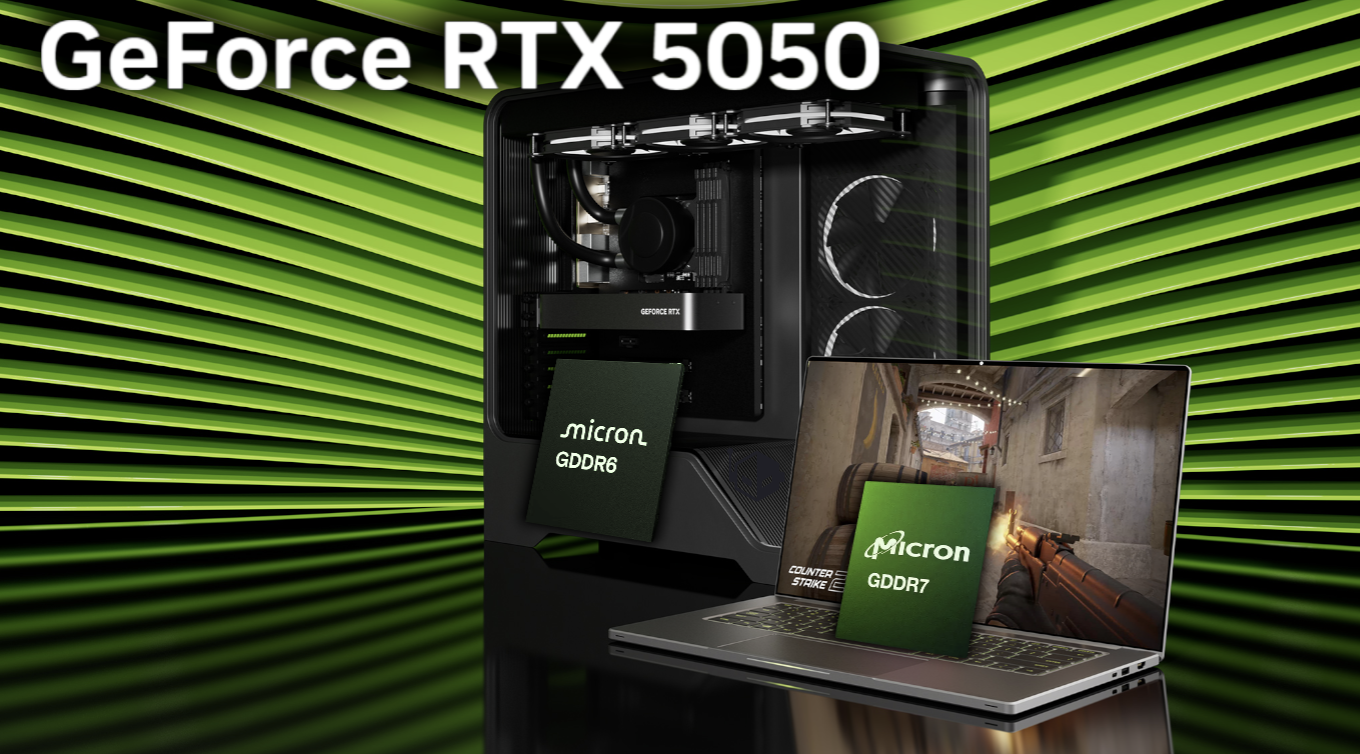
NVIDIA has unveiled its GeForce RTX 5050 GPU line for both desktops and laptops, designed to cater to budget-conscious gamers. Priced at $249 for desktops and $999 for laptops, this entry-level solution is equipped with distinct features to optimize performance across platforms.
One of the standout differences between these two versions is memory type. While the desktop version uses 20 Gbps GDDR6 memory, the laptop version boasts 24 Gbps GDDR7 memory. This upgrade gives the laptop variant an impressive 384 GB/s bandwidth, about 20% more than the desktop’s 320 GB/s. Both models feature a 128-bit bus interface and 8 GB of VRAM, but the greater bandwidth in laptops can significantly enhance certain gaming experiences.
The choice of memory type aims to optimize power efficiency, crucial for maintaining excellent battery life and thermal performance in portable devices. NVIDIA explains that while GDDR7 could also benefit desktop variants with higher bandwidth and power efficiency, the current cost and supply constraints of GDDR7 make GDDR6 a more viable option for desktops.
In terms of specifications, both versions share a similar configuration, featuring 2560 cores. However, the core clock speeds and power consumption differentiate them. The desktop variant delivers slightly better performance with a total graphics power (TGP) of 130W, compared to the laptop’s 35-100W range, making each tailored for its intended use.
NVIDIA’s strategic memory choice reflects a balance between performance, cost, and power efficiency, ensuring that each variant is optimized for its specific platform needs. As the market evolves, we might see further developments, possibly even a GDDR7 desktop variant in the future.