NVIDIA’s CEO, Jensen Huang, has offered a revealing look at where PC graphics are headed next, and he didn’t mince words: neural rendering is the future. At the same time, he acknowledged a problem gamers are feeling right now—graphics cards are getting expensive and increasingly difficult to find in the models people actually want—and suggested NVIDIA could explore an unexpected way to ease the pressure: bringing back older GeForce GPUs.
The comments came during a CES 2026 Q&A session where Huang was asked directly about today’s painful GPU market conditions. The question focused on soaring prices for new graphics cards, ongoing supply constraints, and whether producing older-generation GPUs on more available manufacturing nodes could help improve availability. Another possibility raised was offering lower-memory versions of some products to increase supply.
Huang’s response left the door open. He said it’s “within the realm of possibility” that NVIDIA could revisit certain older GPU generations and even attempt to bring newer AI-driven features to them. However, he also emphasized that doing so wouldn’t be as simple as flipping a switch—adding the latest RTX and DLSS-era advancements to older chips could require significant engineering work and additional research and development. In other words, it’s possible, but not guaranteed, and NVIDIA would have to decide whether the effort makes sense.
That answer lands at an interesting time, because recent chatter suggests the GeForce RTX 3060 could be ramped up again. Despite being an older model, the RTX 3060 has remained extremely popular with PC gamers and has consistently shown up as one of the most widely used GPUs. A return to production would be a practical move for boosting supply in the mainstream market where demand remains high.
Still, it’s important to set expectations: if the RTX 3060 does come back, it would likely return as the same Ampere-based product, not a “new” card loaded with modern Blackwell-era capabilities. Features tied to newer GPU designs—such as more advanced forms of multi-frame generation, next-generation ray tracing upgrades, neural shader pipelines, or deeper neural rendering support—generally require architectural changes at the silicon level. An older chip can’t simply be updated to include hardware that was never built into it.
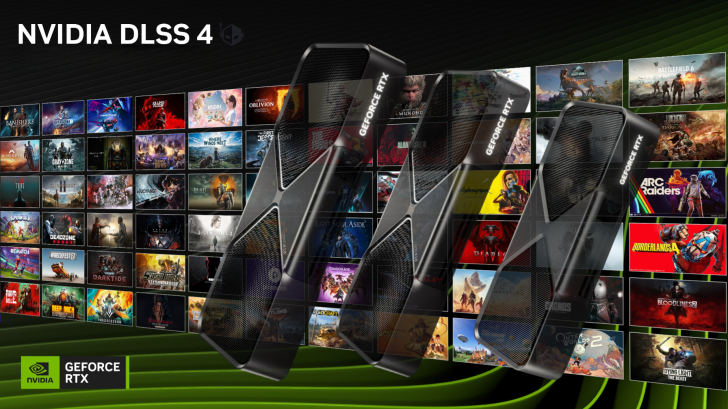
Where older RTX graphics cards can benefit is on the software and AI model side. NVIDIA’s newer DLSS models can improve image quality and performance across multiple generations, and GPUs from the RTX 20, RTX 30, and RTX 40 series can take advantage of updates like DLSS Super Resolution improvements. But there are still limitations. Older architectures rely more heavily on FP16-style throughput, while the newest RTX lineup introduces stronger support for newer precision formats such as FP8, which can make advanced AI workloads more efficient. That gap can translate into higher performance costs for cutting-edge DLSS modes on older cards, even when those features are technically supported.
Even so, reviving older GPUs could help in a very real way: it can increase overall supply and give gamers more purchase options, particularly in price tiers where the market has been squeezed the hardest.
Huang also addressed a bigger, longer-term question: what will gaming graphics look like in the coming years, and how central will AI become? His answer was clear—neural rendering is the direction NVIDIA is betting on. He described a future where DLSS continues to evolve and where more of what you see on screen is generated or inferred by AI, not traditionally rendered pixel-by-pixel the way games have worked for decades.
The concept is based on a major shift in how frames are produced. Rather than computing every pixel with full traditional rendering methods, the idea is to compute fewer pixels directly—making those pixels extremely high quality—then use AI to infer the remainder. Huang compared it to generative AI in spirit, but with a key difference: the AI output is heavily “conditioned” by real rendered data, meaning developers can guide results toward a stable, controllable image that still reflects the game world accurately.
NVIDIA has already been building toward this through RTX neural shader research, including areas like neural texture compression, neural materials, and neural radiance caching. Put together, these technologies point toward a future where classic shader workloads increasingly give way to neural methods, and where the balance of performance shifts toward AI-assisted rendering rather than brute-force pixel computation.
The takeaway from Huang’s remarks is twofold. In the short term, NVIDIA appears to be at least considering creative supply-side options—possibly including the return of older graphics cards—if it helps address price and availability issues. In the long term, the company is doubling down on AI as a foundational pillar of gaming visuals, with neural rendering positioned not as a side feature, but as the next major leap in real-time graphics.