NVIDIA RTX Spark Preview Drivers Arrive as Windows on Arm AI PCs Prepare for Fall Launch
NVIDIA’s RTX Spark platform is moving closer to launch, with the first developer preview drivers now available for native Windows on Arm support. The rollout marks an important step for developers preparing applications for the next wave of AI PCs powered by NVIDIA’s upcoming hardware.
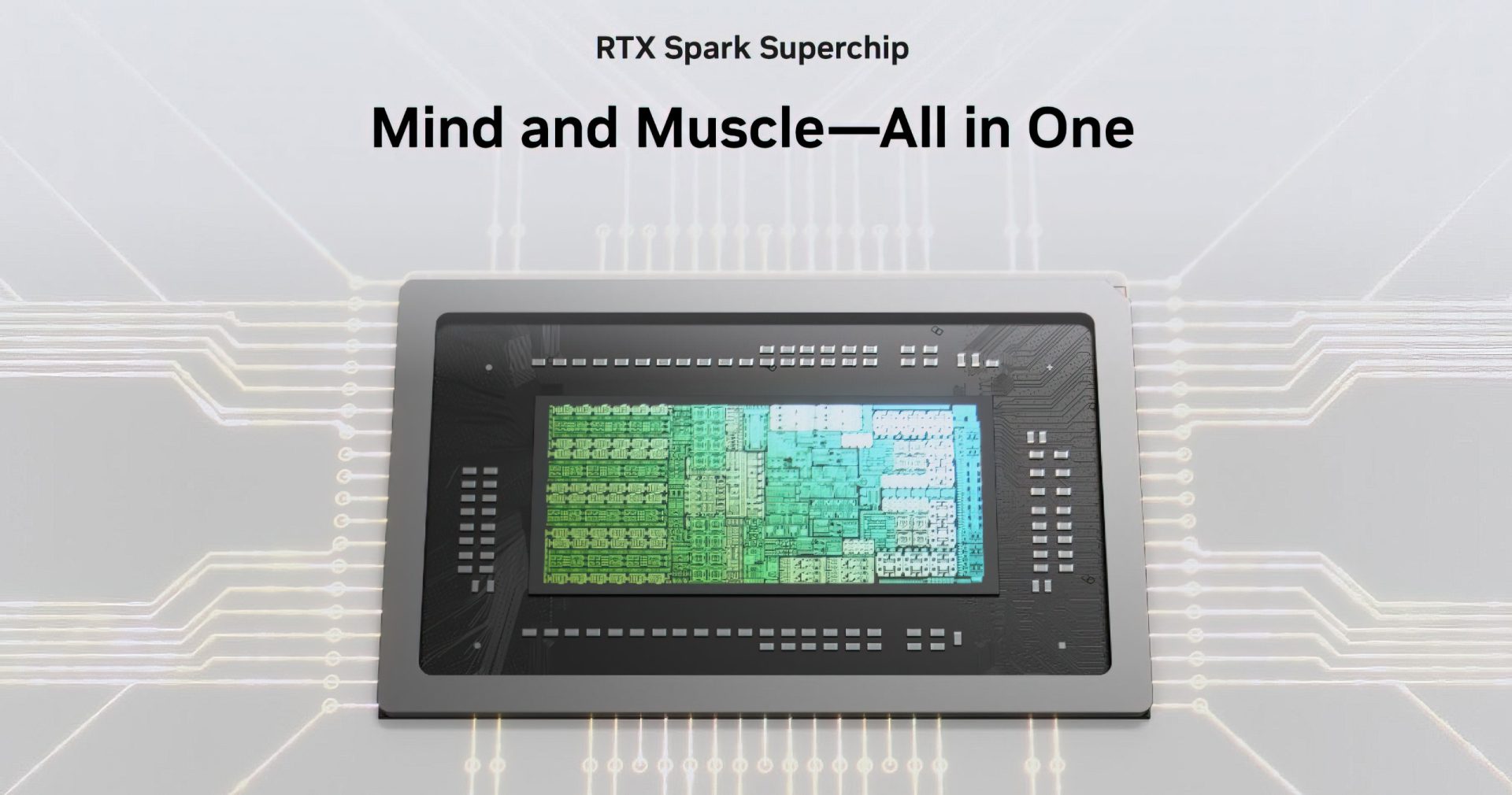
RTX Spark systems are expected to ship this fall across a range of laptops and compact mini PCs. These devices are built around a powerful single-chip design that combines NVIDIA’s Grace CPU architecture with a Blackwell GPU, 128 GB of memory, and a high-speed interconnect fabric. The goal is to deliver strong local AI performance in portable and desktop-friendly systems designed for developers, creators, and advanced PC users.
The first preview driver release is version 616.00, aimed initially at the Microsoft Surface RTX Dev Box. This developer-focused machine features a fanless design and serves as an early platform for testing Windows on Arm applications built for RTX Spark hardware.
Alongside the driver release, CUDA 13.4 now includes early support for RTX Spark as part of a Windows on Arm preview. This preview enables developers to begin building CUDA applications for Windows Arm64 targets. It also supports cross-compiling Windows Arm64 CUDA applications by using the Windows x86_64 Toolkit.
Starting with CUDA 13.4, NVIDIA is changing how the driver is delivered. Instead of bundling the driver directly inside the CUDA Toolkit, the company will release it separately through its Developer Driver program, beginning with the R616 driver branch and newer versions.
For developers, this early preview is designed to make the transition to Windows on Arm smoother before RTX Spark systems become widely available. NVIDIA says teams can begin porting their applications now on existing development setups, check for incompatible dependencies, and prepare early Arm64 builds so their software is ready when RTX Spark PCs arrive later this year.
Developers are encouraged to review their applications and third-party libraries for Arm64 compatibility, choose the right Arm64 or Arm64EC porting strategy, and begin building and testing on Windows on Arm. NVIDIA also recommends validating CUDA and NVIDIA software paths, testing installation and update processes, checking performance, and performing final validation on RTX Spark hardware once supported systems are available.
As this is an early developer preview, there are several known issues. CUDA transfers using pageable or unpinned host memory may deliver lower-than-expected performance. NVIDIA recommends using page-locked host memory where possible through cudaMallocHost, cudaHostAlloc, or cudaHostRegister.
Another issue involves the display during driver installation. On some systems, the built-in screen may go blank for around two minutes during either an Express or Custom installation. NVIDIA says the display should recover automatically and the installation should complete successfully. Users are advised not to restart or power off the system while the screen is blank.
There is also a potential stability issue with PyTorch build workflows. Running PyTorch CI/CD workloads may trigger a GPU timeout, which could cause the system to become unresponsive or restart unexpectedly. NVIDIA says the issue is still being investigated.
Nsight Copilot is also unavailable in this preview release. The feature is currently disabled on Windows Arm64 for the developer preview.
RTX Spark is shaping up to be one of NVIDIA’s most important moves in the AI PC market. Early systems shown at industry events have demonstrated strong potential in AI workloads, creative applications, and even gaming scenarios. With Grace CPU cores, Blackwell graphics, and a large unified memory pool, RTX Spark could become a compelling platform for developers building next-generation AI apps on Windows on Arm.
However, real-world performance remains the key question. Some early benchmark results have already surfaced, but many appear to be based on engineering samples rather than final retail hardware. That means they may not accurately represent the performance, efficiency, or software stability of finished RTX Spark systems.
For now, the release of the first Windows on Arm preview drivers is a major milestone. It gives developers an early path to prepare their applications and helps build the software ecosystem ahead of the expected fall launch. Once retail RTX Spark laptops and mini PCs arrive, users should get a clearer picture of how NVIDIA’s AI PC platform performs in everyday workloads, local AI processing, content creation, software development, and gaming.


