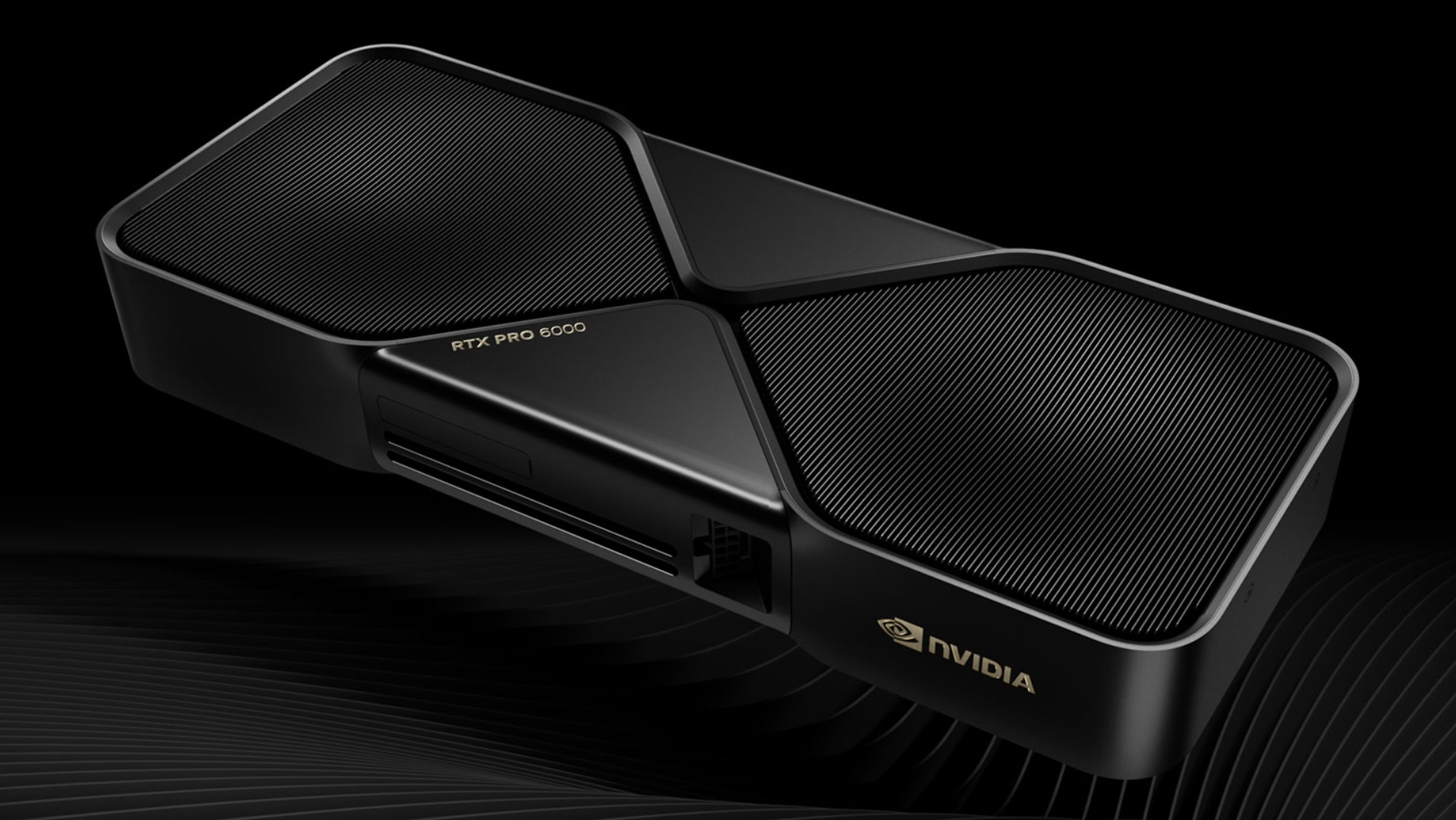
NVIDIA has unveiled its newest powerhouse in the world of graphics cards, the RTX PRO 6000 “Blackwell”. This high-performance prosumer card, while designed with the same architecture as the RTX 5090, surpasses its more gaming-focused counterpart in several key areas.
At its core, the RTX PRO 6000 boasts an impressive 24,064 cores nestled within 188 streaming multiprocessors (SMs), a 10.5% increase over the RTX 5090’s 21,760 cores across 170 SMs. This massive core count, although not the pinnacle of what the Blackwell architecture can achieve, represents the highest we’ve seen in a consumer-level card to date. Plus, the card’s 600W TDP harnesses the maximum power offered by a single 12V-2×6 connector, slightly above the 575W of the RTX 5090.
Performance metrics show the RTX PRO 6000 delivers 4000 AI TOPS, a 19% boost, and achieves 125 TFLOPS in FP32 and 380 TFLOPS in RT performance, all of which are significant improvements over the RTX 5090’s capabilities. The most striking upgrade, however, is its massive 96 GB of GDDR7 memory—three times the frame buffer on the RTX 5090—with a consistent 512-bit bus and 28 Gbps memory speed, amassing a total bandwidth of 1792 GB/s.
Design-wise, the RTX PRO 6000 sticks with the classic double-flow-through and dual-slot form factor, and supports MIG (Multi-Instance-GPU) capabilities, allowing it to operate in 4x 24 GB, 2x 48 GB, or 1x 96 GB modes.
Benchmark tests put this new titan through its paces with GameTechBench using full path tracing—a rigorous CGI rendering method—demonstrating its raw power. The RTX PRO 6000 edges out the RTX 5090 by 5% in 4K performance but falls slightly behind at 1440p during real-time ray tracing tests. In offline path tracing rendering, it retains a modest 2% advantage over its predecessor.
Despite these seemingly modest gains compared to its on-paper specifications, the RTX PRO 6000’s robust VRAM and enhanced specs make it an enticing option for workstation professionals, prosumers, and AI enthusiasts. Its groundbreaking AI-tuned hardware sets a new standard in visualization, unlocking unprecedented levels of realism. While the full potential of this beast may require further optimization, its debut sends a clear message: NVIDIA is pushing the envelope in graphics technology.