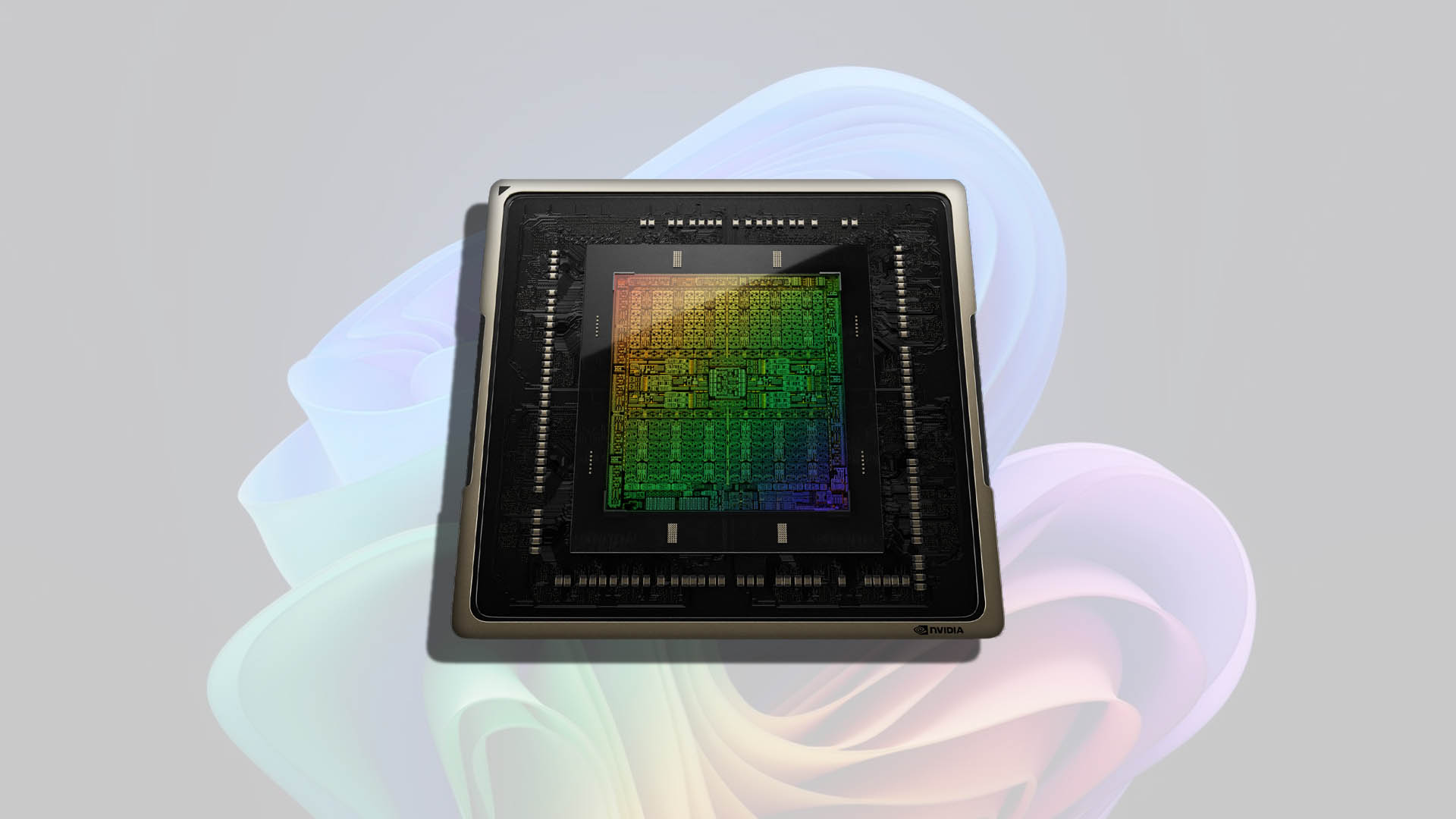
NVIDIA RTX 4060 Runs on Windows 11 ARM, But Performance Shows Why It Is Not Ready for Gamers
Windows 11 on ARM is slowly becoming more capable, and NVIDIA’s first native driver support for ARM-based Windows is an important step forward. It opens the door for future hardware combinations that were once difficult or nearly impossible to test. However, one recent experiment shows that getting an RTX graphics card running on Windows 11 ARM is very different from getting good performance out of it.
A developer managed to pair an NVIDIA GeForce RTX 4060 with a Huawei Qingyun W510 system powered by a 24-core server processor. On paper, that sounds like an unusual but exciting setup. In practice, the results show why most users should still stick with traditional x86 Windows PCs for gaming and high-performance graphics workloads.
The test system included the Huawei Qingyun W510 ARM-based CPU with 24 cores, 32GB of DDR4 memory running at 2,933MHz, and an RTX 4060 graphics card. While the hardware itself is interesting, simply booting Windows 11 ARM on this setup was not straightforward. The developer reportedly had to use an open-source patch to get past the first major obstacle.
The bigger challenge was GPU driver support. Windows 11 ARM can run many x64 applications through emulation, but drivers are a different story. Kernel-level drivers cannot simply be translated in the same way regular applications can. That is where NVIDIA’s native ARM driver support becomes important, as it allowed the RTX 4060 to be detected and used on the system.
Once everything was running, the experiment moved to the most important question: how well does it perform?
Unfortunately, the answer is not very well.
Gaming performance on Windows 11 ARM with the RTX 4060 was extremely limited. This was expected to some degree, since many games still rely on translation layers when running on ARM-based Windows. That extra software layer can reduce performance significantly. However, the CPU also appears to be a major bottleneck.
Although the Huawei Qingyun W510 has 24 cores, its single-core performance is not strong enough for modern gaming demands. Many games still depend heavily on fast single-threaded CPU performance, and that weakness holds back the RTX 4060. As a result, the graphics card is unable to show its true potential.
In Black Myth: Wukong, one of the more visually demanding modern games, the system managed an average of around 21 frames per second at 1080p. Genshin Impact delivered roughly 20 frames per second at the same resolution. These numbers are far below what users would normally expect from an RTX 4060 in a standard x86 gaming PC.
Synthetic benchmark results were more encouraging, at least in native ARM64 tests. 3DMark Night Raid, Solar Bay, and Speed Way were able to run without major issues. The system scored 43,530 in Night Raid, 32,370 in Solar Bay, and 2,252 in Speed Way. These results show that native ARM64 workloads can function, but real-world gaming remains a much bigger challenge.
The test highlights both the progress and the limitations of Windows 11 ARM. Native driver support from NVIDIA is a meaningful development, especially for future ARM-based PCs and specialized systems. It suggests that more powerful ARM machines could eventually support dedicated RTX graphics cards more effectively.
Still, this experiment also makes one thing clear: mixing hardware designed for different ecosystems can lead to major performance compromises. Even when the software installs and the GPU works, that does not mean the experience will be smooth or practical.
For now, anyone looking for strong RTX 4060 gaming performance should stay with a conventional Windows x86 desktop or laptop. Windows 11 ARM may have a promising future, but this unusual RTX 4060 test proves that it is not yet ready to replace traditional gaming PCs.