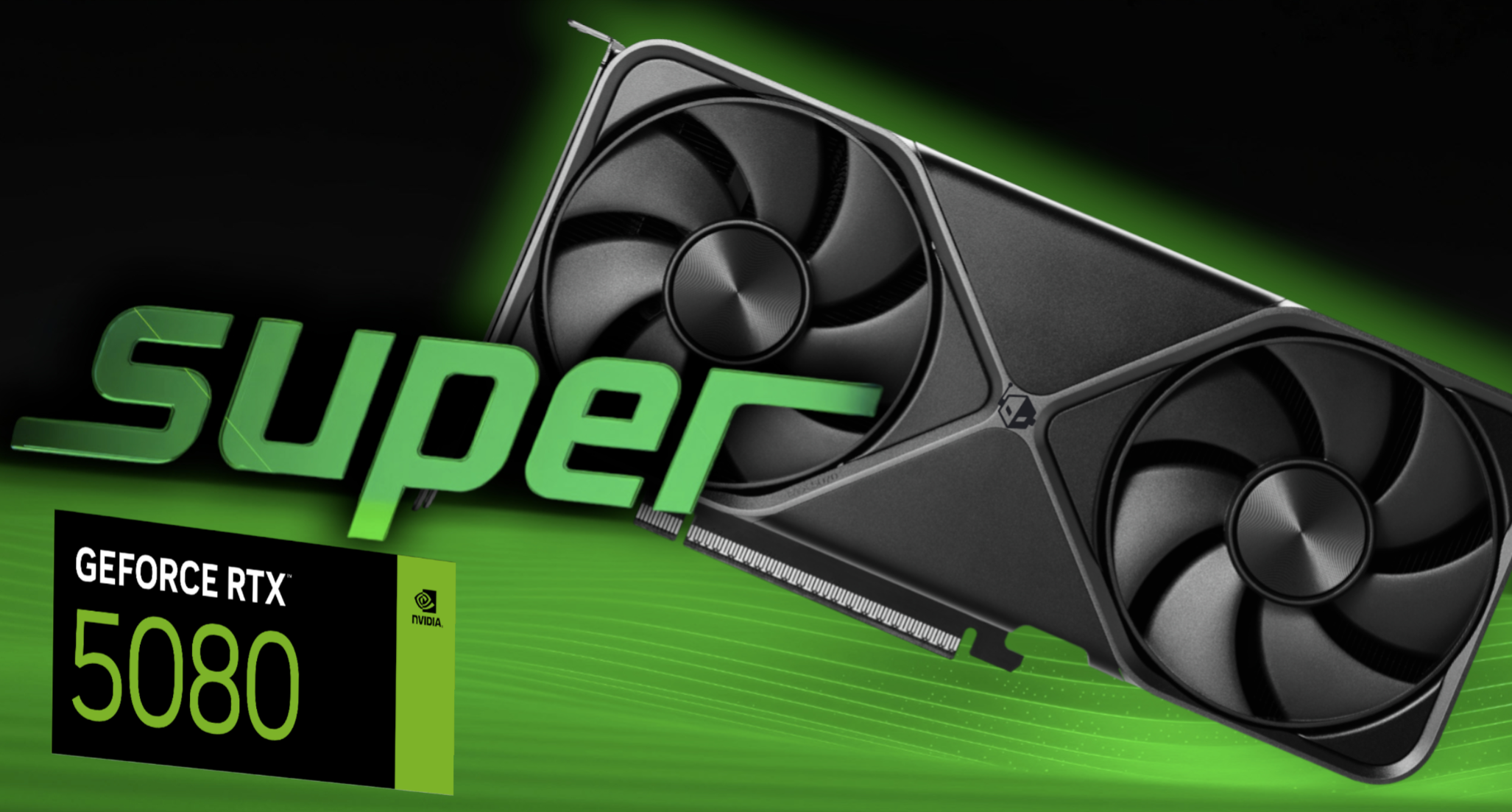
NVIDIA’s next round of GeForce cards is shaping up to be a SUPER refresh that leans hard into memory upgrades, with the RTX 5080 SUPER positioned as a near-flagship for gamers, creators, and AI enthusiasts. The strategy echoes previous SUPER rollouts: keep the core architecture largely intact while dialing up VRAM and memory speeds to squeeze out more performance on the same platform. The twist this time is the industry’s white‑hot demand for next‑gen memory, which could complicate pricing and availability.
Why the SUPER series now? Think of it as a bridge from today’s lineup to the next generation, rumored to transition toward a future Rubin family while sticking to the current architecture playbook. Expect the headline changes to revolve around GDDR7 and higher memory capacities rather than huge leaps in compute resources. That approach worked only modestly well for the last SUPER refresh, and consumer reactions were mixed.
The wild card is supply. GDDR7 adoption across consumer GPUs is set to surge just as DRAM demand spikes. That dynamic reportedly pushed the timeline out by several quarters and could force tough choices on pricing and launch cadence. The bottom line: a memory‑heavy refresh is all but required, but it may arrive later than enthusiasts hoped and cost more than they’d like.
RTX 5080 SUPER: the rumored spec story
– GPU: GB203, full configuration expected
– CUDA cores: 10,752 (rumored)
– VRAM: 24 GB GDDR7 using 3 GB modules
– Memory bus: 256‑bit
– Memory speed: up to 32 Gbps (vs. 30 Gbps on the non‑SUPER)
– Bandwidth: up to 1,024 GB/s
– Clocks: potentially higher, not confirmed
– TBP: 400W+ (vs. around 360W on RTX 5080)
This build points to a “chunky” card primarily differentiated by VRAM and bandwidth. A 24 GB GDDR7 frame buffer on a 256‑bit bus at 32 Gbps is a massive step up from a 16 GB, 30 Gbps configuration, and it’s exactly the kind of change that helps in memory‑bound tasks: high‑res textures, complex scenes, professional content projects, and local AI workloads.
What to expect in real‑world performance
– 4K and 8K gaming: The extra VRAM and faster GDDR7 should deliver smoother frame times and fewer stalls in ultra‑heavy games and texture packs, especially at max settings. That’s where the 5080 SUPER is most likely to separate itself.
– 1080p and 1440p gaming: Don’t expect dramatic FPS gains in esports or lighter titles. In past SUPER refreshes, uplift hovered in the low single digits when core counts and clocks were the main changes. Here, the benefits are more about memory headroom than raw frames.
– AI and creator workloads: This is where 24 GB pays off. Local LLM inference, high‑res video editing, complex 3D scenes, and edge AI pipelines thrive on larger VRAM pools. If you’re building a hybrid gaming + AI rig, the 5080 SUPER’s memory profile is a strong draw.
Who should consider it?
– Ideal for: 4K/8K gamers who push ultra textures, creators working with large assets, and users running local AI models that need more VRAM.
– Think twice if: You mainly play competitive titles at 1080p/1440p, or you already own an RTX 5080. The extra cost for primarily a memory boost may not feel justified for typical gaming workloads.
Price and launch outlook
Memory costs are trending up, and GDDR7 is still early in its supply curve. Industry trackers anticipate higher DRAM pricing into year‑end, and constrained GDDR7 availability could add even more pressure. That sets the stage for a premium MSRP. A ballpark of $1,100 to $1,300 for the RTX 5080 SUPER is a reasonable expectation based on current signals, with the caveat that supply tightness could push it higher.
On timing, the refresh appears to be sliding. Instead of an early‑to‑mid‑year window, rumors now point to retail availability potentially slipping to late 2026, with a public showcase likely aligned to a major tech event beforehand. If that holds, it wouldn’t be surprising to see the company skip a consumer GPU spotlight at the next big winter trade show.
The takeaway
If the leaks pan out, the RTX 5080 SUPER will be a memory-first monster: 24 GB of GDDR7, big bandwidth, and a power budget to match. It’s tailor‑made for users who hit VRAM limits—ultra‑high‑res gamers, creators, and anyone dabbling in local AI. For the broader gaming crowd, especially those already on the 50‑series stack, the value proposition will hinge on price. Keep an eye on how the launch window, DRAM supply, and final MSRP shake out before making your upgrade call.