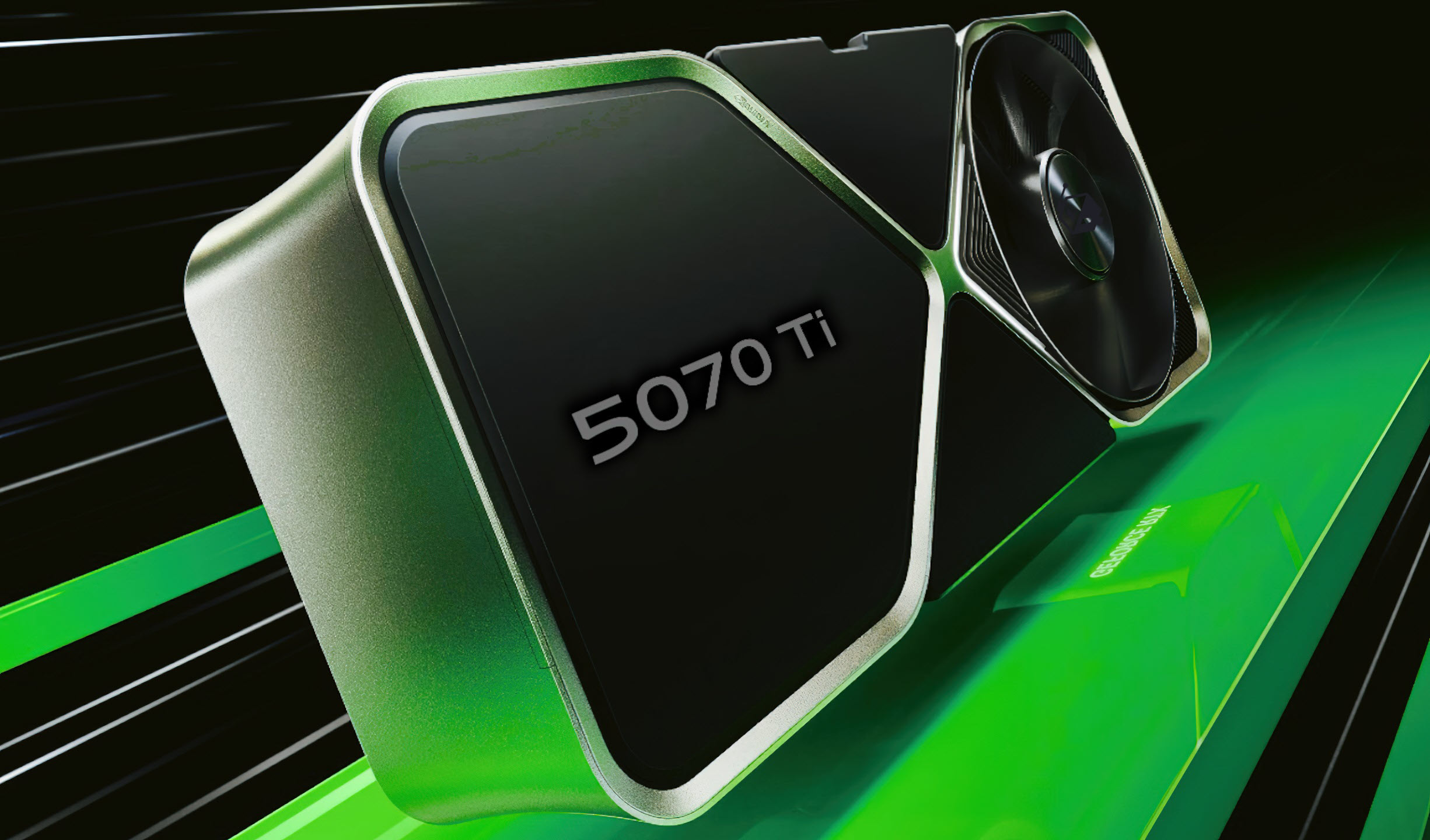
NVIDIA’s RTX 50-series gaming GPU lineup may be heading into a major shakeup as the industrywide memory shortage continues to squeeze supply. The latest chatter suggests NVIDIA is tightening its focus to just a handful of RTX 50 models, while boards that gamers actually want to buy are becoming harder to find—or may be getting phased out entirely.
One of the biggest surprises is what’s happening with the GeForce RTX 5070 Ti. According to recent reporting, supply of the RTX 5070 Ti has effectively stopped, and ASUS has reportedly confirmed it can no longer place new orders for the GPU through NVIDIA. ASUS has even placed the RTX 5070 Ti on an end-of-life list, signaling that restocks may not be coming in meaningful volume. Retail checks in Australia reportedly show stores struggling to source RTX 5070 Ti units from distributors, with expectations that availability won’t improve through the rest of Q1.
ASUS is said to be shifting attention to other RTX 50-series cards due to limited RTX 5070 Ti access, and at the moment it’s unclear if NVIDIA plans to restart production in the near future. For shoppers, the impact is immediate: fewer cards on shelves, less price competition, and more “only a few units” listings that vanish instantly.
The underlying reason appears to be NVIDIA reshaping its GPU inventory strategy around VRAM configurations. With memory supplies constrained, multiple reports claim NVIDIA is prioritizing certain memory capacities and higher-tier models, while reducing—or even discontinuing—others.
Here’s how the prioritization logic is being described:
If a single GPU model is offered in both 8GB and 16GB versions, NVIDIA is expected to favor the 8GB version for supply.
If two different models share the same memory capacity (for example, an RTX 5060 8GB and an RTX 5060 Ti 8GB), the higher-tier card (RTX 5060 Ti 8GB) is expected to get priority.
If multiple GPUs sit at 16GB (such as RTX 5060 Ti 16GB, RTX 5070 Ti 16GB, and RTX 5080 16GB), the top option in that group (RTX 5080) is expected to be prioritized.
There’s also uncertainty around the RTX 5070 12GB. One partner reportedly suggested it hasn’t been decided whether that model might also “make way,” potentially reallocating memory resources toward higher-margin cards like the RTX 5080.
Meanwhile, the flagship RTX 5090 and RTX 5090 D v2 reportedly aren’t governed by this exact prioritization rule—but they’re still expected to feel the effects of the broader memory shortage, meaning supply constraints can still apply.
If these supply decisions play out as described, NVIDIA’s RTX 50-series lineup could effectively be streamlined around a smaller set of GPUs—particularly models such as the RTX 5060 Ti 8GB, RTX 5080, RTX 5090 D v2, and RTX 5090—while supply for other variants drops sharply. The report also claims production may end for GPUs like the RTX 5060 8GB, RTX 5060 Ti 16GB, and RTX 5070 Ti 16GB as NVIDIA shifts attention toward select SKUs and higher tiers.
Pricing data already shows how painful the market has become. Across major retailers, RTX 50-series cards are frequently listed far above MSRP, with top-end models reaching eye-watering highs. The RTX 5090, in particular, is already appearing at levels that can climb into the several-thousand-dollar range depending on the specific card variant and seller. Even “midrange” options are seeing inflated pricing, and the growing combination of limited stock plus reduced model availability could push prices even higher in the weeks ahead.
The big takeaway for gamers is grim: RTX 50-series GPUs aren’t just expensive—they may also be getting cut from production sooner than expected. And if the RTX 5070 Ti is truly being treated as end-of-life this early, it raises a larger question about what comes next for other models, including the RTX 5070, as NVIDIA appears to push harder toward 8GB variants and higher-tier cards that receive supply priority.