NVIDIA May Turn to Teflon-Like PTFE to Solve AI Chip Signal Loss Challenges
NVIDIA is reportedly exploring an unusual material to improve the performance of future AI server hardware: PTFE, a substance best known as the non-stick coating used in cookware under the Teflon brand. While it may sound surprising, the material could help address one of the biggest challenges facing next-generation AI systems: signal loss at extremely high data transmission speeds.
Modern AI accelerators and networking boards are pushing data rates toward 200Gbps per lane. At those speeds, even tiny amounts of electrical interference or signal degradation can affect system performance. As AI servers become more powerful and more densely connected, maintaining stable, high-speed communication between chips is becoming increasingly difficult.
That is where PTFE comes in. Compared with the resin materials commonly used in printed circuit boards today, PTFE wastes significantly less signal energy. This makes it attractive for high-frequency, high-speed hardware where cleaner signal transmission is critical.
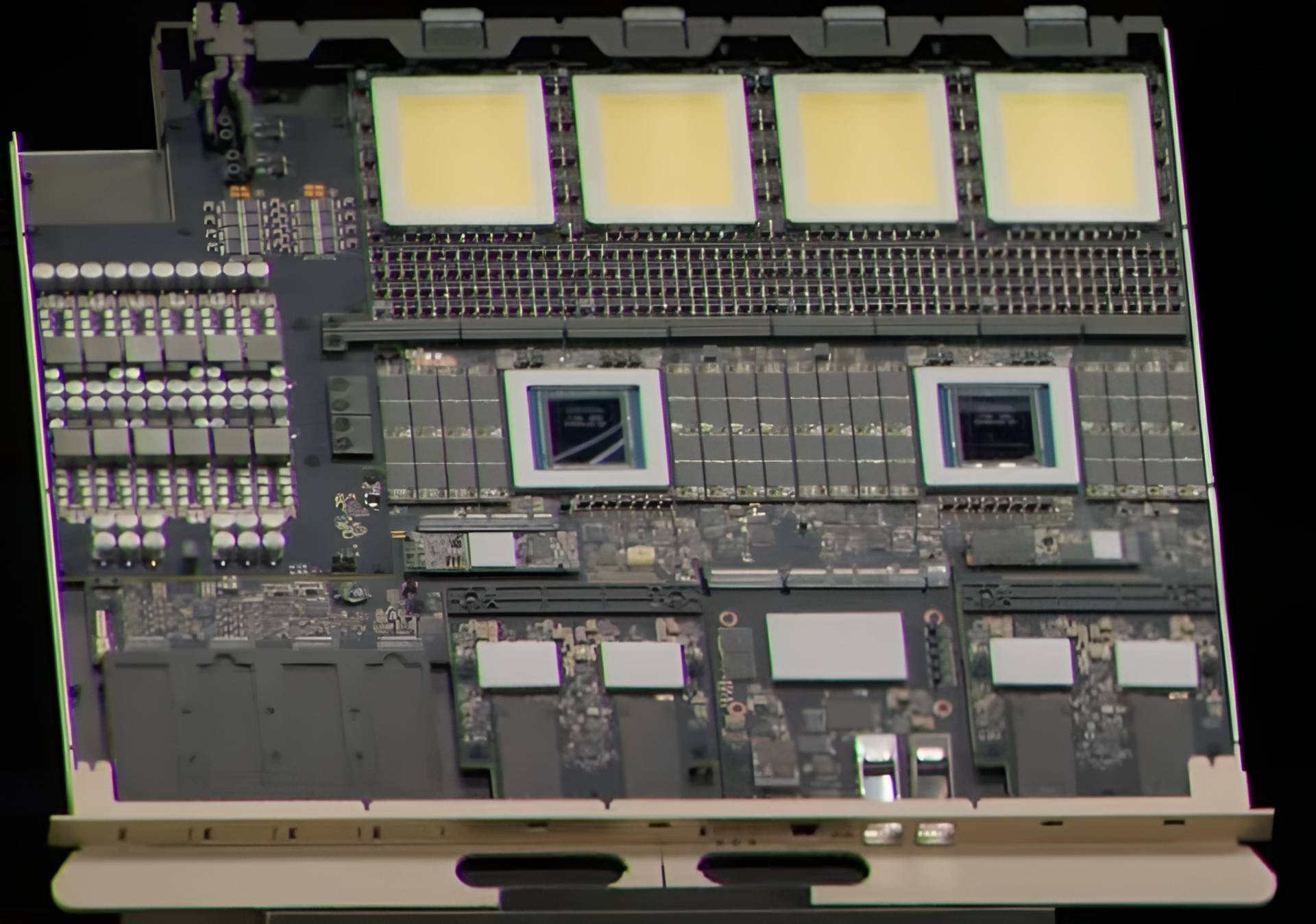
Industry reports suggest NVIDIA is evaluating PTFE for use in advanced switch boards, possibly tied to future Rubin Ultra systems or next-generation mid-plane designs. The goal would be to allow faster switching directly through the circuit board, reducing reliance on complex copper cabling and improving overall server throughput.
The timing is important. Co-packaged optics, a technology expected to help solve bandwidth and power issues in future AI infrastructure, is not yet ready for widespread deployment. Until then, improving the printed circuit board itself may be one of the most practical ways to boost data movement inside AI servers.
PTFE is not new to advanced electronics. Its electrical properties have already made it useful in areas such as military radar, satellite systems, and automotive radar used for driver-assistance features. These applications benefit from PTFE’s low signal loss and high-frequency performance.
However, using PTFE in large, multi-layer AI server boards is far more complicated.
The same non-stick quality that makes PTFE famous also makes it difficult to work with. It does not bond easily with other materials, which creates major problems when manufacturers try to build circuit boards with dozens of layers. Modern AI boards can exceed 70 layers, and each layer must be precisely bonded, drilled, plated, and processed.
PTFE is also thin and soft compared with conventional materials such as epoxy or hydrocarbon-based resins. That makes manufacturing more difficult, more expensive, and more prone to defects. Reports suggest current production yields may still be extremely low, with PTFE-based boards remaining mostly in the sample or testing stage.
This has led to skepticism across parts of the supply chain. Some industry figures reportedly question why PTFE has not become common in circuit boards after decades of availability. Others believe NVIDIA’s interest may be partly driven by shortages of high-end laminate materials rather than a guaranteed long-term shift to PTFE.
Still, the potential performance benefits are hard to ignore. If NVIDIA and its manufacturing partners can solve the processing challenges, PTFE could become an important material for future AI infrastructure. Several suppliers in Asia and the United States are said to be preparing equipment capable of handling PTFE-based production, suggesting the industry is taking the possibility seriously.
Analysts believe the manufacturing bottleneck could improve within the next two years, although a clear commercial outcome may not emerge until the 2028 to 2030 timeframe.
For now, PTFE remains a promising but difficult option. It offers lower signal loss, better high-frequency performance, and a possible path toward faster AI server communication. At the same time, its manufacturing complexity, poor bonding behavior, and low yields make it far from guaranteed.
If NVIDIA succeeds in bringing PTFE into future AI switch boards, the material best known for keeping food from sticking to pans could end up playing a surprising role in powering the next generation of artificial intelligence systems.