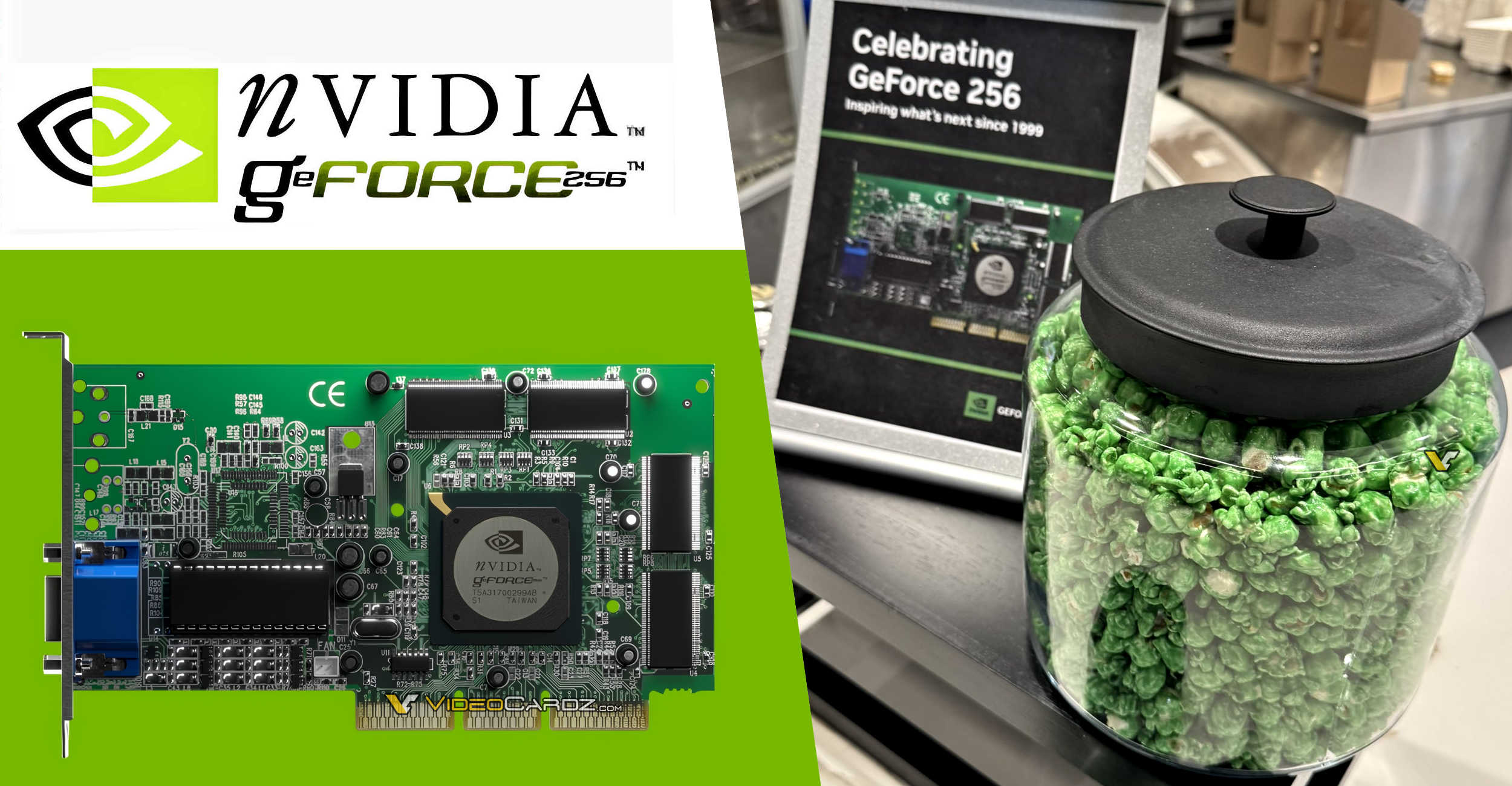
A quarter-century ago, NVIDIA made history with the launch of the GeForce 256, marking a new era in the world of graphics processing. Released in October 1999, just after its introduction in August, this groundbreaking card was hailed as the “world’s first GPU.” It brought to life features such as hardware transform and lighting, which were revolutionary at the time, catering to gamers hungry for more vivid experiences from titles like Quake III Arena and the visually striking scenes of The Matrix.
The GeForce 256’s release wasn’t just a technical triumph; it captured the gaming world’s imagination, selling an impressive one million units within its first year—a testament to its immediate impact on the gaming landscape. NVIDIA recently took a playful approach to commemorate this milestone, as employee Manuel Guzman shared a whimsical nod to their legacy with a picture of green-colored popcorn served at the NVIDIA cafeteria, reflecting the company’s signature branding.
The heart of the GeForce 256, the NV10 GPU, contained around 23 million transistors—a far cry from the behemoth 76.3 billion transistors in NVIDIA’s modern-day powerhouse, the RTX 4090. This comparison starkly highlights how far technology has advanced. The original card’s modest 32 MB of memory seems diminutive next to the RTX 4090’s colossal 24 GB, 768 times more than its ancestor.
In celebration, NVIDIA released a video chronicling the evolution of graphics technology with snippets from early demos and gameplay. Although brief, it evokes nostalgia and illustrates the journey from the humble beginnings of the GeForce 256 to today’s cutting-edge RTX 4090.
Looking back, the GeForce 256 was priced at approximately $199, embodying the spearhead of innovation with NVIDIA’s debut into real-time rendering and advanced game graphics. Fast forward to today, the advanced RTX 4090 stands at a premium, reflecting the strides in sophistication and performance across two and a half decades. From a 120 MHz base clock speed to the RTX 4090’s blazing 2.23 GHz, NVIDIA’s journey is a testament to its pivotal role in transforming the graphics industry and gaming experiences worldwide.


