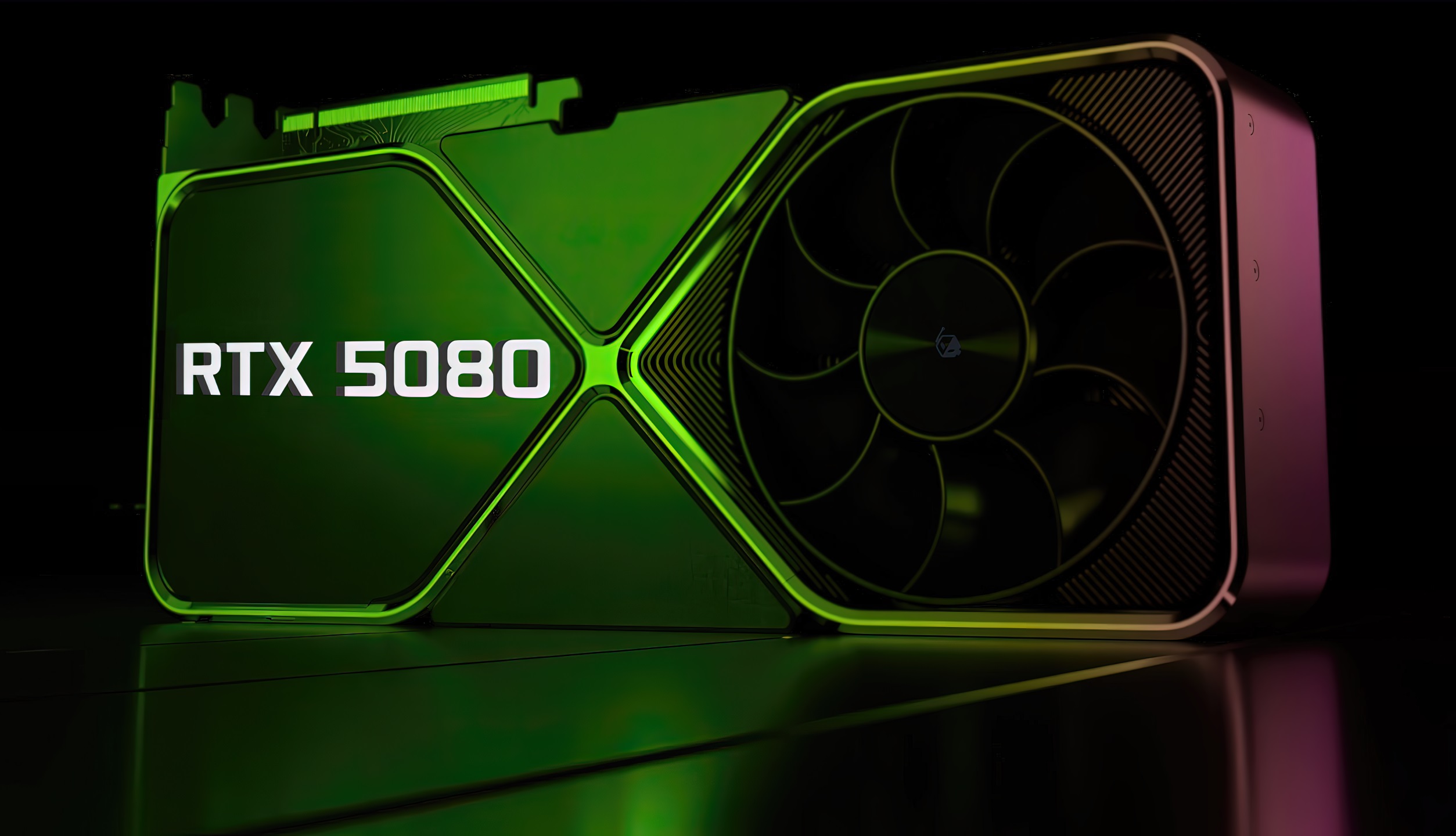
Exciting news is on the horizon for gaming and tech enthusiasts as NVIDIA prepares to launch its state-of-the-art GeForce RTX 5080 GPU. As the frontrunner in their upcoming Blackwell series, this GPU will be the first to debut with the blazing-fast 32 Gbps GDDR7 memory, setting a new benchmark in graphics technology.
The NVIDIA GeForce RTX 5080, armed with the GB203 GPU core, is expected to revolutionize game performance and computational tasks with its 16 GB of GDDR7 memory. This memory is designed to achieve speeds 4 Gbps faster than the memory modules in the anticipated RTX 5090, reaching an impressive total bandwidth of 1 TB/s via a 256-bit bus interface. Such performance marks a significant leap from the current RTX 4080 series, which maxes out at 736 GB/s using GDDR6X technology.
The RTX 5080 isn’t just about raw memory speed; the specs hint at a powerhouse of a card. Utilizing the full GB203 GPU die with 84 SMs and 10,752 cores, the card showcases a remarkable 25% increase in power, rated at 400W TBP, which promises substantial performance improvements over its predecessors. Enthusiasts can look forward to seamless gaming experiences even at high resolutions and with demanding texture packs.
Moreover, NVIDIA is poised to advance even further by incorporating 3 GB GDDR7 memory modules that could push the RTX 5080’s VRAM to 24 GB in the future. This enhancement is likely to appeal to gamers and professionals alike, providing ample memory for intricate AI tasks and high-definition content creation.
The official unveiling of the NVIDIA GeForce RTX 5080 is expected at CES 2025, and anticipation is running high. The full lineup will reveal even more about what NVIDIA has in store with its Blackwell series, especially regarding potential upgrades and expansions in speed and memory capacity across the lineup.
So, as we wait for CES 2025, the question remains: which NVIDIA GeForce RTX 50 GPU captures your imagination the most? Share your thoughts and join the buzz around the next generation of graphics technology.