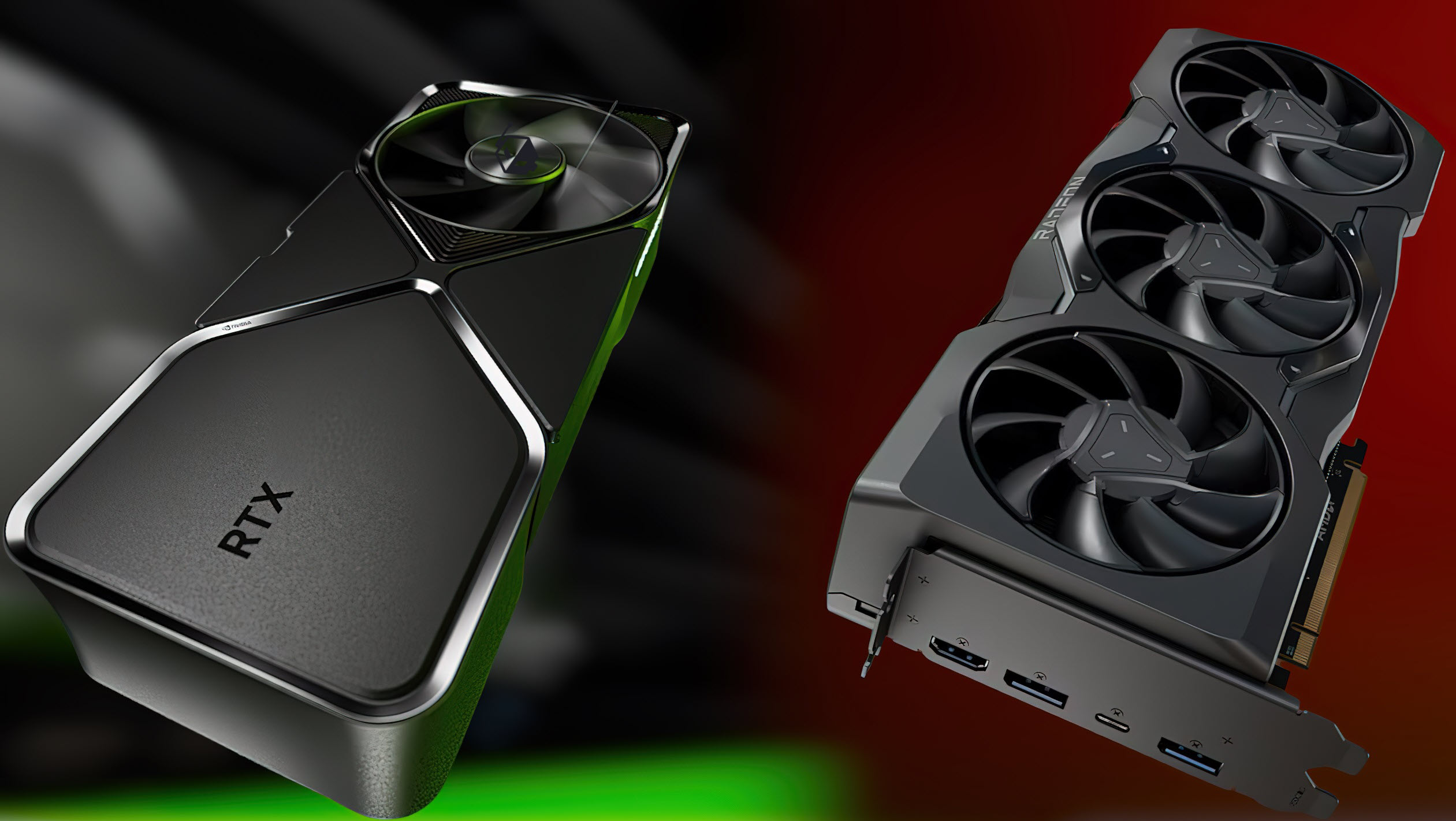
NVIDIA’s new GeForce RTX 40 “SUPER” GPUs have surged ahead of AMD’s Radeon RX 7000 series in DIY sales, particularly at Germany’s premier retailer, Mindfactory. This sales trend was spotlighted by TechEpiphany’s recent data insights.
NVIDIA’s GeForce RTX 4080 SUPER emerged as the top-selling GPU among the RTX 40 “SUPER” lineup. In contrast, the AMD Radeon RX 7800 XT stood out as the favorite within the Radeon RX 7000 series.
NVIDIA’s latest earnings report highlighted record-breaking sales in its gaming segment, bolstered by the “SUPER” GPU lineup. While these figures still trail behind the data center revenue, they contrast sharply with AMD’s dwindling gaming revenue throughout 2024.
In Week 37 of GPU retail sales, the numbers presented a clear picture:
– NVIDIA: 1295 units sold, capturing 56.55% of the market, with an average selling price (ASP) of 690 Euros.
– AMD: 975 units sold, holding a 42.58% market share, with an ASP of 506 Euros.
– Intel: Only 20 units sold, marking a mere 0.87% of the market, with an ASP of 124 Euros.
Revenue-wise, NVIDIA’s higher ASP translated to 64.33% of total revenue, dwarfing AMD’s 35.49%.
Breaking down the most popular GPU models:
– NVIDIA GeForce RTX 4080 SUPER led with 305 units sold.
– RTX 4070 SUPER followed with 250 units.
– RTX 4070 Ti SUPER secured 200 units in sales.
– AMD’s RX 7800 XT ranked third overall but led AMD’s lineup with 235 units sold.
– NVIDIA’s RTX 4060 Ti and RTX 4060 tied for fifth place, with each selling 150 units.
– The flagship GPUs showcased lower numbers: NVIDIA’s RTX 4090 sold 30 units, while AMD’s Radeon RX 7900 XTX sold 70 units.
The AMD Radeon RX 7800 XT offers notable value, but the robust RTX ecosystem is swaying gamers and enthusiasts towards NVIDIA, even in traditionally AMD-favored markets like Germany. The RTX 4080 SUPER’s leading sales highlight its appeal as a disruptive, ultra-enthusiast option retailing for around 1000 Euros, with some retailers offering it at 950 Euros, making it an attractive contender against the 7900 XT and 7900 XTX models.
Notably, NVIDIA’s top-selling GPUs are predominantly high-end models priced above 500 Euros, whereas AMD’s popular cards cater more to the mid-range market. With AMD shifting its focus towards the RDNA 4 lineup to lure mainstream audiences and expand its market share, the goal is for game developers to optimize for AMD GPUs due to a growing user base.
Meanwhile, NVIDIA is gearing up to launch the Blackwell “RTX 50” series, starting with flagship models and eventually rolling out mainstream options to compete with AMD’s RDNA 4 GPUs. The upcoming year promises a heated competition in the mainstream and high-end segments, with contenders like the RTX 50, Intel’s Battlemage, and the Radeon RX 8000 series, while NVIDIA is poised to dominate the enthusiast segment for now.


