NVIDIA Blackwell Ultra B300 GPUs Reportedly Found on China Telecom Network Despite U.S. Export Restrictions
NVIDIA’s powerful Blackwell Ultra B300 AI GPUs have reportedly surfaced inside Chinese infrastructure, raising fresh questions about how restricted high-end AI hardware continues to reach China despite strict U.S. export controls.
According to findings from security firm Lava, 32 NVIDIA Blackwell Ultra B300 units were detected operating within the network of China Telecom, one of China’s major state-owned telecommunications companies. The discovery suggests that even the most tightly controlled AI accelerators can still make their way into restricted markets through unofficial or illegal supply channels.
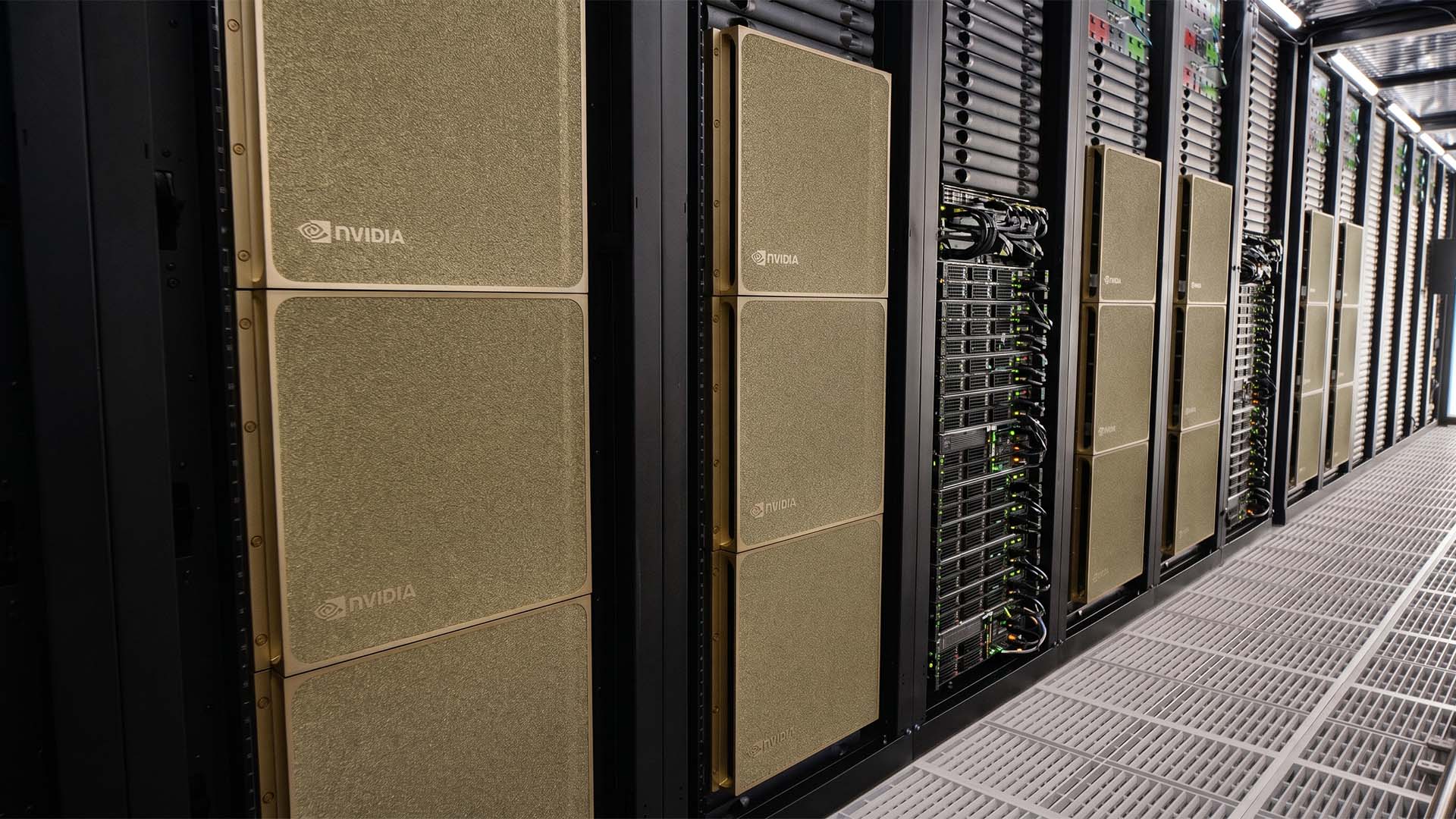
The B300 is not just another data center GPU. It is one of NVIDIA’s most advanced AI accelerators, built for heavy workloads such as large language model training, reasoning-based AI systems, and high-performance inference. That makes it a highly sensitive product under current U.S. trade rules, which are designed to limit China’s access to cutting-edge AI computing power.
The restricted chips were reportedly identified remotely through NVIDIA’s Data Center GPU Manager Exporter, a tool commonly used by data center operators to monitor server health and GPU performance. In this case, the software appeared to be exposed to the public internet without password protection, allowing researchers to detect the presence of the GPUs.
While the tool confirmed that 32 B300 units were active on China Telecom’s network, it did not reveal their exact physical location. That leaves an important question unanswered: whether the GPUs were operating in a China Telecom-owned data center, a partner facility, or another connected environment.
The appearance of Blackwell Ultra B300 hardware in China is significant because the chip is subject to strict distribution controls. Under U.S. export policy, these GPUs can only be sold to approved customers who agree to prevent resale or diversion to banned entities. The goal is to stop advanced AI accelerators from reaching organizations tied to restricted markets or state-backed programs.
The B300’s technical capabilities help explain why it is so closely controlled. The GPU features 288GB of HBM3E memory using eight 12-high stacks and offers up to 8TB/s of memory bandwidth across an 8,192-bit interface. Compared with previous-generation hardware, it delivers major gains in memory capacity and FP4 compute performance, making it especially valuable for modern AI workloads.
Chinese technology companies have had to rely on less capable alternatives due to U.S. export restrictions. While GPUs such as the RTX PRO 5500 can support certain AI inference tasks, they are not in the same performance class as NVIDIA’s top-tier Blackwell data center accelerators. For companies and institutions trying to scale advanced AI systems, the B300 is far more attractive.
The report highlights a persistent challenge for export enforcement. Even when official sales channels are restricted, illicit supply chains can still move premium hardware across borders. Smuggling, resale through intermediaries, and diverted shipments remain difficult to fully prevent, especially when demand for AI chips remains extremely high.
NVIDIA, however, appears to be downplaying the scale of the issue. A company spokesperson said smuggled NVIDIA GPUs represent only “a drop in the bucket” compared with China’s existing deployed inventory. The company also stated that diverted U.S. products account for less than 0.5 percent of total deployed units.
Even so, the discovery of 32 Blackwell Ultra B300 GPUs on a network connected to a major Chinese state-owned telecom operator is likely to draw attention from regulators and industry observers. If these units were detected in one environment, it raises the possibility that more restricted AI accelerators may be operating elsewhere in China without being publicly known.
For now, the case underscores the growing tension between AI hardware demand and export control enforcement. NVIDIA’s most advanced GPUs remain central to the global AI race, and as long as access is restricted in key markets, attempts to bypass those limits are likely to continue.


