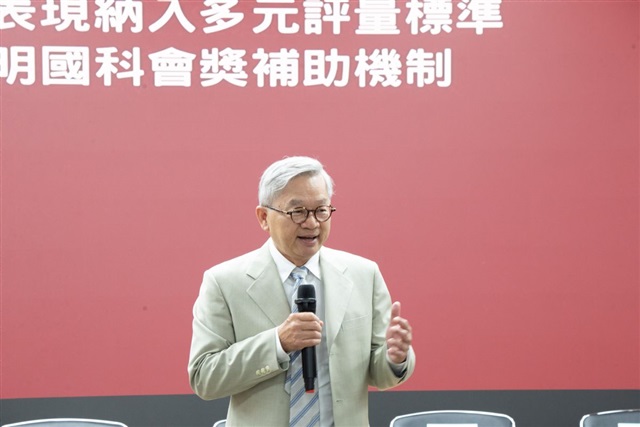
Taiwan’s academic world is in the spotlight after recent remarks by National Science and Technology Council (NSTC) Minister Cheng-wen Wu ignited intense debate over how research is evaluated, funded, and rewarded. His comments, described by many as unusually blunt for a top official, have pushed a long-simmering conversation into the mainstream: whether Taiwan’s current research metrics are helping the country compete globally—or quietly holding it back.
At the center of the controversy is Wu’s criticism of entrenched structural issues within the academic system. While details of his full remarks continue to circulate among universities and research institutes, the reaction makes one thing clear: his message struck a nerve. For some, Wu is saying what few senior leaders are willing to say publicly—calling out practices that encourage box-ticking, paper-counting, and short-term output over deeper innovation. For others, the tone and phrasing of the critique risk undermining morale in a community already under pressure to deliver results with limited resources.
The debate ties directly into a question that affects researchers at every career stage: what counts as “good research” in Taiwan today? In many systems, the easiest way to measure performance is through numbers—publication counts, journal rankings, citation rates, and other indicators that can be quickly compared across departments and institutions. Supporters of reform argue that overreliance on these metrics can create perverse incentives: researchers may prioritize safer topics, rush incremental findings into multiple papers, or chase prestige signals rather than tackle difficult long-horizon work that could lead to real breakthroughs.
Wu’s critique has fueled renewed calls to rethink how Taiwan evaluates research quality and impact. Reform advocates want assessment models that better reflect real-world contribution—such as meaningful industry collaboration, open and reproducible science, long-term national priorities, and research that translates into patents, products, policies, or public benefit. They also argue that evaluation should better account for differences across fields, because what “impact” looks like in engineering can be very different from what it looks like in the humanities or social sciences.
At the same time, the backlash illustrates how complex research reform can be. Metrics—however imperfect—offer transparency and comparability, and they help institutions make difficult funding and hiring decisions. Critics of sweeping change worry that replacing established benchmarks with less standardized criteria could introduce new problems, including inconsistent judgment, favoritism, and uncertainty for early-career scholars trying to build credentials. Others point out that universities compete internationally, and global ranking systems still heavily reward traditional publication-based signals.
What makes this moment significant is that it’s not just an internal academic argument. Taiwan’s research strategy is closely tied to national competitiveness, talent retention, and the ability to lead in advanced technology. Any shift in research evaluation could influence where funding flows, what kinds of projects get prioritized, and whether young researchers see a future in Taiwan’s universities and labs. In other words, the controversy isn’t only about tone—it’s about the rules that shape an entire innovation ecosystem.
Wu’s remarks have effectively forced a more public and urgent discussion about reforming Taiwan’s research metrics. Whether the result is a major policy shift or a more gradual recalibration, the debate is likely to continue—because it touches the core of how Taiwan defines success in science and scholarship, and how it plans to compete on the global stage in the years ahead.