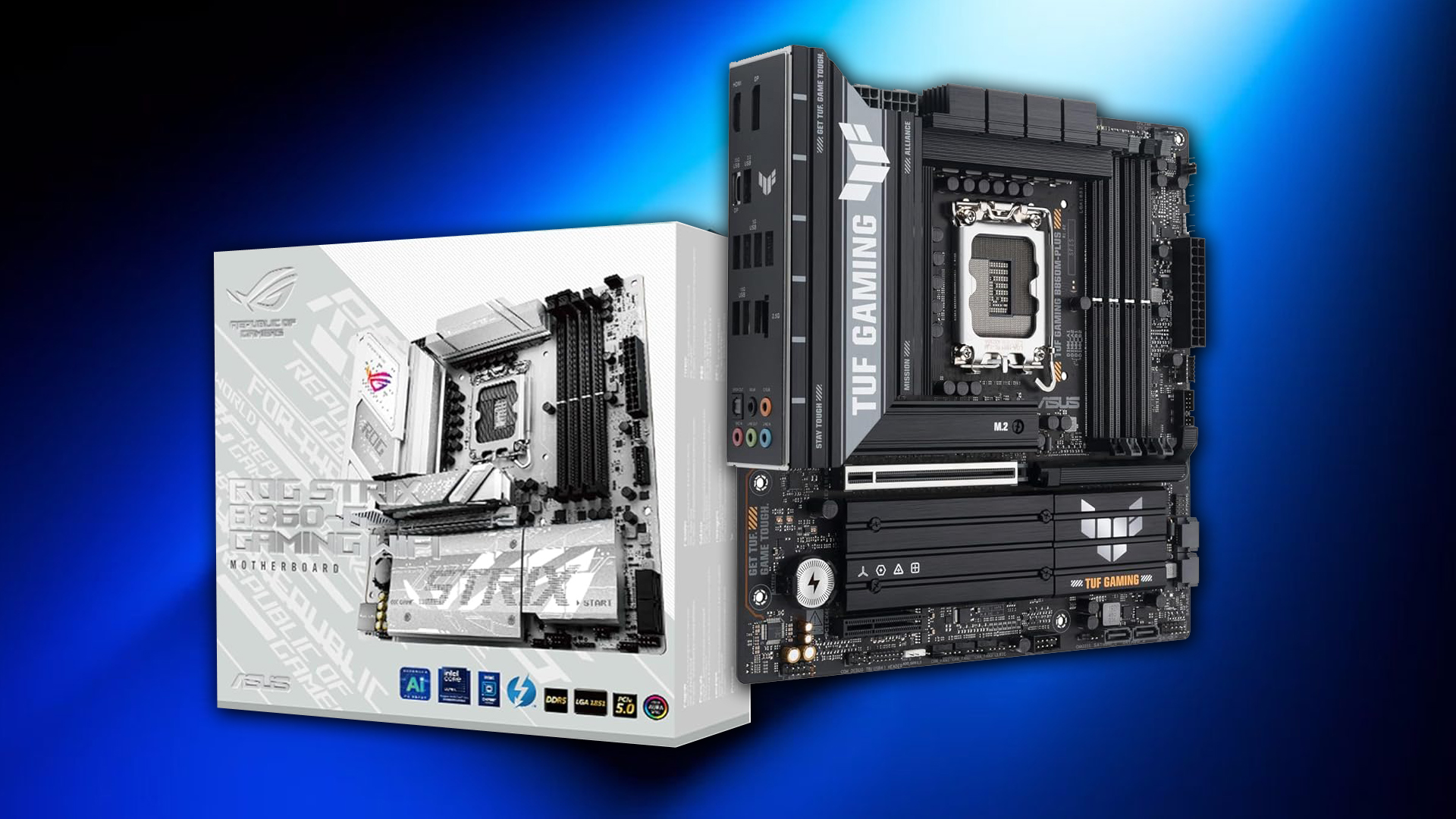
The recent leak of ASUS’s B860 micro-ATX motherboards is sure to excite tech enthusiasts, especially those eyeing Intel’s upcoming Arrow Lake desktop processors. These compact motherboards, which are set to accommodate the LGA 1851 socket, have been revealed ahead of the official showcase expected at CES 2025.
ASUS has offered two striking designs in this leak. The first model, the ASUS ROG Strix B860-G Gaming WiFi, flaunts a sleek aesthetic with a white PCB and heatsinks, accented with gray and adorned with the ROG Strix branding. Positioned as a mid-range offering in the B860 series, it compensates for the absence of CPU overclocking and reduced PCI-E lanes compared to the higher-end Z890 boards while ensuring compatibility with cutting-edge components like PCI-E Gen 5.0 SSDs and GPUs. Notable hardware features include expansive VRM and M.2 heatsinks, a single PCI-E x16 slot, three M.2 slots, and four SATA ports for ample storage options. Connectivity won’t be an issue with its rear I/O providing eight USB Type-A ports, two USB Type-C ports, HDMI, DisplayPort, audio interfaces, Wi-Fi, 2.5G LAN, and a versatile BIOS switch.
The second model, the TUF Gaming B860M-Plus, appeals with a stealthy, all-black design featuring TUF-themed accents on its heatsinks. It follows a slightly different specification sheet with one PCI-E x16 slot, one PCI-E x4 slot, four SATA ports, three M.2 slots, and room for four DIMMs. While it lacks built-in Wi-Fi, it matches the ROG Strix model’s 2.5G LAN capability and includes six audio jacks, plus seven USB Type-A and a USB Type-C port for connectivity.
Both models promise affordability without skimping on modern standards. They are primed to accompany Intel’s Core Ultra 200 series of non-overclockable chips, offering an appealing solution for cost-effective PC builds that don’t compromise on future-proofing, particularly with the inclusion of PCI-E 5.0. As these boards make their way to the market, they present a compelling choice for users looking to benefit from the next-gen graphics capabilities in a value-oriented package.